Breaking the silence on period poverty: Empowering students with USM PinkBank
April 9, 2025
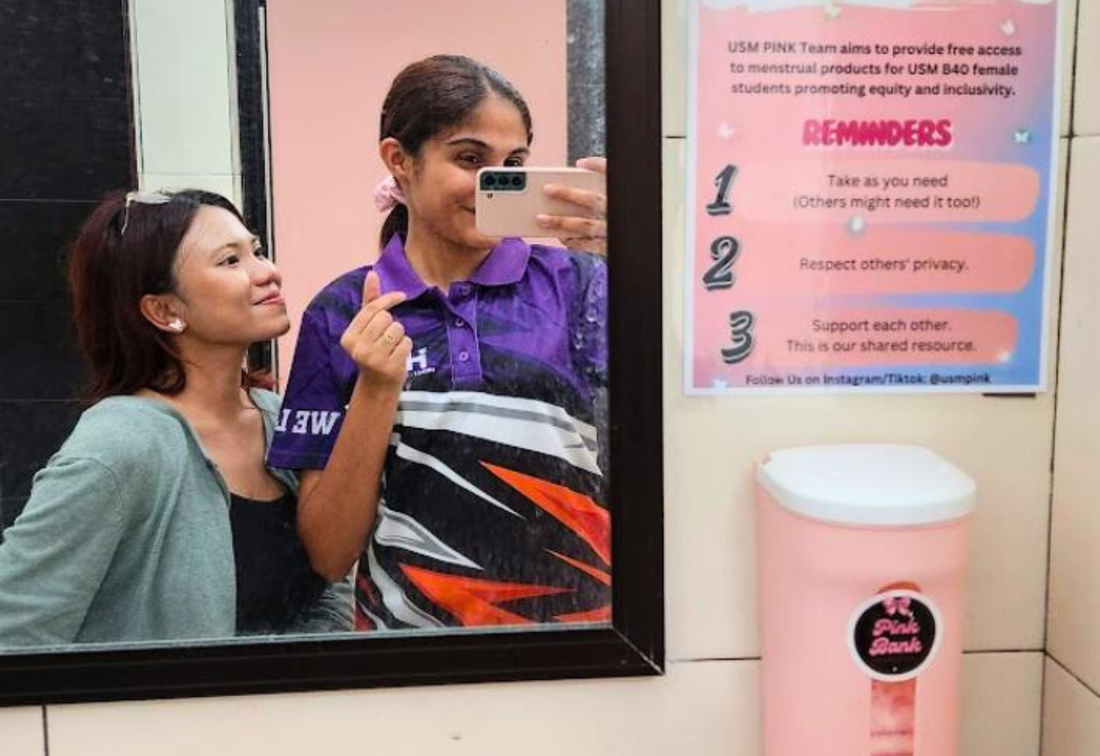
Alka Kaur proudly stands next to the neatly laminated sign for the USM PinkBank initiative, showcasing the sanitary pads affixed to the wall, symbolizing support and accessibility for students in need.
Period poverty is a pressing issue that affects countless individuals, particularly students who often find themselves grappling with the financial burden of menstrual products. For many, sanitary pads are not a luxury but a necessity. Unfortunately, the reality is that a significant number of students struggle to afford these essential items, leading to discomfort, health risks, and a negative impact on their education. The stigma surrounding menstruation can further exacerbate the problem, leaving many feeling isolated and unsupported during a natural biological process.
USM PinkBank: A supportive solution to period poverty for students At University Sains Malaysia (USM), the USM PinkBank initiative is making strides to combat period poverty by ensuring that no student faces this challenge alone. By providing free sanitary pads in restrooms across all three campuses—main campus in Gelugor, Penang Island; Engineering campus in Nibong Tebal, Penang Mainland; and the Health campus in Kubang Kerian, Kelantan—students can maintain good hygiene, prevent infections, and reduce unpleasant odors. Alka Kaur, Vice President of the USM Student Council and Co-Founder of USM PinkBank, highlights the importance of accessibility. Despite the proximity of malls, a survey revealed that many students do not change their pads every 3 to 4 hours, which is crucial for preventing bacterial buildup and odor. “The main issue is affordability. Many students come from B40 family backgrounds. Based on our initial findings, these students feel that spending money on menstrual products is a waste when it could be used for food instead. By providing better access, we are ensuring that their health—both financial and emotional—is taken care of,” she explains. The initiative thrives through collaboration with the student representative council from each faculty and faculty club members, who are responsible for refilling supplies weekly or biweekly. Currently, one restroom per faculty is stocked, with plans for further expansion. Alka mentions that they are actively seeking sponsors to enhance their impact. So far, 40 large boxes of sanitary pads have been distributed across the campuses, with 78% of recipients reporting improved management of their menstrual health. Additionally, 65% of B40 female students indicate that this initiative has alleviated their financial burden, allowing them to concentrate on their studies. Menstrual health should never serve as a barrier to education. “USM PinkBank is more than just providing pads. We are on a mission of dignity, equality, and ensuring that every student has the support they need,” asserts Alka. |
EXPLORE FURTHER

|
20 Clever ways for busy moms to sneak in some 'me time' every dayPrioritize self-care, as taking care of oneself can actually make it easier to take care of others
|

|
5 Ways to tweak your health and diet for a healthier decadeThe age milestone is a good reminder
|

|
Surviving, living or striving as a woman: Overcoming poverty and hardshipUnleash your potential as a woman
|

|
Breaking societal norms: Women's ambition after marriage and childrenIs it wrong?
|

|
Perimenopause and menopause: Knowing what to expectHot flashes and disturbed sleep are common hallmarks
|

|
(Ask a Dr) I fart when I orgasm. Is there anything I can do to make it stop?Pre-lovemaking no-nos: Foods to avoid
|

|
Women's sexuality and pleasure: What are we so afraid of?From nervous twinges to empowered pleasure
|

|
Stretching and strengthening exercises for a frozen shoulderThe inflammatory phase to freezing stage
|

|
Giving birth can trigger autoimmune thyroid diseaseUnderstanding hypothyroidism: Causes and connections to iodine deficiency
|

|
Pelvic floor dysfunction: Effects on urination, bowel movements, and sexual intercourseA comprehensive guide
|

|
Pelvic organ prolapse explainedNumbness during sex a possible symptom
|

|
Understanding pelvic pain: Causes, symptoms, and treatmentExploring the complexities and effective management options
|

|
No period, yet not pregnant? Here is a possible reasonUnderstanding primary ovarian insufficiency (POI) and its impact on women's health
|

|
Carpal tunnel syndrome more common in women than menAssociation of diabetes, gout, and rheumatoid arthritis
|

|
Magnesium deficiency causes sweet craving and stress eatingFactors affecting magnesium intake
|

|
The difference between premature ovarian failure and premature menopauseThe connection between conception and infertility
|