Butterfly children with skin as fragile as a butterfly
DEC 24, 2018 @6.35 PM
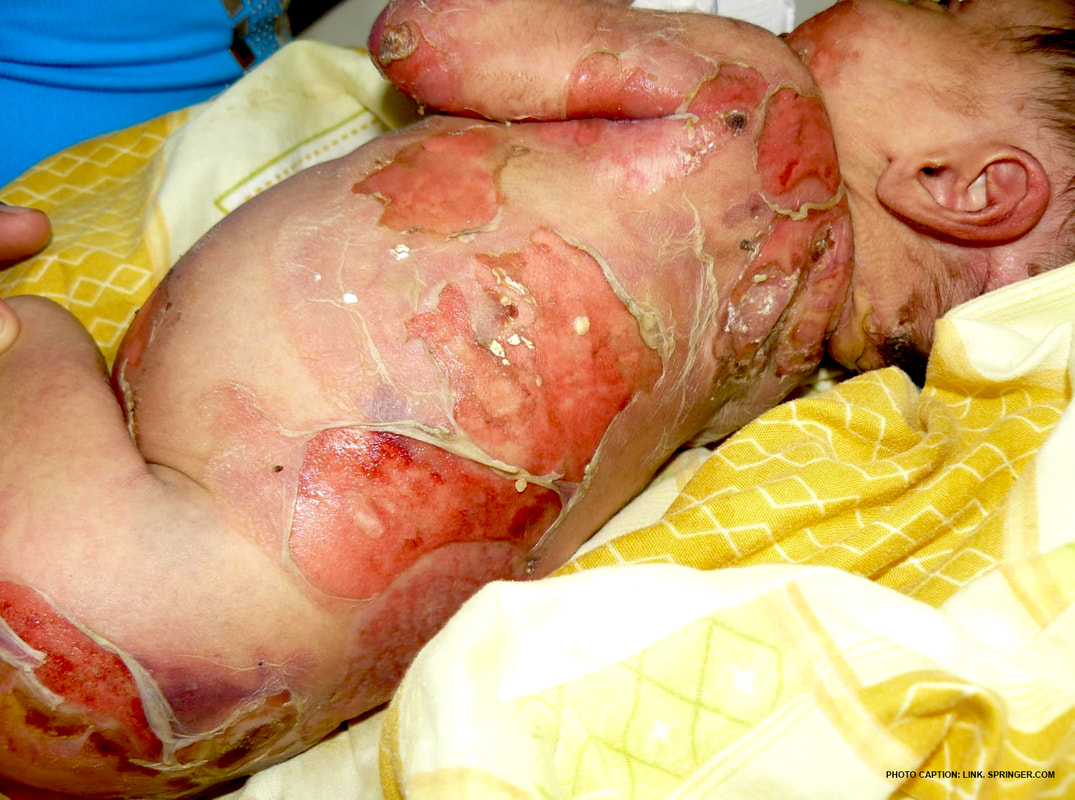
To date, there are 100 families in Malaysia affected by epidermolysis bullosa.

In Malaysia, there are a hundred families affected by epidermolysis bullosa (EB) – a rare inherited and incurable disease. The disorder occurs in every racial and ethnic group throughout the world and affects both sexes equally.
Globally, the United States National Organisation for Rare Disorders (NORD) estimated that EB occurs in one out of every 50,000 live births. “Children with EB are known as 'Butterfly Children' because their skin is as fragile as the wings of a butterfly. EB causes the skin to blister - becoming fragile even at the slightest touch,” says Pantai Hospital Kuala Lumpur Dermatologist consultant Dr Nazirin Ariffin (pix). What causes epidermolysis bullosa? The skin is made up of an outer layer (epidermis) and an underlying layer (dermis). The area where the layers meet is called the junctional zone. They are glued together by at least 15 types of skin protein (Collagen 7, Collagen 17, Keratin 5, Keratin 14, Plectin, etc). EB happens when one of the skin protein decreases. The loss of this skin 'glue’ makes the skin weak. A hereditary disease In most cases, these are inherited from one or both parents but sometimes the fault occurs spontaneously and appear for the first time in a child who has no other affected family member. The inherited forms follow either autosomal dominant or autosomal recessive inheritance. In autosomal recessive EB, neither parent has EB, but their child does. This happens when both parents are 'carriers' of the faulty genes. The risk for two carrier parents to both pass the defective gene and have an affected child is at 25 per cent with each pregnancy. In autosomal dominant EB, only one abnormal gene is needed to express the disease. This means only one parent needs to carry the EB gene and the risk of passing the abnormal gene from affected parent to offspring is 50 per cent for each pregnancy. If you or your partner has EB or is known to be a carrier of a mutated gene associated with EB, a test on the fetus can be carried out at 11 weeks into pregnancy. Clinical manifestations of EB The clinical manifestations of EB is based on the degree of skin fragility and the involvement of the associated organs, with an overall long term outcome ranging from mild to devastatingly severe. The primary symptoms of EB is blistering, which is often painful - affecting daily activities of living and interferes with school and work. EB usually occurs at birth or shortly after. In milder form of EB, the manifestation of skin fragility (blisters) may not appear until a toddler first begins to walk or until an older child begins new physical activities that trigger more intense friction on the feet. In more severe forms, there is generalised blistering of the skin due to trivial physical trauma or spontaneously without any apparent friction. Beside skin, blisters may also occur on internal organs such as the oesophagus, stomach and respiratory tract. These more severe forms of EB result in disfigurement, disability and early death, usually before the age of 30. In fact, some forms of EB are lethal in the first few months of life. |

- IN THE SPOTLIGHT
-
HEALTH CONDITIONS
- ANTIMICROBIAL RESISTANCE
- ARTHRITIS
- ASTHMA
- BACK PAIN
- BRAIN DISORDERS
- BREAST CANCER
- CANCER
- CARDIOVASCULAR DISEASE
- CERVICAL CANCER
- CORONAVIRUS DISEASE (COVID-19)
- DEMENTIA
- DENGUE
- DENTAL PROBLEMS
- DIABETES
- DRUG ABUSE
- EAR, NOSE AND THROAT
- ECZEMA
- EPILEPSY
- EYE
- FIBROIDS
- GASTROINTESTINAL DISEASES
- INFLUENZA (FLU)
- HEADACHES & MIGRAINES
- HEPATITIS
- HIV & AIDS
- JOINT PAIN
- KIDNEY DISEASE
- LUNG CANCER
- LUPUS
- MELASMA
- MENTAL HEALTH
- MOUTH-AND-TEETH
- OBESITY
- OSTEOPOROSIS
- OVARIAN DYSFUNCTION: UNDERSTANDING PREMATURE OVARIAN FAILURE, POLYCYSTIC OVARY DISEASE AND INFERTILITY
- SEXUAL & REPRODUCTIVE HEALTH
- SKIN CONDITIONS
- SLEEP
- STROKE
- DISABILITIES & SPECIAL ABILITIES
- NURSING RESOURCES
- DIGITAL HEALTH
- HEALTH PRODUCTS & SERVICES
- RELATIONSHIPS
- FAMILY HEALTH & PARENTING
- EMPOWERING WOMEN
- MEN'S WELLNESS
- GOLDEN YEARS
- ACTIVE LIFE HUB
- NUTRITION
- COMPLIMENTARY MEDICINE
- HUMANITARIAN & COMMUNITY HEALTH
- AMBULANCE AND FIRST AID GUIDE
- Community clinics/ Klinik Komuniti
- Government Dental Clinics / Klinik Pergigian Kerajaan
- ABOUT US