Elder abuse and neglect for family members and carers
November 27, 2022 @ 11.43pm
In “Malaysia Elder Abuse Awareness,” neglect is defined as the refusal or failure to fulfil a caregiving obligation.
The advertisement read ‘Caregiver needed for Sunday - Monday, 7pm - 7am.’
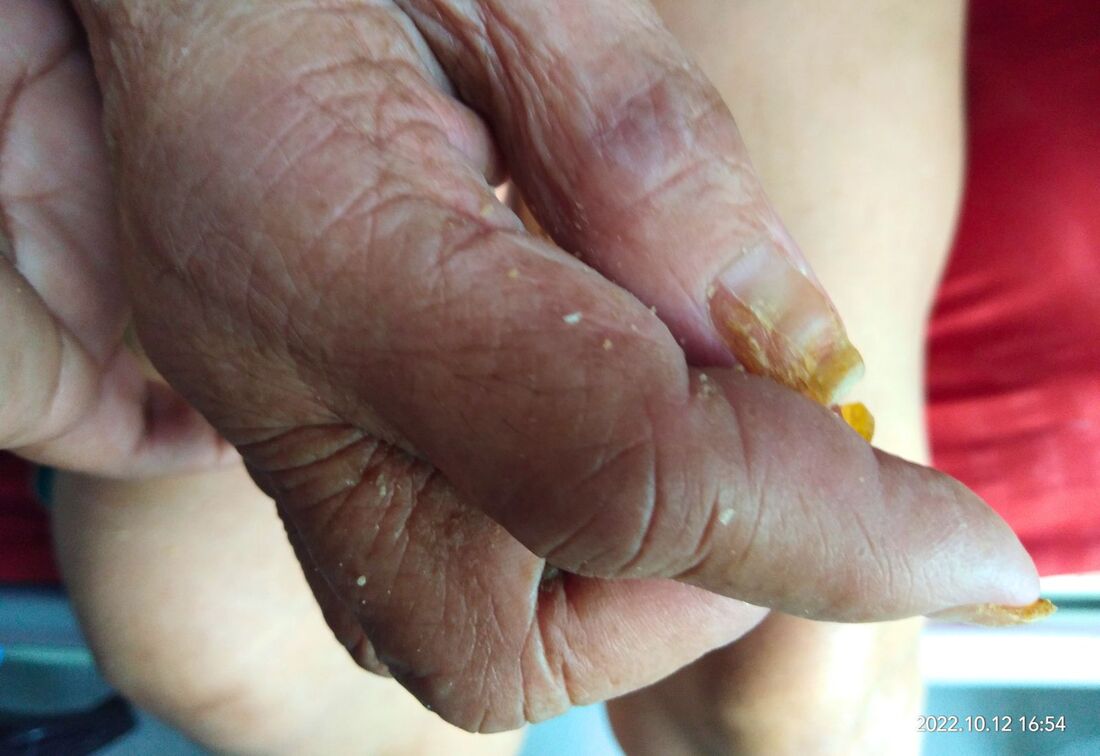
A chat on Facebook messenger then revealed that the 65-year-old lady was a stroke patient - and paralyzed on her right side, bedridden, tiub-fed with a history of hypertension. Trained to care for stroke patients, I was ready to take on the task. I arrived at 6.30pm that Sunday to meet with her only son and daughter in-law. As they greeted me and walked me through the tiny condominium, the son gave me an update of his mother’s condition. He explained that it was only a week since his mother had been discharged from the hospital and brought back home. They were unprepared, the condo was still under renovation except for his mum’s room. It was the third room - the tinniest in the house with an attached bathroom where she laid on a rubber sheet above a hospital bed. Weighing close to 75 kilogrammes, straight shoulder length hair, she was semi-naked with only a diaper on. The mattress had no sheets, her pillow bare with no blanket in sight. I greeted her with a smile as I stood by her bed. She looked at me with no surprise. There was a foul stench emanating throughout the room as she had not been given a bath since she was hospitalized. In addition, there were milk residues on her palm, on the bed frame with traces of faeces. My night was rather long as she moaned in despair for frequent diaper change. I was relieved at a sign of dawn, so I mixed the formula and gently poured it down a syringe into her nasogastric tube before I left. An offer I should have refused Two weeks later, I received an offer from her son to care for her four times a week - 7 hours per day. Although I was hesitant, I accepted the offer. Monday came and I walked in. My afternoon instantaneously turned grim. There were used wet tissue papers and a diaper strewn on the floor, the rubber mat thrown outside the toilet door was filled with faeces, the floor was filled with hair, sticky every step that I took. The wheel chair was dumped with unfolded washed clothing that belonged to the old lady. The sun proof curtains were down and windows closed. The television on the other hand played a series of animated cartoons - which according to the daughter-in law, she enjoyed. Although this was rather strange, I took to myself to use a wet tissue to clean her mouth, helped her up and gave her a good wipe down. I transferred her to the wheel chair and changed the sheets, sanitized and wiped the bed frame, cleaned the room before mopping the entire floor. The curtains were drawn apart and windows opened to allow the fresh air in. Towards the end of the day, I requested for a bottle of mouthwash, gauze swabs, liquid body wash, a large nail clipper and a female pubic hair shaver. Number 1 on the list was a commode that I could use to transfer her from the bed to the washroom for a good warm shower and massage. Unfortunately, these items came after 2 months of caregiving. Discoloured nasogastric tube Time ran quick and it was almost a month since I started caregiving. I politely asked the daughter-in-law the date for the patient’s next check up. “It’s next week, but I’m unable to bring her on my own,” she explained. To this, I offered my assistance to transfer the patient from wheelchair to car and back on the day of the check-up. There was no confirmation from her. The next day, I learnt that she’d missed the check-up as there were cabinet installation works happening at home. I asked if she’d called up the hospital to re-arrange for another check-up date. She brushed this off by explaining that she had a medical condition of her own. It seemed to me that she was in good health, so I politely told her that it was more than a month since the patient was discharged with the nasogastric tube. It had to be changed as it had discoloured. In addition to this, the elderly woman suffers a bad cough so a hospital visit would help. The daughter-in-law again brushed this off by saying that her mother-in-law suffered from a bad cough even before the stroke. Time passed and nothing was done, except for the cabinets at home. Whenever I carried the old lady from the bed to the commode during bath time, I could literally feel her body getting lighter. Troubled, I again alerted her daughter-in-law that the patient needed a doctor’s visit to identify the cause of her cough as well as for the tube to be removed in order to start with oral feeding. She seemed disinterested and got me a pre-packed porridge from a fast food outlet filled with red-chilies, cut ginger and course chicken pieces. The mother-in-law only took half a teaspoon before she spat it out. Playing doctor It’s three months now and the elderly woman is still tube fed. She has lost lots of weight. There has not been any attempts to bring the elderly woman for a doctor's visit at the hospital either. Sadly, the daughter-in-law has hired an Indonesian maid to assist her in housekeeping as well as to feed the patient. Despite the agency and the maid’s claim of having caregiving experience, she doesn’t shower the patient or carry her up. My visits moreover have been reduced to twice a week. This has resulted in the elderly woman suffering from severe heat rash and bed sore as I'm the only one for now who gives her a bath. During my recent visit, I found a box of oral formulation in the treatment of acute diarrhea placed in the rack. Initially I thought it was for the maid. A brief conversation with her revealed that the daughter-in-law had instructed her to put eight scoops of formula milk - above the recommended dosage every four hour feed. This gave the elderly woman a runny tummy. The oral formulation was administered to her in order to stop the diarrhea, rather than reducing the number of scoops as per doctor's recommendation. Neglect and elder abuse Understandably, geriatric care can be challenging to family members and carers. However, withholding food, medications or access to health care are defined as neglect and elder abuse by the National Institute of Aging (NIH). In “Malaysia Elder Abuse Awareness,” neglect is defined as the refusal or failure to fulfil a caregiving obligation. This may or may not involve a conscious and intentional attempt to inflict physical or emotional distress on the older person. Indicators of possible neglect include the caregiver’s attitude of indifference or anger towards the elder, the functionally impaired elder arrives without the main caregiver present and inadequate care: poor hygiene, overgrown nails, soiled / inappropriate clothing, unattended medical needs / physical problems, unusual weight loss, pressure sore, located at unusual place, or been recurrent without obvious reason. |
EXPLORE FURTHER







|
Growing strong with age: How you can experience life-changing benefits with regular exercise |

|
Getting over retirement guiltActionable steps for a brighter outlook
|

|
Recent innovations in healthy ageingProactive assessment and preventive regimens for optimal health
|
|
Caring for elderly people with orthopaedic problems |