Empowering nurses key to strengthening Malaysia’s healthcare workforce
May 13, 2026
Second from left: Safiah Sutan Taharudin, together with Dato Hajjah Hanifah Hajar Taib, Malaysia’s Deputy Minister of Health, poses with recipients of the Nursing Icon Award — Asiah Supaat, Datin Dr Norkiah Arsad and Suriana Yazid. Last from right is Gowry Narayanan Director of Nursing Ministry of Health.
Patient care does not end when individuals leave the hospital. For many Malaysians, recovery continues at home and within the community, where nurses ensure continuity of care beyond the hospital ward. Community nurses provide follow-up monitoring, support families managing recovery, and help patients transition safely from hospital treatment back into daily life.
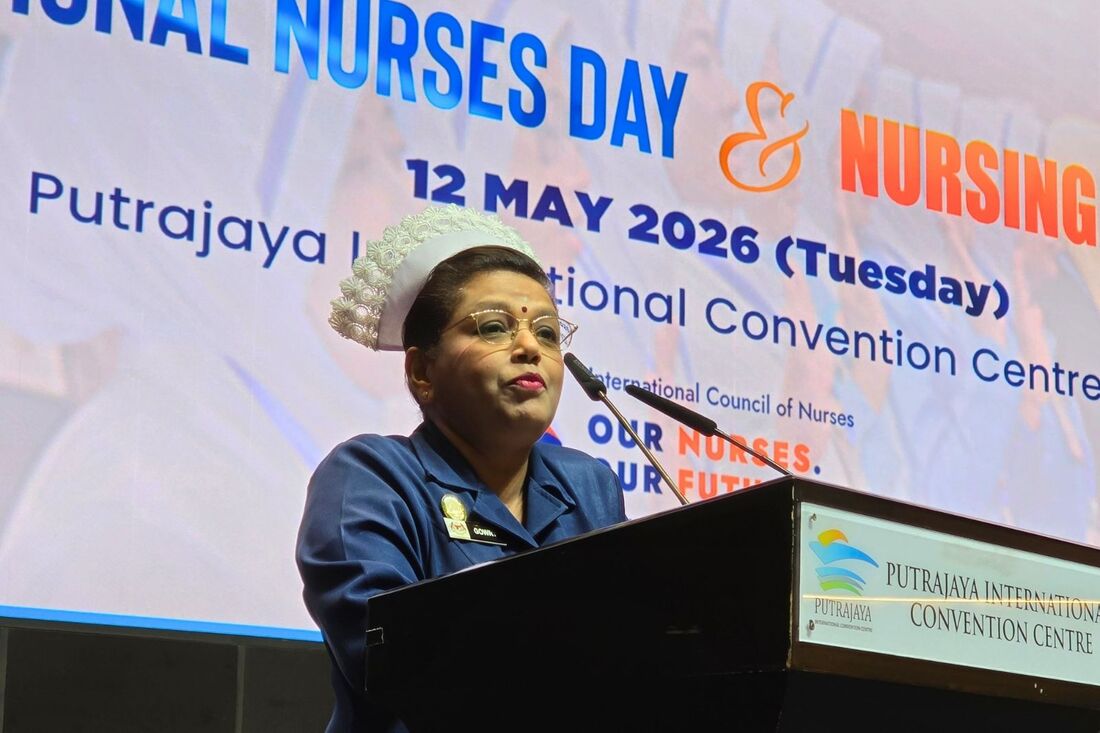
This extended care highlights the vital role nurses play throughout the healthcare system. As the largest workforce in healthcare, nurses form the backbone of service delivery and act as key coordinators within multidisciplinary medical teams. Beyond clinical responsibilities, nurses serve as patient advocates who safeguard safety standards and represent the concerns of patients and their families. They also function as care navigators, translating complex medical instructions into practical steps patients can follow during recovery. At the same time, nurses frequently act as educators and counselors, explaining diagnoses and treatment plans in ways that provide reassurance and clarity. However, as healthcare systems worldwide face growing pressure, the importance of empowering nurses has become increasingly urgent. Empowerment through education and authority Speaking at the National Level International Nurses Day celebration organized by the Malaysian Nurses Association on May 12, Gowry Narayanan, Director of Nursing at the Ministry of Health Malaysia, emphasized that empowering nurses is critical to sustaining high-quality healthcare. “Empowerment comes from the core word power,” she said. “But how do we strengthen that power? Empowerment means giving nurses the authority, support, education, and leadership opportunities needed to provide safe, high-quality care and influence healthcare decisions.” According to Gowry, basic nursing qualifications alone are no longer sufficient in today’s complex healthcare environment. Nurses are encouraged to pursue post-basic specialization and competency development before advancing to higher academic qualifications such as master’s degrees. “Knowledge is power and strength,” she explained. “To communicate effectively about medicine and clinical evidence, education is essential.” Specialized knowledge enables nurses to participate more actively in treatment planning, clinical discussions, and healthcare decision-making. As healthcare systems evolve, nurses are increasingly expected to move beyond traditional bedside roles and contribute to advanced clinical care, leadership, and policy discussions. Malaysia’s nursing education system has gained strong international recognition, making Malaysian nurses highly sought after globally. “Our nursing curriculum is widely recognized and accepted around the world,” Gowry said. “When nurses say they are from Malaysia, they are respected. That means we must continue improving our standards and never become complacent.” Expanding training opportunities Recognizing the need to strengthen professional development, new approaches to post-basic training are being introduced. Gowry revealed that beginning in October, the conventional model of sending only one nurse at a time for specialized training will transition to an on-the-job training system. This approach will allow a larger number of nurses to participate in advanced education, leadership development, and clinical skills programs. Nursing is fundamentally a hands-on profession that requires continuous practical experience. “Nursing is not like office work,” she explained. “You have to practice procedures repeatedly. Skills and competence come through continuous practice.” Repeated training allows nurses to sharpen technical skills, strengthen clinical judgment, and improve decision-making in high-pressure situations. Empowerment therefore involves more than authority. It requires developing the competence and confidence necessary to make safe and effective clinical decisions. Leadership Development Begins Early Leadership is another key component of nurse empowerment. Gowry encouraged nurses to begin developing leadership abilities from the start of their careers. Even small responsibilities—such as coordinating tasks within ward teams or guiding junior colleagues—can help build leadership experience. Early exposure to leadership roles allows nurses to develop the confidence needed to manage teams and respond to complex clinical situations. Over time, these experiences cultivate stronger leaders who contribute not only to healthcare institutions but also to the broader healthcare system. By strengthening leadership within the nursing workforce, healthcare organizations can build a more resilient workforce capable of responding to emerging health challenges. Rising Healthcare Demands Malaysia’s healthcare system is facing increasing pressure as patient needs become more complex. Population aging is one of the most significant factors contributing to rising demand for healthcare services. A growing proportion of patients are older adults who often require long-term medical care and management of multiple conditions. “Nearly 90 percent of our patients are elderly,” Gowry said. “Many require comprehensive care because their caregivers may not live with them.” Older patients frequently present with multiple illnesses rather than a single condition. In addition to chronic non-communicable diseases such as diabetes and hypertension, healthcare providers are also encountering rare diseases, genetic disorders, and complex medical conditions. These evolving healthcare needs significantly increase the workload for nurses, who must coordinate care for patients with multiple medical issues while ensuring safe treatment. Hospital Pressures and Staffing Challenges Hospital wards across the country are also facing operational strain. Ideally, a general ward should maintain a nurse-to-patient ratio of one nurse for every four patients. In practice, however, the ratio can increase dramatically, sometimes reaching one nurse for eight, twelve, or even fourteen patients. Hospital stays are also becoming longer as patients present with more complicated medical conditions. Cases that previously required three to four days of hospitalization may now extend beyond a week. Patients requiring ventilator support or treatment for rare or genetic conditions require intensive monitoring, further increasing the demand for nursing care. At the same time, Malaysia’s healthcare system continues expanding services and increasing hospital capacity, which places additional pressure on the nursing workforce. Currently, the country faces approximately 14,000 nursing vacancies nationwide. Hospitals must also manage patients who arrive seeking treatment even when wards are already operating at or beyond intended capacity. The Hidden Reality of Nursing Work Behind every patient recovery is a nurse who has dedicated time, energy, empathy, and physical endurance. Nursing requires constant decision-making, emotional resilience, and the ability to perform under pressure. Long working hours, heavy workloads, and continuous patient interaction create demanding conditions for healthcare workers. Double shifts have increasingly become part of the reality for many nurses as hospitals attempt to maintain services despite staffing shortages. While these extended shifts help sustain service delivery, they also increase fatigue and raise the risk of clinical errors. Fatigue is one of the most significant risks in healthcare environments. Nurses who work extended hours or multiple shifts may experience reduced concentration and slower decision-making. Despite these challenges, nurses are still expected to maintain professionalism and compassion in every patient interaction. Patients expect attentive care, clear explanations, and a reassuring presence, even when healthcare workers themselves are experiencing stress and exhaustion. Burnout Among Nurses The psychological and emotional demands of nursing have contributed to increasing burnout within the profession. Data indicate that approximately 24.4 percent of hospital shift nurses in Malaysia experience high levels of burnout. In other words, nearly one in four nurses faces significant emotional exhaustion. Burnout often results from heavy workloads, extended shifts, and the emotional strain of caring for patients facing serious illnesses. Newly graduated nurses may find the transition into clinical practice particularly challenging. Gowry emphasized the importance of mentorship and peer support to help young nurses adapt to the realities of the profession. A balanced workforce that includes both experienced nurses and newer graduates can create a supportive environment where knowledge and resilience are shared. Workforce Attrition and Migration Retention has become one of the most pressing concerns within Malaysia’s nursing workforce. Between 2014 and November 2025, a total of 3,744 nurses resigned from their positions. Attrition has accelerated significantly since 2022. Financial factors remain one of the primary reasons nurses leave the profession or seek employment abroad. Although salary adjustments have been introduced, earnings in Malaysia remain lower than those offered in several other countries. In urban areas where living costs are higher, financial pressures can make it difficult for healthcare workers to remain in the profession. However, Gowry emphasized that the issue extends beyond compensation. Workplace conditions, professional development opportunities, and job satisfaction also influence retention. Because Malaysian nursing qualifications are widely recognized internationally, Malaysian nurses are highly marketable abroad. Pandemic Impact on Training Supply Before the COVID-19 pandemic, Malaysia had a surplus of trained nurses. However, the pandemic disrupted training programs at government nursing institutes, resulting in fewer graduates entering the workforce. This reduction created a supply gap that continues to affect the healthcare system today. To address the shortage, the government has expanded nursing education capacity. Private colleges have been allowed to increase training programs, while government institutions have expanded annual enrollment from approximately 1,000 students to about 3,000. These measures aim to rebuild the nursing workforce and ensure sufficient staffing in the coming years. Empowerment as a Long-Term Solution While increasing the number of nurses is essential, experts stress that recruitment alone will not solve workforce challenges. Sustainability depends on creating a workforce that feels supported, valued, and professionally fulfilled. Empowered nurses are more likely to remain in the profession, provide higher-quality care, and contribute to healthcare innovation. Empowerment includes providing career advancement opportunities, leadership development, supportive workplace environments, and professional recognition. “If we fail to retain our nurses, resignation numbers will continue rising,” Gowry warned. Retention strategies therefore focus not only on recruitment but also on creating environments where nurses can grow professionally and feel valued. A Strategic Roadmap for the Future Malaysia is currently developing a long-term strategy to strengthen the nursing workforce and prepare for future healthcare demands. The initiative aligns with the World Health Organization Global Strategic Directions for Nursing and Midwifery (2021–2025), adapted for Malaysia’s healthcare landscape. Scheduled for launch on June 9, the strategy outlines a ten-year roadmap built around four pillars, 21 strategies, and 62 initiatives. These initiatives focus on strengthening education, expanding employment opportunities, developing leadership, and transforming service delivery. One key objective is to create career pathways that allow nurses who excel in clinical practice to advance without leaving patient care. “If you excel in clinical work or management, we want you to stay and still be promoted,” Gowry explained. Proposals are also being considered to shorten the time required to obtain advanced academic qualifications by recognizing work experience and post-basic training through credit transfer systems. Financial incentives are also under review, including improvements to shift allowances and post-basic training allowances. Innovation and Digital Healthcare Future nursing models will place greater emphasis on innovation, technology, and community-based care. Nurse-led chronic disease management programs are expected to expand as Malaysia addresses rising rates of chronic illness. Digital health systems and clinical informatics will also become increasingly integrated into everyday nursing practice. Modern nurses will need to be technologically proficient, capable of using electronic medical records, data systems, and digital healthcare platforms. This represents a significant shift from traditional nursing roles that relied heavily on manual documentation and administrative work. Modernizing Nursing Education Education reform is another cornerstone of the national strategy. Nursing curricula will be modernized to incorporate training in digital healthcare, specialized clinical competencies, and emerging medical technologies. Training programs will also be aligned more closely with workforce needs through Training Needs Analysis to ensure that graduates are prepared for real healthcare demands. Closer collaboration between academic institutions and healthcare providers will strengthen both theoretical education and clinical practice. Strengthening Nursing Leadership The final pillar of the strategy focuses on strengthening nursing leadership. Nurses are expected to take greater roles in healthcare policy development, governance, and strategic planning. Leadership pathways will be developed to prepare nurses for management, administrative, and policy positions. Professional legislation and ethical standards governing nursing practice will also be updated to reflect the evolving responsibilities of the profession. Building a Resilient Nursing Workforce The future of Malaysia’s healthcare system depends heavily on the strength of its nursing workforce. Empowering nurses through education, leadership development, and supportive work environments will be critical to addressing workforce shortages and rising healthcare demands. As healthcare systems grow more complex, nurses are increasingly recognized not only as caregivers but also as leaders, innovators, and key contributors to healthcare transformation. Strengthening and empowering the nursing profession today will help ensure a resilient and sustainable healthcare system for the future. |
EXPLORE FURTHER

|
WHO updates: What role do nurses play in achieving universal health coverage?
Exploring nursing laws and leadership in the Western Pacific Region
|
|
Is nursing losing its appeal to the younger generation?How can we attract youth to the nursing profession?
|

|
Global healthcare faces inequities; nurses essential for universal health coverageUrgent call for fair pay and better conditions for healthcare workers
|
|
Civil servants, including nurses, get 15% pay raise starting December 1, 2024Addressing Malaysia's nursing crisis with strategic policy reforms and educational enhancements
|
|
Nursing in the age of uberization: Revolutionizing healthcare deliveryHow innovative models are transforming nursing practice across Asia
|
|
Balancing nursing technology and skills: Where does Malaysia stand?Insights from regional leaders: Upskilling nurses through training programs, simulation labs, EMR and AI
|