Sensory issues in autism: Practical strategies for everyday supportApril 28, 2026
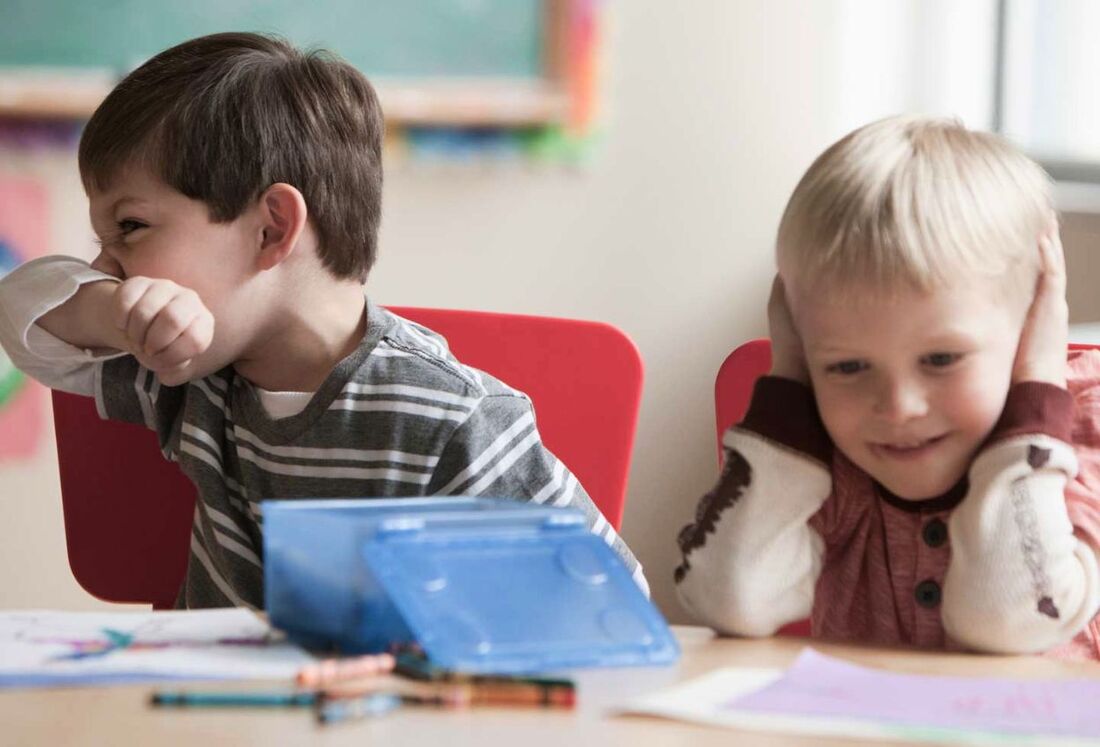
Sensory differences in children with Autism Spectrum Disorder mean some feel overwhelmed by everyday sights, sounds, and textures, while others actively seek stronger sensory experiences to regulate themselves.
Sensory issues in Autism Spectrum Disorder (ASD) refer to difficulties in processing and responding to sensory information such as sights, sounds, textures, tastes, and smells. For many autistic children, the world can feel either overwhelmingly intense or unusually muted.
Some children are over-sensitive to sensory input, meaning their senses take in too much information from the surrounding environment. Others are under-sensitive, meaning they receive too little sensory feedback and may actively seek stronger sensations to regulate themselves. These sensory differences can significantly influence an autistic child’s daily experiences. Simple environments that most people take for granted—shopping malls, classrooms, or playgrounds—may trigger discomfort, anxiety, or emotional dysregulation. When the brain struggles to filter sensory signals, the child may find it difficult to participate comfortably in everyday activities. Understanding these sensory differences is the first step toward creating supportive environments that help autistic children feel calmer, safer, and more in control. Hypersensitivity and hyposensitivity: Two sides of sensory processing Sensory processing challenges are commonly observed in individuals on the autism spectrum. In autistic children, these differences often manifest as hypersensitivity (over-responsiveness) or hyposensitivity (under-responsiveness) to sensory stimuli. According to Hamsni Perumal, lecturer in Special Needs Education at University of Malaya, speaking during UNITAR’s Embracing Neurodiversity Series 03 Special Needs Capacity Building Workshop, children may react very differently to the same sensory environment. Children with hypersensitivity have heightened responses to sensory input. They may avoid loud noises, crowded environments, strong smells, bright or flashing lights, and certain textures of clothing or food. Everyday experiences such as visiting a busy shopping mall may feel overwhelming. In contrast, children with hyposensitivity often seek sensory stimulation. They may enjoy jumping, crashing into objects, tight hugs, or repetitive noises. Some may show a reduced response to pain or may constantly move their bodies to satisfy sensory needs. “Children with hypersensitivity avoid sensory input, while children with hyposensitivity actively seek it,” explains Hamsni. “These behaviors are not intentional misbehavior. They are responses triggered by how their senses interpret the environment.” When the environment becomes overwhelming For autistic children with sensory sensitivities, environments that appear ordinary to others can feel chaotic or distressing. Imagine entering a busy shopping mall: bright lights, music playing in the background, people moving in different directions, announcements echoing overhead, and various smells from nearby restaurants. For a child with sensory hypersensitivity, all these stimuli may arrive simultaneously without proper filtering. The result may be anxiety, agitation, or behaviors that adults sometimes misunderstand as tantrums. In reality, the child is responding to sensory overload. Understanding this perspective can help parents and teachers approach such behaviors with empathy rather than frustration. When sensory triggers are identified early, supportive strategies can be introduced to reduce distress and improve emotional regulation. Calming overstimulation through movement activities One effective approach for managing sensory overload is providing structured movement activities. Children who become hyperactive or overstimulated at home or in the classroom may benefit from proprioceptive activities—movements that involve pressure on muscles and joints, helping the body regulate sensory input. For example, allowing a child to bounce on a therapy ball can help release excess energy and calm the nervous system. Similarly, fidget toys provide tactile stimulation that helps children redirect their attention. These tools work because they give children a controlled sensory outlet. When their attention shifts to the sensory experience provided by the toy or activity, it can help them gradually move away from the trigger that caused distress. Simple activities such as playing games on a soft mat can also help children regain focus and return to a calmer emotional state. The “Calming Sensory Burrito” technique Another technique commonly used in occupational therapy is the Calming Sensory Burrito, a deep-pressure activity designed to help autistic and neurodivergent children regulate their nervous systems. This method provides comforting pressure across the body, which can have a soothing effect similar to a gentle hug. The activity can be performed using simple household items. First, spread a large soft blanket or weighted blanket on the floor. This forms the “tortilla.” Next, have the child lie down on their back at one end of the blanket. Then wrap the blanket snugly around the child, leaving the head uncovered. Once wrapped, parents or caregivers can add playful “toppings” that apply gentle pressure along the body. For instance:
The playful nature of this activity not only provides calming sensory input but also makes the experience enjoyable and engaging for the child. Visual schedules: Helping children understand their day Many autistic children are strong visual learners. Because of this, visual supports can be powerful tools for reducing anxiety and improving communication. A visual schedule is a structured set of pictures or symbols that represent daily routines and activities. By seeing what will happen throughout the day, children gain a clearer sense of predictability. 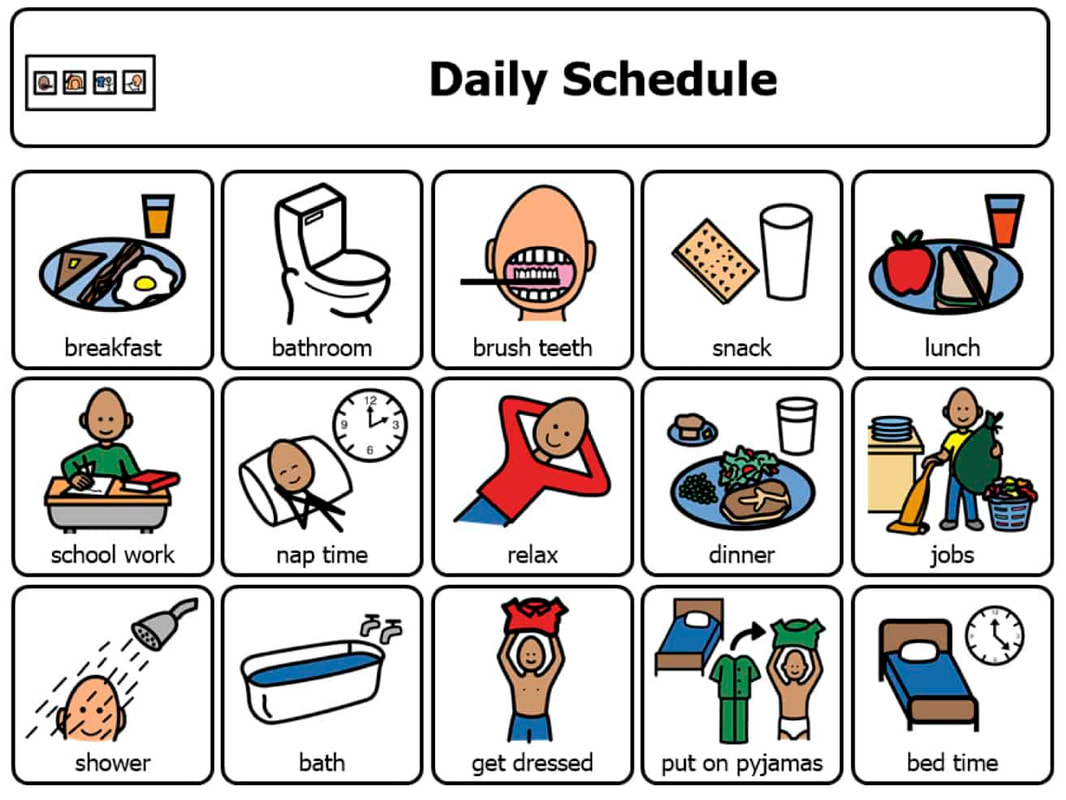
Using a schedule may be a helpful way to organize the child’s day and to help develop a learning routine.
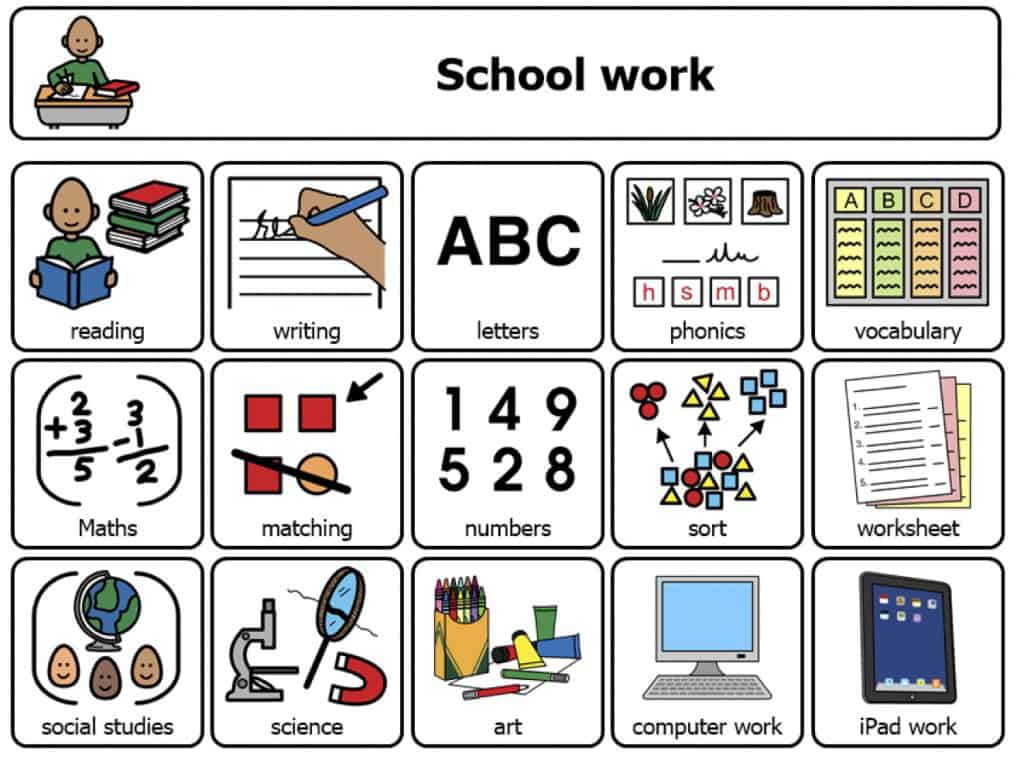
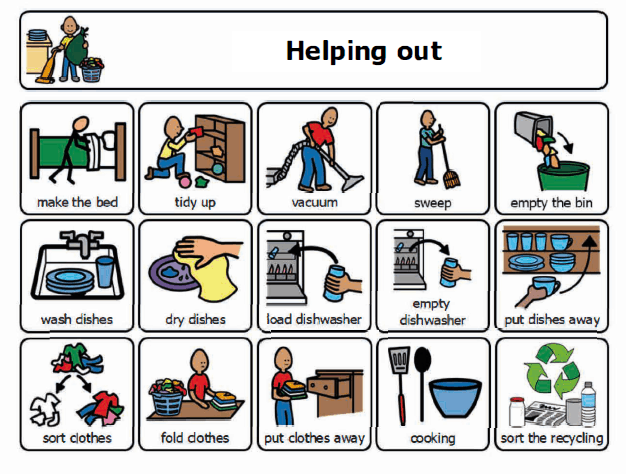
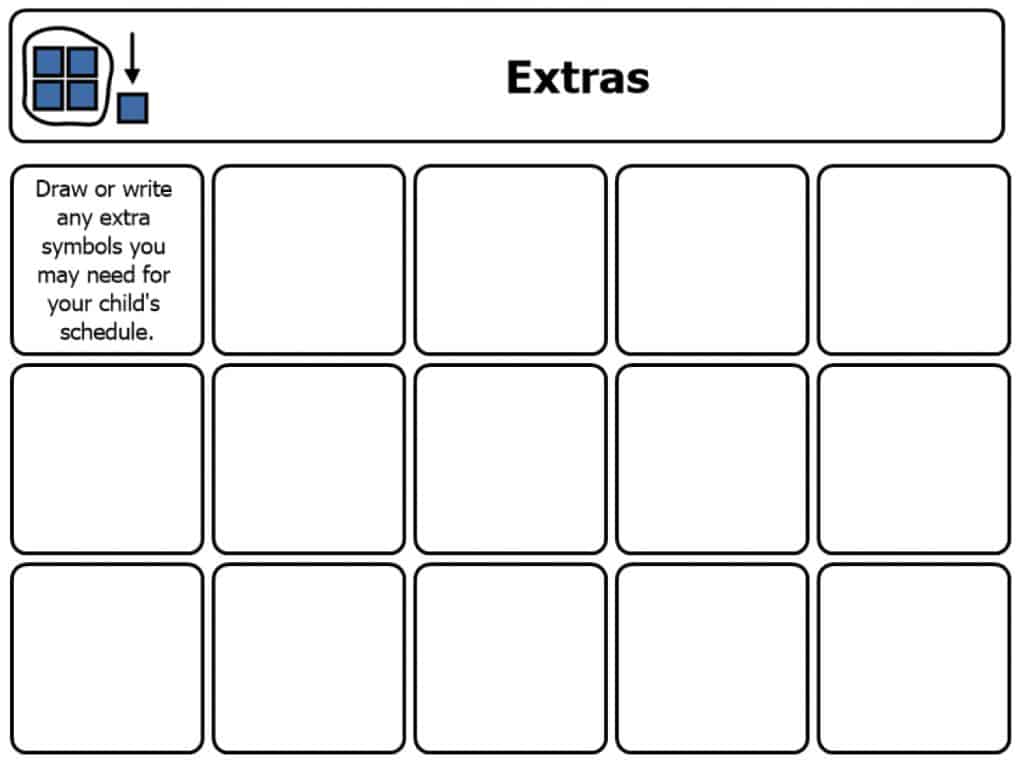
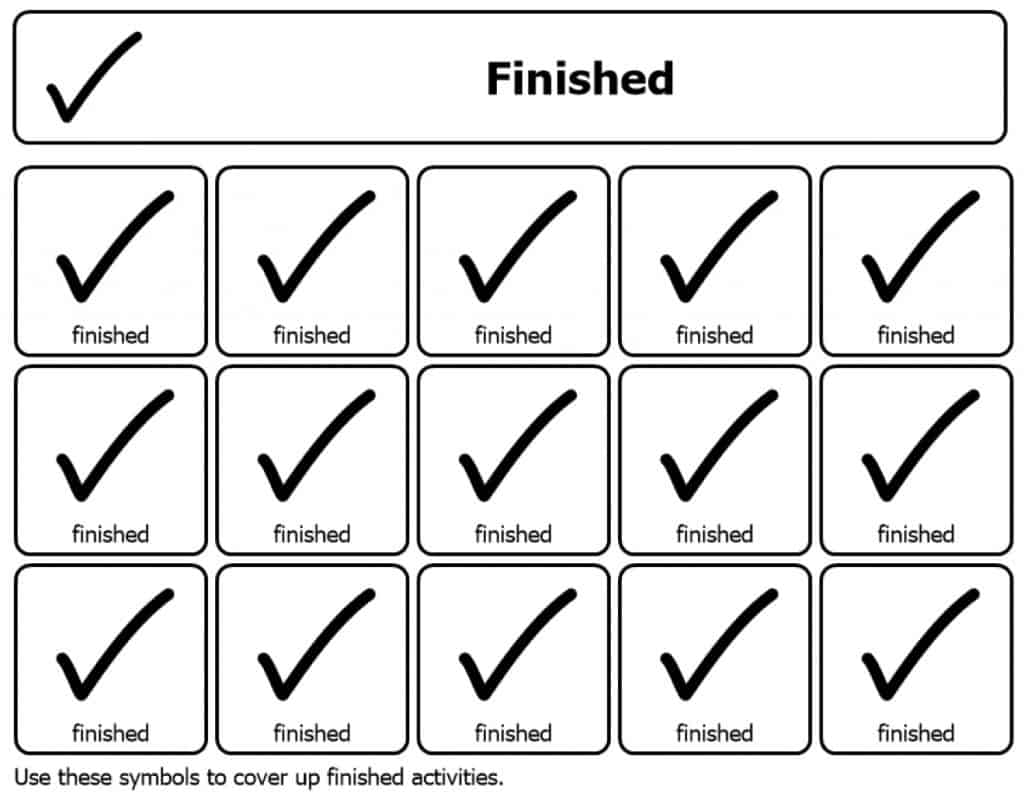
Visual schedules as demonstrated above can be simple or complex depending on the child’s needs. Pictures or symbols are arranged in sequence—either vertically or horizontally—to illustrate the order of events.
These schedules may be used at home, in classrooms, or during therapy sessions. They help children anticipate transitions such as waking up, going to school, completing homework, or preparing for bedtime. When children understand what comes next, uncertainty is reduced. As a result, stress and anxiety often decrease, while independence and confidence gradually increase. Understanding behaviour through the ABC model When challenging behavior occurs, parents and teachers can analyze the situation using the ABC model. This framework helps identify why behaviors occur and how adults can respond effectively. A – Antecedent The antecedent refers to what happens immediately before the behavior occurs. This may include environmental triggers, demands placed on the child, sensory stimuli, or internal emotional states. B – Behavior The behavior is the specific observable action. Examples include covering the ears, shouting, crying, or running away. C – Consequence The consequence describes what happens immediately after the behavior. This might involve adult responses, reactions from peers, or changes in the environment. By observing these three elements, patterns may emerge that reveal the purpose of the behavior. Parents and teachers can keep short notes during or after incidents to identify repeated triggers. These observations help guide effective interventions that focus on prevention and skill-building. A classroom example: Sensory triggers and loud noise Consider a situation where a vacuum cleaner is suddenly switched on during classroom clean-up time. Antecedent A loud vacuum noise occurs unexpectedly during a transition period. Behaviour The student covers their ears, cries, and attempts to leave the room. Consequence The adult turns off the vacuum cleaner or removes the child from the area. In this case, the behavior may represent sensory avoidance. The sudden noise is distressing, and the child’s reaction helps remove the unpleasant stimulus. However, if the vacuum is always turned off immediately, the child may learn that reacting strongly removes the sound. Over time, the behavior may escalate—even when the vacuum is not switched on. Instead of reacting only after distress occurs, proactive strategies can help reduce future incidents. For example, teachers and parents can provide advance warnings before turning on loud equipment. Visual cues—such as an icon representing sound—can signal that a noisy activity is about to begin. Children may also be taught replacement communication skills, such as requesting headphones or asking for a break. Providing noise-canceling headphones or allowing the child to move temporarily to a quieter space can also prevent distress. Importantly, when the child successfully uses these alternative strategies, adults should offer immediate positive reinforcement to encourage the behavior. The importance of observation and lifelong learning Sensory sensitivities may evolve as children grow. What did not bother a child at age five may become uncomfortable later, or vice versa. Clothing textures, food textures, lighting conditions, and sound environments can all influence sensory experiences. Because of this, parents and teachers must continuously observe, learn, and adapt their strategies. Understanding a child’s sensory preferences is an ongoing journey rather than a one-time solution. Patience, empathy, and open communication remain essential tools in supporting autistic children. Practical tools for regulation and positive behavior Several core practices can help support emotional regulation and communication for autistic children. Visual supports Tools such as visual schedules, first-then boards, and choice boards improve predictability and help children understand expectations. Positive reinforcement Providing behavior-specific praise immediately after desired actions strengthens positive learning. Replacement skills Children can be taught to request help, ask for a break, or communicate discomfort using simple words, visual cards, or gestures. Coping toolkits Items such as noise-cancelling headphones, fidget toys, chewable tools, visual timers, and sensory corners provide immediate calming resources. Co-regulation Adults should maintain calm voices and model emotional regulation during moments of distress. Data-light tracking Quick ABC tracking sheets help identify patterns without overwhelming teachers or caregivers. Preparing children for changes and new experiences Unexpected changes can be challenging for autistic children. Providing advance explanations helps reduce anxiety. For instance, if a usual school route changes due to traffic, parents can explain the situation beforehand. Showing a map or describing landmarks along the new route may help the child feel more comfortable. Similarly, preparing children for events such as dental visits can involve showing pictures, explaining the procedure, and describing what they might hear or see. Visual previews help transform unfamiliar experiences into predictable ones. Creating a DIY calm corner at home or school A calm corner is a dedicated space designed to help children regulate emotions when they feel overwhelmed. This space should feel safe, comfortable, and inviting. Key elements may include:
Children can spend a few minutes in the calm corner to regain emotional balance before returning to regular activities. Simple relaxation techniques In addition to structured sensory tools, simple relaxation strategies can help children calm down. Breathing exercises—such as slowly inhaling and exhaling while counting from one to ten—can encourage relaxation. Outdoor activities such as walking in the garden also provide gentle sensory input and can become part of a calming daily routine. These small practices can gradually help children develop self-regulation skills. Building inclusive classrooms through proactive strategies Inclusive classrooms benefit from environments that reduce sensory triggers and promote predictability. Environment
Routines
Instruction
Sensory supports
Social supports
Culture and collaboration
Ultimately, the most effective strategy is one tailored to the individual child. Here are some positive behaviour strategies for special education that are particularly useful for teachers. 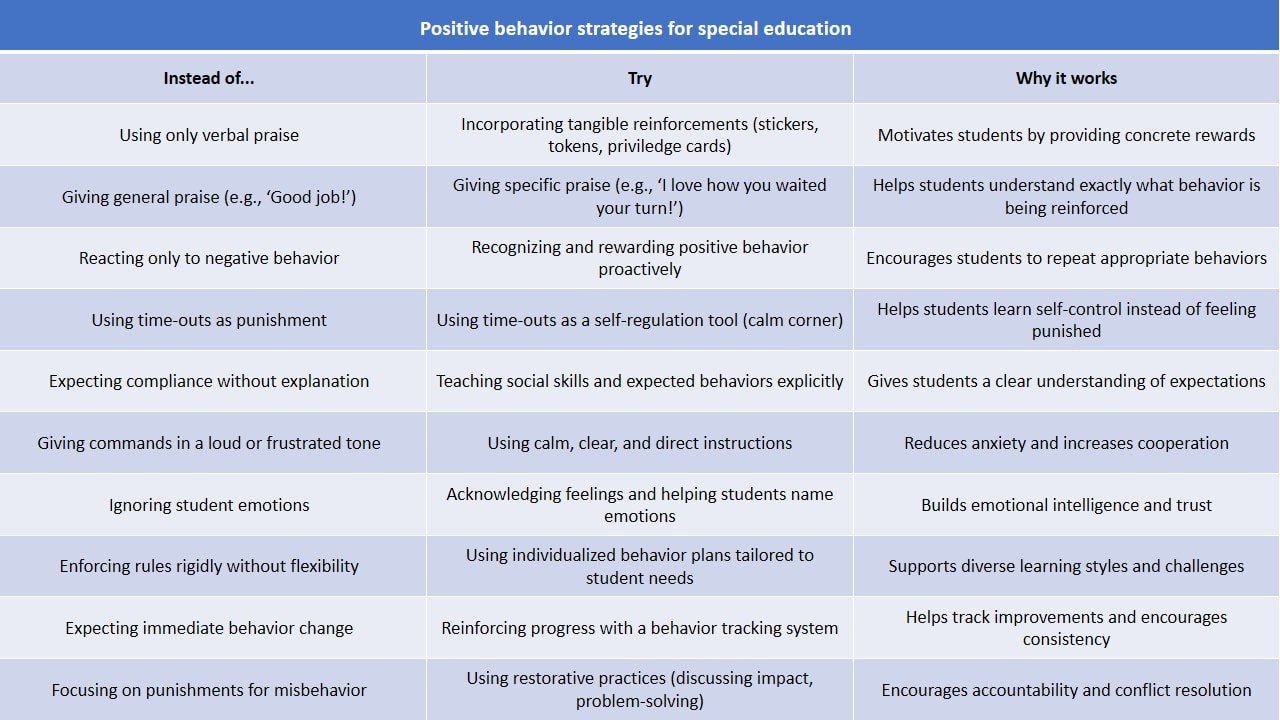
Supporting sensory differences with patience and understanding
For parents and caregivers, raising a child with sensory sensitivities can sometimes feel like navigating an unpredictable landscape. What seems ordinary to others may feel overwhelming to a child with autism. Yet within these challenges lies an opportunity for deeper understanding. By observing carefully, preparing children for changes, and creating supportive sensory environments, families and educators can help autistic children feel safer and more confident in the world around them. Patience becomes the most powerful tool. Progress may be gradual, but each small success—whether learning to request a break, tolerate a new sound, or calmly navigate a busy environment—is a meaningful step forward. When parents, teachers, and caregivers work together with empathy and creativity, autistic children are given the chance not only to manage sensory challenges, but also to thrive in their own unique ways. |
EXPLORE FURTHER

|
Understanding autism spectrum disorder: Challenges, strategies, and supportA neurodevelopmental disability, not just a learning disorder
|

|
Barriers to support: Challenges for autistic individuals and their familiesCelebrating strengths of autistic individuals and their families
|

|
The vital role of job coaches in supporting persons with disabilitiesEnhancing employment opportunities for individuals with autism
|

|
Advancements in education for autistic childrenA comprehensive approach to special education and inclusion
|

|
Building positive relationships in families with autistic childrenTips for parents raising an autistic child
|
|
Possible link between metal toxicity and autismHigher levels of toxic metals found in the blood and urine of autistic children
|
|
National Autism Society launches certified e-commerce programme for youthsA 6-week training program in essential e-commerce skills
|

|
Bukit Tinggi Medical Centre's art gallery raises funds for the autism societyVoices through art featuring 42 pieces by autistic creatives aged 17 to 29
|