Special Olympics Asia Pacific Badminton Competition expands inclusive sports for regional intellectual disabilities
September 29, 2025

Group photo of all delegates, coaches and officers at the Special Olympics Asia Pacific Badminton Competition.
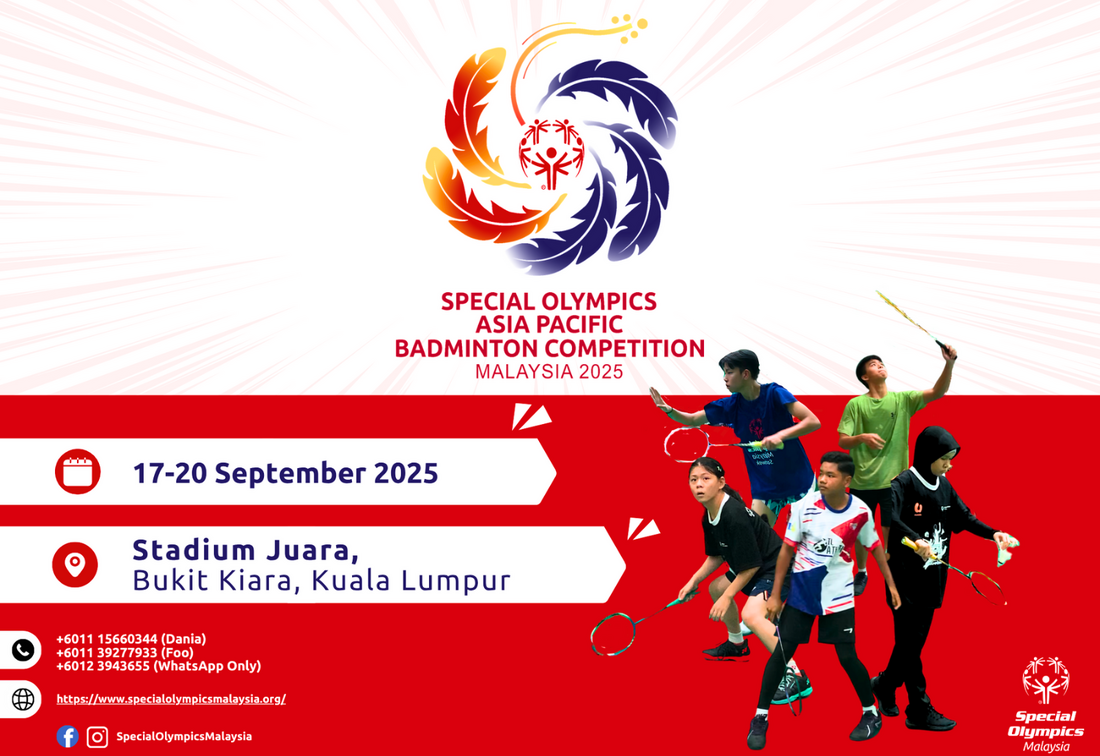
The Special Olympics Asia Pacific Badminton Competition recently concluded with remarkable success, bringing together 80 badminton players, including 63 athletes with intellectual and developmental disabilities and 17 unified partners. Participants from 10 countries across the region - Bangladesh, India, Indonesia, Maldives, Pakistan, Papua New Guinea, Philippines, Singapore, Thailand, and host country Malaysia - showcased their skills at Stadium Juara, Bukit Kiara, Kuala Lumpur from September 17-20, 2025.
This four-day tournament expanded inclusive sports opportunities for people with intellectual and developmental disabilities in Asia Pacific, who often face stigmatization and social exclusion. The athletes demonstrated exceptional resilience, talent, courage, and sportsmanship on the international stage following extensive training and preparation. The event commenced with an impressive opening ceremony featuring a delegation march-in from all 10 country programs. During the competition, the Special Olympics Badminton Impact Report 2020-2024 was launched at a celebration ceremony attended by representatives from Special Olympics International (SOI) and the Badminton World Federation (BWF). This report highlighted the global growth of badminton among athletes with intellectual and developmental disabilities, increased involvement of coaches and unified partners, and the transformative impact of the sport on participants' lives. Khunying Patama Leeswadtrakul, President of BWF, emphasized the significance of such events: "BWF's vision is to give every child a chance to play badminton for life. Competitions like this create a profound impact on participants, their families, communities, and society as a whole." Dipak Natali, Regional President and Managing Director of Special Olympics Asia Pacific, expressed gratitude for ongoing partnerships with BWF, Badminton Asia, and Badminton Oceania. "True inclusion is achieved when every person, regardless of ability, is given the chance to discover their strengths and be celebrated for their unique contributions," he stated. Badminton has become the most popular racquet sport for Special Olympics in the Asia Pacific region, with 16 country programs now offering training opportunities. Ibni Amin, a Special Olympics Pakistan athlete, shared, "Events like this give every athlete the chance to show the world what they enjoy and are good at. Sport has the power to unite people of all abilities." The competition featured Men's and Women's Singles and Doubles, along with Unified Doubles where athletes with and without intellectual disabilities competed side by side. Events were contested across two age categories: 16-21 years and 22-33 years. The Healthy Athletes Program, made possible by the Golisano Foundation, provided complimentary health screenings across five disciplines: FUNfitness, Opening Eyes, Special Smiles, Strong Minds, and Health Promotion. This landmark event was made possible through the generous support of the Youth and Sports Ministry of Malaysia, Perbadanan Stadium Malaysia, FWD Takaful Berhad, FLEXpro Sports Technology, Spritzer Berhad, Baker Hughes, Swift Support Services, SD Guthrie Berhad, Momentum Strike, Lions Club International Foundation, and UPS. |
EXPLORE FURTHER
|
Malaysia to host Special Olympics Asia Pacific Badminton Competition this SeptemberInclusive event highlights 64 athletes with intellectual disabilities from 10 countries, including host Malaysia.
|

|
Shining light on Prader-Willi syndromeTaylor’s College join forces with PWSA Malaysia to raise awareness, funds, and empathy for families facing Prader-Willi syndrome
|

|
ADHD: Gender differences and their impact in the workplaceRecognizing the unique challenges faced by men and women with ADHD
|

|
Barriers to support: Challenges for autistic individuals and their familiesCelebrating strengths of autistic individuals and their families
|

|
Does having a Persons with Disability (PWD) card make you invisible to the law?The legal implications of the OKU card
|

|
Are occupational therapists essential for rehabilitation and recovery?Differences between occupational therapists and physiotherapists
|

|
7 Types of disabilities you should be aware ofPromoting awareness and challenging misconceptions
|

|
The urgent need for inclusivity in healthcare for persons with disabilitiesHow technology and community awareness can transform lives
|

|
Understanding autism spectrum disorder: Challenges, strategies, and supportA neurodevelopmental disability, not just a learning disorder
|

|
Possible link between metal toxicity and autismHigher levels of toxic metals found in the blood and urine of autistic children
|

|
National Autism Society launches certified e-commerce programme for youthsA 6-week training program in essential e-commerce skills
|

|
The vital role of job coaches in supporting persons with disabilities
Enhancing employment opportunities for individuals with autism
|