Synergising forces in the battle against dengueJune 23, 2023

In celebration of ASEAN Dengue Day this year, eight professional bodies and non-governmental organizations (NGOs), as well as several esteemed medical experts with a strong interest in dengue came together to form Dengue Prevention Advocacy Malaysia (DPAM).
DPAM is jointly established and led by the Malaysian Pediatric Association (MPA), Malaysian Society of Infection Control and Infectious Diseases (MyICID), Malaysian Society of Infectious Diseases and Chemotherapy (MSIDC), and Malaysian Public Health Physicians Association (PPPKAM), in collaboration with the Malaysian Society of Parasitology and Tropical Medicine (MSPTM), Malaysian Medical Association (MMA), Asia-Pacific Academic Consortium for Public Health Kuala Lumpur (APACPH-KL), and Rotary International District 3300. Rise in dengue cases In 2019, Malaysia had its worst dengue outbreak with over 130,000 cases and 182 deaths. While the numbers declined significantly during the Covid-19 pandemic due to movement control measures, dengue is now making a comeback. From January to epidemiology week-22 this year, there has been a 158% rise in dengue cases and a distressing 183% increase in the death toll compared with the same period last year. During the official launch of DPAM, Dr Husnina Ibrahim, Deputy Director of Disease Control Division (Communicable Diseases) highlighted that this upward trend is expected to continue. She added, "As Malaysia typically experiences a surge in dengue cases every 4 to 5 years, it was projected that an outbreak is due around this or next year, with an estimated number of cases potentially surpassing the historic 2019 outbreak." Despite the growing burden, the Ministry of Health's (MoH) efforts have yielded positive results. In terms of prevention and control, the introduction of Wolbachia-infected mosquitoes has significantly reduced dengue cases in 16 out of 19 localities by 33-100%. Additionally, through the implementation of comprehensive guidelines, proper training, and a critical review of dengue mortality, doctors have remarkably reduced the case-fatality rate by 87.3% from 2000 to 2022. Moving forward, the MoH’s National Dengue Prevention and Control Strategic Plan 2022-2026 aims to annually reduce the number of dengue cases by 5%, while maintaining the case fatality rate (CFR) below 0.2%. Aligning with global targets set by the World Health Organization (WHO), the MoH also aims to reduce the case fatality rate to 0% by 2030. Professor Datuk Dr Zulkifli Ismail, DPAM chairman, is optimistic that these ambitious targets are achievable with active involvement from key stakeholders namely the government, civil society, academia, private sector, media, and the community to mobilize ‘whole-of-society’ action. Embracing unity, DPAM aims to synergize efforts by various stakeholders in assisting the MoH to achieve national and global dengue targets through the strengthening of dengue prevention, management, and control. “The group’s scope of interest will be comprehensive, covering epidemiology, integrated vector management, environment, patient care, laboratory, and vaccines. In its capacity, DPAM will focus its efforts on healthcare professional education & communication, public education & communication, local research, guideline recommendations, as well as policy recommendations”, he added. DPAM also intends to foster and strengthen regional collaboration. Thus, it will be working closely with the Asian Dengue Voice & Action (ADVA), a regional advocacy group, towards a common goal. Next year marks the first collaborative initiative with ADVA, as Malaysia has been selected to host the 7th Asia Dengue Summit in June 2024. Fundamental approaches At the DPAM’s launch event, the group also released its Resolution Paper. Dr Zulkifli explained that the document proposed several key strategies that can be undertaken by all relevant stakeholders to create a “whole of society” approach to achieve six (6) goals: 1) Acquisition of accurate epidemiological data to ensure effective dengue prevention and control activities as well as outbreak preparedness and response. 2) Delivery of sustainable, efficient, and effective integrated vector management strategies. 3) Implementation of cross-sectoral environmental management activities to reduce the entomological risk of dengue transmission. 4) Reduction of the dengue case fatality rate. 5) Accessibility of laboratory diagnoses and diagnostic tests of dengue, generating accurate and timely results. 6) Provision of individual and ultimately universal access to dengue vaccines as part of the dengue prevention strategy. He added that DPAM will play its part to implement the strategies by focusing its efforts on the following initiatives:
|
EXPLORE FURTHER

|
Debunking common myths about dengue: What you need to know
Understanding dengue myths can help protect your health effectively
|

|
When dengue lasts beyond the fever: The hidden impact of post-dengue syndrome
Severe dengue can severely affect your health, with post-dengue syndrome lingering for months
|
|
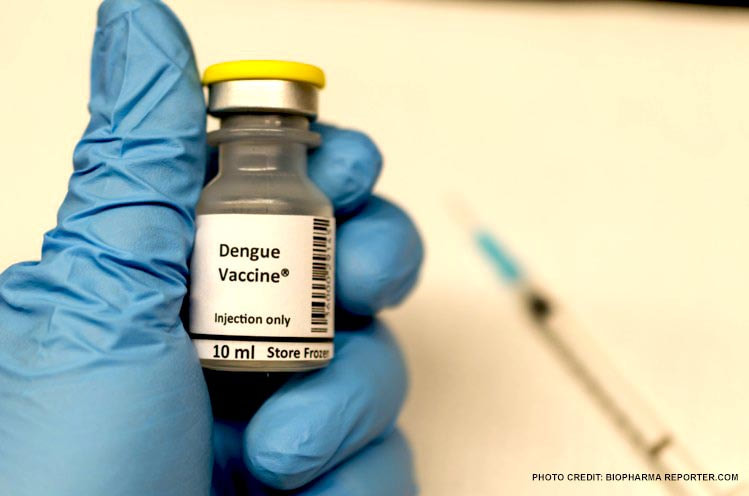
Takeda dengue vaccine candidate show long term safety results in pivotal phase 3 efficacy trial
TAK-003 is based on a live-attenuated dengue serotype 2 virus
|

|
Scientists develop prototype to detect and differentiate multiple vector-borne flavivirusesTracking secreted flaviviral protein
|