The art of wheelchair to car transfer for caregiversMarch 5, 2019 @11.38am

Getting into and out of a car can be easily done with proper transfer technique.
|
ADVERTISEMENT |
|
It’s important to know proper transfer techniques to protect yourself, so that you can continue providing the best care possible to the patient.
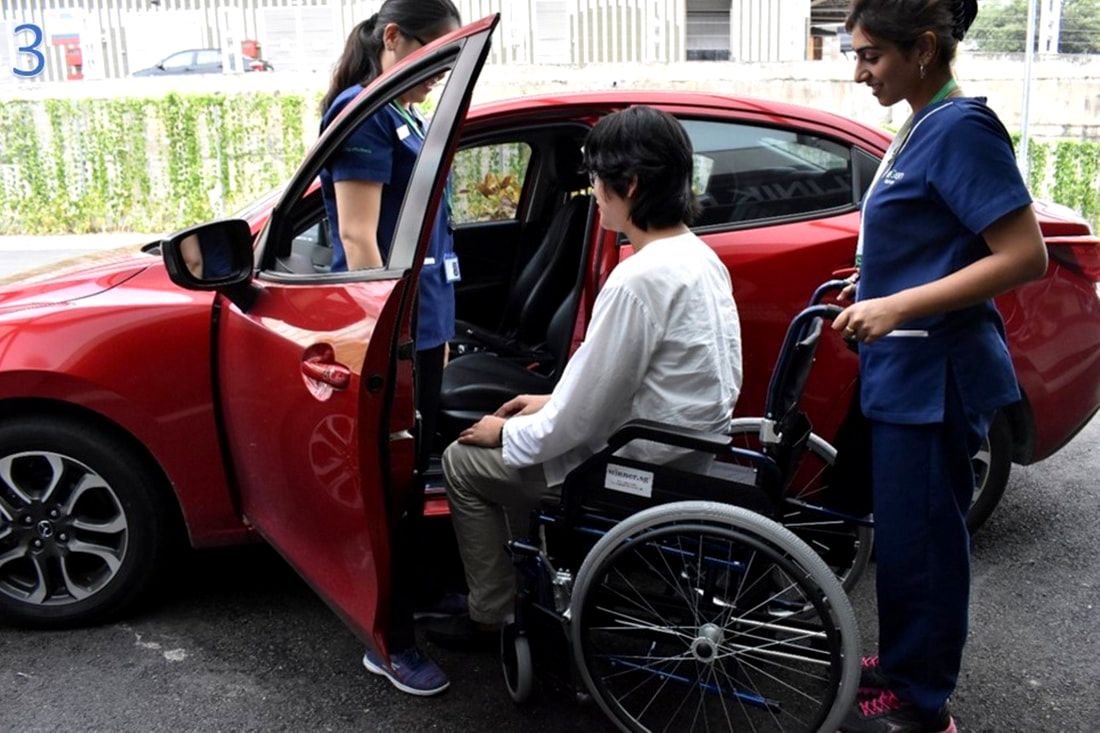
"A transfer is a method of moving a patient from one surface to another, where the patient is capable of assisting in the transfer. Getting into and out of a car can be easily done with proper transfer technique," says Chelvi Muniandy, Director of Therapy, Regen Rehab Hospital. Steps for car transfer: Prior to transferring or moving a person, inform the person what you are going to do. Get the surface the patient is moving to and the car seat as close as you can while still leaving enough room for the two of you to move. The therapist or caregiver should stand inside the open door where the door meets the car. Angle the chair 45-90 degrees to the car. Lock the brakes on the wheelchair. The foot pedals should always be swung out of the way or raised completely. Move the armrest out of the way on the side where you are transferring. Assist the user while they move towards the edge of the wheelchair seat. After they are close to the edge of the seat, they can go ahead and lean forward towards the caregiver. From this point, a stand pivot transfer or sliding board transfer may be used when transferring from wheelchair into a car seat. Next, stand close to the person you are lifting. While lifting, be sure to keep your back in a neutral position which means that your back must be arched normally and not stiff. Keep both of your knees bent, with weight placed on both your feet equally. Use your arms to support the person and use your leg muscles as you lift the person. When you turn, pivot your body by turning on one foot. Do not twist your body. Remember to keep your shoulders relaxed but not bent or hunched. If you need a lot of effort to transfer the person, strap the transfer belt around the person’s waist. Hold onto the belt as you do the transfer. If the user has weak knees you will need to line up your knees with their knees in order to provide extra support while lifting. Caretaker should guide the individual to shift their bodies towards the opened car door facing the caregiver. Once they are next to the car door, advice the user to bend their knees to allow the caregiver to assist in getting the person into the vehicle. Tips: During transfer, it would be advisable to have the patient transferred to the front passenger seat. Slide the car seat back to allow optimal room to engage the transfer. Sedan cars, with car seat almost equal the height of the wheelchair are recommended. Wheelchair used should be with detachable arm rest (arm rest & foot rest can be removed). |
EXPLORE FURTHER











|
Growing strong with age: How you can experience life-changing benefits with regular exercise |

|
Getting over retirement guiltActionable steps for a brighter outlook
|

|
Recent innovations in healthy ageingProactive assessment and preventive regimens for optimal health
|
|
Caring for elderly people with orthopaedic problems |