Screen time vs. play time: The battle shaping children’s eye health
August 25, 2025

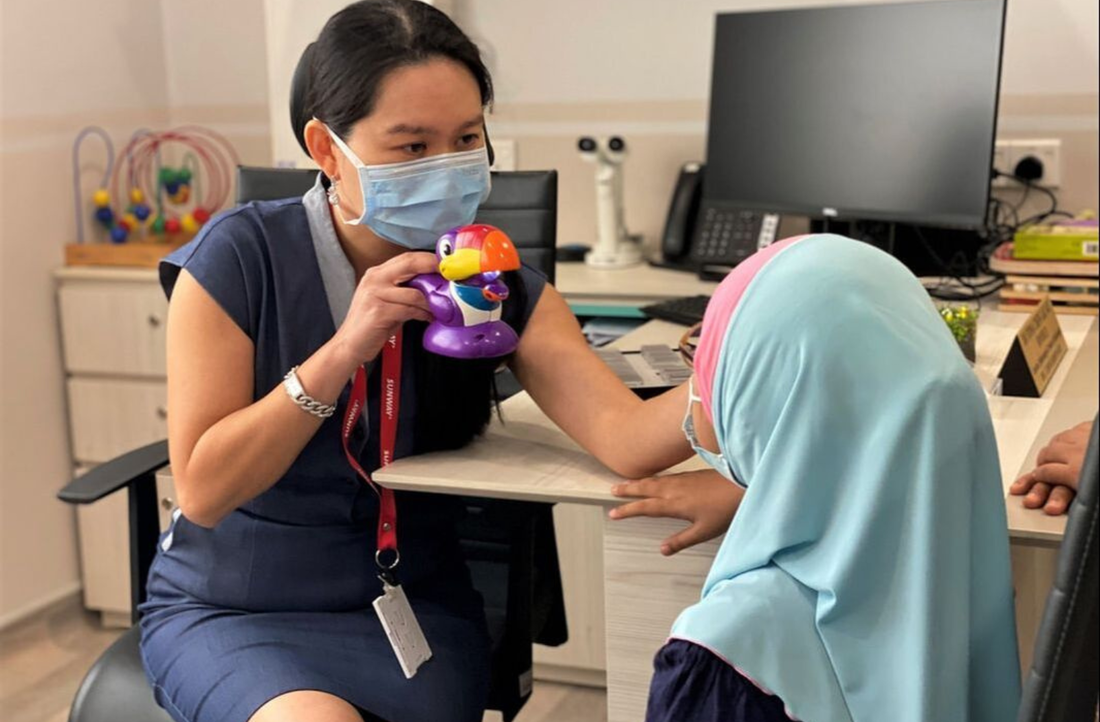
Children very rarely voice out their vision problems. Watch out for signs like squinting, frequent eye rubbing, and reading or watching screens too closely, as these may indicate refractive errors that need attention.
Vision problems are becoming increasingly common among children, yet many remain undiagnosed until they start affecting behavior, school performance or overall development. A recent study found that 22.3% of children have some form of visual impairment, with more than half of these cases linked to treatable causes.
Most of these cases stem from refractive error, a condition where light is not focused properly on the eye due to the shape of the eyeball, resulting in blurry vision. Myopia (nearsightedness) and astigmatism (a common condition that causes distortion of vision) are the most common refractive errors in children, and both are becoming increasingly prevalent. Understanding refractive errors in children Nearly one in two children are affected by refractive errors, with a local study reporting a prevalence of 47.8%. Myopia, affects 30.2% and occurs when light focuses in front of the retina, causing distant objects to appear blurry. Astigmatism, which affects 16.3%, is caused by an uneven curvature of the cornea, resulting in blurred vision at all distances. While hyperopia, or long-sightedness, is less common at 1.2% and occurs when light focuses behind the retina, making near objects appear blurry. While these conditions are common, they are often overlooked because children rarely complain of vision problems. Instead, they may adapt to their limitations, leading parents to believe nothing is wrong. Symptoms may be subtle, such as squinting to see distant objects, frequent blinking or rubbing of the eyes, or even holding books and devices unusually close to the face. While behaviours like sitting too close to the television are often mistaken for bad habits, it could indicate that a child is struggling to see clearly and may have myopia. If left untreated, refractive errors can lead to more serious vision problems, including lazy eye which causes permanent poor vision, eye alignment issues, headaches from eye strain, problem with depth perception and even difficulties in concentration. These risks are further compounded by modern lifestyle habits such as prolonged screen use, especially as reliance on digital devices has increased significantly over the years. Impact of screen time and lifestyle factors Lifestyle changes in recent years have had a notable significant impact on children’s eye health, with the shift to remote learning during the pandemic, increasing daily screen exposure. As a result, more than half of students experience headaches linked to extended periods in front of screens. Prolonged screen time is also associated with increased eyeball length, a key factor in the development of refractive errors. In view of these risks, children over the age of three are recommended to no more than one hour of screen time per day, while children under three should avoid screens entirely. Ideally, screen time should be introduced as late as possible, preferably from the age of seven. Spending more time outdoors can help protect children’s vision by giving their eyes a break from digital devices. This also allows them to focus on varying distances while exposing them to natural sunlight. Research increasingly links outdoor activities to a reduced risk of developing myopia. The adoption of the 20-20-20 rule is also encouraged, which is beneficial for people of all ages. It is a simple yet effective habit with a 20 second break for every 20 minutes of near distance work to focus on something 20 feet away. Treatment and management options Alongside these preventive habits, appropriate corrective measures are key to protecting a child’s vision. Prescription glasses remain the most effective way to correct refractive errors in children, and those who require them should wear their glasses consistently to prevent eye strain and help stabilize the refractive error. Concerns that glasses will weaken a child’s eyesight are unfounded, as the correct prescription instead helps the eye to focus properly. For older children from the age of 10 to 12, contact lenses may be introduced as an alternative, but strict hygiene must be practiced to avoid eye infections. Routine eye screening also plays an important role in maintaining children’s eye health. All children should be screened at birth, followed by a formal eye assessment at the age of three. Should there be any signs of vision problems in between, parents are encouraged to take proactive steps and have their children’s eyes assessed earlier. When detected early, many childhood eye conditions can be treated effectively, significantly improving the treatment outcome and their quality of life. The role of nutrition in eye health Nutrition is a critical yet often overlooked factor in protecting children’s vision. A balanced diet during early childhood supports optimal visual development, eye muscle coordination and overall eye function. Key nutrients such as vitamin A, lutein, zeaxanthin and omega-3 fatty acids play an essential role in maintaining clear vision and protecting the retina from harmful light exposure. Deficiencies during this stage may not only affect their vision now but also increases the risk of potential eye conditions in the future. These nutrients can be found through everyday foods such as carrots, sweet potatoes, eggs, spinach, broccoli, corn, salmon, mackerel, local favourites such as ikan tenggiri, ikan kembung, ikan patin, walnuts and chia seeds. Vitamin A deficiency can significantly impair a child’s ability to see in low-light conditions and, in severe cases, may cause permanent damage to the cornea. Insufficient lutein and zeaxanthin intake reduces the retina’s natural defence against harmful blue light, increasing its vulnerability to long-term damage. While lack of omega-3 fatty acids can hinder the development and function of the retina, affecting the clarity and efficiency of visual processing. By incorporating these nutrient-rich foods into daily meals, parents can give their children the best chance of developing strong, healthy vision that supports them throughout their lives. Early detection, supported by healthy lifestyle habits and proper nutrition, can make a significant difference in preventing and managing vision problems in children. By staying alert to subtle warning signs, scheduling regular screenings and encouraging good daily habits, parents can play a vital role in safeguarding their child’s eyesight. With timely intervention and the right care, many childhood eye conditions can be treated successfully, giving children the best possible start for a lifetime of healthy vision. |

EXPLORE FURTHER

|
Postpartum hemorrhage: A preventable cause of maternal deathMaternal obesity heightens the risk of postpartum hemorrhage
|

|
Chickenpox in children aged 3 to 6 yearsA guide for parents on symptoms, management, and prevention
|

|
A parent's guide to hearing loss in young kidsDisparities in access to hearing screening may result in hearing loss going undetected
|

|
Tackling tummy troubles: Managing functional constipation in childrenHow stress, poor diet, milk intolerance, and rushed potty training trigger functional constipation
|

|
Are all baby skin care products truly safe to use?Ingredients that can cause dryness and allergies in baby’s skin
|

|
Food allergies in children can be life threateningDoes a food diary really help?
|

|
Japan's ultimate gaming bed: Balancing entertainment and real-life for teensWhat are its impact on teenagers?
|

|
When teens speak about the opposite sex: How parents can respondGuidance for discussing opposite sex with teen without judgment
|

|
Disturbing trend on TikTok: Cracking eggs on children's foreheads for entertainmentDelicate balance between entertainment and children's emotional well-being
|

|
The ultimate hospital bag checklist for mom and babyA significant step towards a stress-free birthing experience
|

|
Ultrasound to detect abnormalities in pregnancyDetecting abnormalities during different stages of fetal development.
|

|
Postpartum hernia: A common occurrence following a C-sectionPelvic floor exercises during pregnancy
|

|
Should you swaddle your baby?We might think that it is actually uncomfortable, because we ourselves do not want to be that way
|

|
Sudden Infant Death Syndrome (SIDS): Causes, safe sleeping practices, and co-sleeping concernsCot death or crib death
|

|
Do you have enough milk to breastfeed your baby?A good latch increases milk supply
|

|
Butterfly children with skin as fragile as a butterflyEpidermolysis Bullosa causes the skin to blister - becoming fragile even at the slightest touch
|

|
Thumb sucking and pacifier use in children affects the bite says dentistThumb sucking causes the teeth to proclinate outwards
|

|
Liquids with natural sugars linked with baby bottle tooth decayChildren who suck on pacifiers dipped in sugar or syrup are equally at risk.
|

|
Debunking myths and reinforcing facts on vaccinationPerak, Terengganu and Pahang record highest number of anti-vaxxers
|

|
Is it ADHD or other developmental disorders?When one toy may not be enough
|

|
Food allergies in children can be life threateningDoes a food diary really help?
|

|
Paracetamol use in childrenToo much paracetamol can cause liver problems
|

|
Guide to winning your child's tantrums on your next road tripFive tips to ace your vacation
|

|
Is my child too short?How do you determine if your child is growing well?
|

|
Identifying Hand-Foot-And-Mouth disease in your childA contagious disease that spreads through touch, saliva and stool
|

|
Breastfeeding as a natural cure for jaundice?Breastfeeding babies lose jaundice in the third week.
|

|
Hemorrhagic disease of the newborn (HDN) as a result of Vitamin K deficiencyBleeding in infancy develops in the first days and weeks of life
|

|
What parents need to know about the 6-in-1 vaccine under the National Immunisation Program for infants and children |

|
Coronavirus: Babies vaccine schedule should not be delayedAre clinics safe? Is there a risk of catching the disease from the attending nurse or doctor?
|

|
Partner participation helps mother breastfeed longer, says studySupport helps mothers breastfeed longer
|

|
The art of babywearing: A guide to safe and convenient parentingBabywearing can be a game-changer, offering hands-free parenting
|

|
Teaching children swimming at a young age: Yay or Nay?Swimming brings lifelong benefits to children and imbue in them essential life skills.
|
|
Squint treatment for children: A life-changing experienceChildren with reduced vision may have delayed developmental milestones
|

|
Family travels over 400km to treat 11-month old son with congenital heart defectTests confirmed that he was born with two holes in his heart.
|

|
Managing scoliosis - torsional deformity of the spine in the youngIdiopathic scoliosis is more apparent during an adolescent’s growth spurt
|

|
Your developing child - How milestones play an important roleEarly experiences can influence lifelong learning and health.
|