Brain death: Nurses' duty beyond life
June 13, 2026
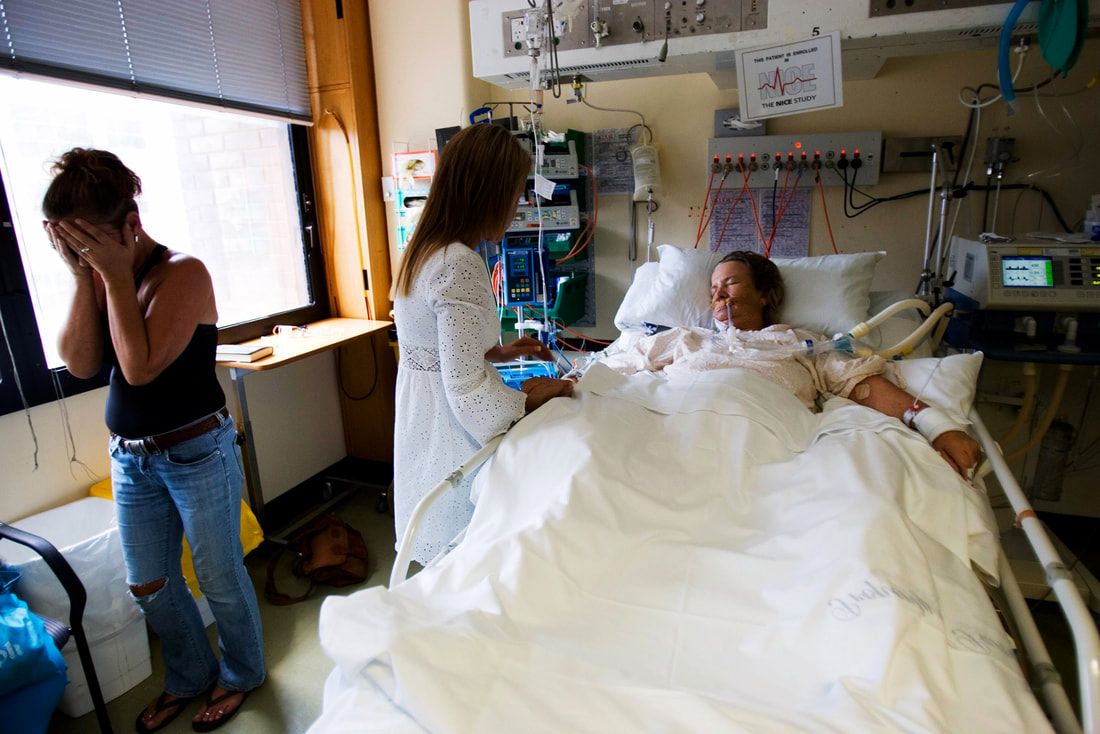
Brain death is the irreversible loss of all brain functions, including the brainstem, and is distinct from coma or a vegetative state.
Nurses working in the intensive care unit (ICU) are familiar with critically ill patients, ventilators, invasive monitoring, emergency situations, rapidly changing patient conditions, and end-of-life care. However, among all the situations encountered in the ICU, one of the most emotionally challenging and misunderstood conditions is brain death.
Many people, including family members, healthcare workers, and even newly appointed staff, struggle to understand the concept of brain death. Brain death: Why is it so challenging? Speaking during a webinar organized by the Nursing Division, Ministry of Health, Norfairuziana Tinggal, Nurse (Clinical), Queen Elizabeth Hospital, Kota Kinabalu, Sabah, said that ICU technology can temporarily maintain circulation and oxygenation. Ventilators may continue to support breathing. Medications can maintain blood pressure. The heart may continue beating for some time, and the patient's skin remains warm. To family members, these signs suggest that the patient is still alive. Families naturally ask: "How can my loved one be dead if his or her heart is still beating?" Traditional concepts of death Traditionally, people associate death with the cessation of breathing and circulation, absence of movement and responsiveness, pallor, coldness, and eventual decay. Today, machines can artificially support breathing and circulation even though the patient is already dead. Healthcare professionals therefore need a clear understanding of brain death. In the past, when breathing stopped and the heart ceased beating, death was obvious. Historically, in 1959, the term coma dépassé (a state beyond coma) was introduced by Mollaret and Goulon. It described a condition beyond coma in which patients had a complete absence of brain function. In 1968, Harvard Medical School's Ad Hoc Committee introduced the concept of irreversible coma, or brain death. This became the foundation for modern brain death criteria. In Malaysia, brain death was officially accepted in 1993. The country currently follows the Malaysian Consensus Statement on Brain Death 2024, which adheres to established medical and legal standards. What is brain death? Brain death refers to the complete and irreversible cessation of all functions of the entire brain, including the cerebral cortex and brainstem. It is important to emphasize that brain death is not a coma, nor is it a vegetative state. Brain death is irreversible. No treatment can restore brain function once brain death has occurred. Understanding the concepts of brain death The cerebral cortex is responsible for higher brain functions, including memory, thought processes, awareness, and voluntary movement. When cerebral function ceases completely, these critical activities disappear. However, isolated cerebral death alone is not equivalent to brain death. Brainstem function is essential in determining brain death because the brainstem controls consciousness and vital reflexes necessary for life. Brainstem death is identified through the loss of consciousness, absence of brainstem reflexes, and apnea. Electroencephalography (EEG) is not routinely required for confirmation. The dilemma of modern technology Modern technology enables breathing and circulation to be artificially maintained even after brain death has occurred. Although the patient is medically and legally dead, ventilators can continue to support oxygenation and circulation. Physically, healthcare providers and families may observe chest movements, a beating heart, and warm skin. Some families describe this situation as "a corpse with a beating heart." This reality creates emotional distress because many families struggle to accept the patient's death. Traditionally, death was understood as the absence of breathing and heartbeat. Healthcare workers must therefore approach brain death cases with professionalism, sensitivity, and clear communication. Why is brain death testing important? Brain death testing accurately defines death, avoids unnecessary prolongation of intensive treatment, and provides closure for families. Formal brain death determination is necessary before further decisions can be made. Brain death testing is not merely a medical process; it also carries ethical, legal, humanitarian, intellectual, and utilitarian implications. Ethical considerations Brain death is recognized as definitive clinical death. Adults diagnosed with brain death will eventually progress to asystole, often within a week despite supportive measures. Magnetic resonance imaging (MRI) findings may demonstrate diffuse cerebral swelling, tentorial and foraminal herniation, and absence of cerebral blood flow. Postmortem findings may include necrosis, cerebral oedema, and fragments of brain tissue displaced into the spinal canal. Continuing aggressive treatment after confirmed brain death increases healthcare costs and is considered ethically inappropriate. Brain death testing should therefore be conducted promptly to determine whether ICU treatment should be withdrawn. Humanitarian considerations Every individual has the right to dignity and respect. Death pronouncement should not be unnecessarily delayed. Families often experience profound emotional distress and may continue to believe that recovery is possible. As long as death has not been formally declared, families may hold onto hope for continued treatment and recovery. Healthcare professionals must communicate respectfully and compassionately to help families understand brain death. Intellectual progression in defining death Medical understanding of death has evolved over time. Previously, death was determined by the absence of pulse and breathing according to traditional concepts. Today, circulation and respiration can be artificially maintained despite irreversible loss of brain function. Consequently, the neurological criterion of death has become an accepted basis for certifying death. Utilitarian considerations ICU resources are limited. The number of beds, ventilators, and specialized personnel is finite. Continuing intensive support for patients who have been declared brain dead may deny critically ill patients with better prognoses access to potentially life-saving treatment. In addition, some brain-dead patients may become organ donors, thereby saving multiple lives. What happens physiologically? Brain death commonly follows catastrophic neurological events such as cerebrovascular accidents (CVA), traumatic brain injury (TBI), hypoxic-ischaemic brain injury following cardiac arrest, intracranial haemorrhage, or severe cerebral oedema. As intracranial pressure (ICP) rises, cerebral perfusion pressure decreases. Eventually, intracranial pressure exceeds mean arterial pressure, causing cerebral blood flow to cease. Without oxygen and blood supply, brain tissue undergoes irreversible injury. Brainstem herniation may occur, resulting in permanent loss of brain function. Patients may initially experience sympathetic storms characterized by severe hypertension, tachycardia, and arrhythmias. Subsequently, hypotension, hypothermia, hormonal failure, and cardiovascular collapse may develop. For this reason, the management of brain-dead patients is complex. Who declares brain death? According to the Malaysian Consensus Statement on Brain Death 2024, two specialists are required to determine brain death. These include accredited National Specialist Register (NSR) specialists experienced in diagnosing brain death, preferably anesthesiologists, pediatric anesthesiologists, intensivists, pediatric intensivists, neurologists, pediatric neurologists, neurosurgeons, pediatric neurosurgeons, pediatricians, or internal medicine specialists. Importantly, clinicians involved in diagnosing brain death should not be members of the transplant team to avoid conflicts of interest. Diagnosis of brain death Several preconditions must be fulfilled. The patient must be in a deep coma, apneic, and ventilated for at least 12 hours. The cause of coma must be established. Brain imaging, preferably a computed tomography (CT) scan, is highly recommended. The patient must have irremediable brain damage. Hemodynamic stability must also be ensured, meaning blood pressure and circulation are adequately maintained naturally or through medical support. Exclusions to brain death testing Brain death testing should not proceed when coma is caused by reversible conditions. These include metabolic or endocrine disturbances, drug intoxication, and primary hypothermia, defined as a core temperature below 35°C. Certain neurological disorders that can mimic brain death must also be excluded, including Guillain-Barré syndrome, locked-in syndrome, botulism, and organophosphate poisoning. Brain death testing should not be performed in patients with coma of undetermined cause or in preterm neonates. Brain death testing Before testing, the patient must have a Glasgow Coma Scale (GCS) score of 3/15 and be deeply unconscious, unresponsive, and unreceptive. There should be no spontaneous motor activity, coordinated eye movements, or epileptic seizures. In newborns, sucking and rooting reflexes should be absent. Assessment of brainstem reflexes Brainstem reflexes are assessed systematically. These include pupillary light reflex, oculocephalic reflex (doll's eye reflex), motor responses in cranial nerve distribution, corneal reflex, vestibulo-ocular reflex (cold caloric test), oropharyngeal reflex, and tracheobronchial reflex. Pupillary light reflex Cranial nerves II and III are assessed. The pupils should show no constriction in response to bright light and remain fixed despite illumination. The cornea is gently stimulated using a cotton swab or saline instillation. Normally, blinking occurs. In brain death, no blinking response is observed. Oculocephalic reflex This test should only be performed when cervical spine injury has been excluded. Normally, the eyes move opposite to head movement. In brain death, the eyes move passively with the head, indicating absent brainstem function. Vestibulo-ocular reflex The cold caloric test involves instilling at least 50 mL of ice-cold water into the external auditory canal. Eye movements are observed for at least one to five minutes before testing the opposite side. Normally, the eyes deviate toward the irrigated ear. In brain death, no eye deviation occurs. Motor response assessment There should be no jaw reflex and no grimacing in response to deep pressure applied to the nail bed, supraorbital ridge, or temporomandibular joint. Oropharyngeal and tracheobronchial reflexes There should be no gag response following stimulation of the posterior pharynx. Similarly, no cough response should occur during bronchial suctioning. Apnea testing The apnea test is performed last. Prerequisites include cardiovascular and respiratory stability, with a baseline PaCO₂ of 35–45 mmHg. During testing, ventilatory support is temporarily discontinued while carbon dioxide levels are allowed to rise. A positive apnea test is defined by the complete absence of respiratory effort despite elevated PaCO₂ levels. Nursing responsibilities ICU nurses play a significant role throughout the entire brain death determination process. The first responsibility is patient identification. Nurses should recognize patients with severe irreversible brain injury, including those with major traumatic brain injury, massive stroke, or post-cardiac arrest hypoxic-ischemic brain injury. Early recognition facilitates timely referral and preparation for brain death testing. The official time of death is documented as the time of completion of the second brain death examination. If the patient is eligible, nurses should refer the case to the hospital's tissue and organ procurement team to initiate organ donation procedures. Preparation of equipment Nurses should prepare oxygen catheters, a pupilometer, tongue depressor, suction catheters, an otoscope, and a laryngoscope. In selected cases, family members may be present during testing. Proper preparation ensures a smooth and uninterrupted process. Nursing care of brain-dead donors When a patient is declared brain dead and qualifies for organ donation, referral to the tissue and organ procurement team should occur promptly. Brain death not only confirms death but may also offer the opportunity to save the lives of others through organ donation. Nurses therefore play critical roles in identifying potential donors, preparing for testing, assisting during assessment, and facilitating referrals. Although brain death has been confirmed, ongoing resuscitative measures are required to preserve organ viability for transplantation. Post-declaration management Following brain death declaration, nurses must continue to provide holistic care. Family support, bereavement care, and compassionate communication remain essential nursing responsibilities. Initial donor resuscitation During initial donor resuscitation, nurses should establish two reliable intravenous lines and maintain central venous and arterial access. For heart donors, pulmonary artery catheterization may be required. Prompt and effective resuscitation optimises organ perfusion and preserves organ function for successful transplantation. Brain death represents one of the most challenging situations encountered in critical care nursing. Beyond technical competence, nurses provide clarity, compassion, dignity, and hope. By understanding brain death and fulfilling their responsibilities with professionalism and empathy, nurses continue caring beyond life itself—supporting grieving families while helping to give others a second chance at life. |
EXPLORE FURTHER
|
Ten-year national nursing strategy launching in June to strengthen healthcare workforceBurnout, shortages and complex care demands drive urgent nursing system reform
|

|
Three distinguished nurses honored for service, education, and community health leadershipAsiah Supaat, Datin Dr Norkiah Arsad, Suriana Yazid receive Nursing Icon awards
|

|
WHO updates: What role do nurses play in achieving universal health coverage?
Exploring nursing laws and leadership in the Western Pacific Region
|
|
Is nursing losing its appeal to the younger generation?How can we attract youth to the nursing profession?
|
|
Global healthcare faces inequities; nurses essential for universal health coverageUrgent call for fair pay and better conditions for healthcare workers
|

|
Civil servants, including nurses, get 15% pay raise starting December 1, 2024Addressing Malaysia's nursing crisis with strategic policy reforms and educational enhancements
|

|
Nursing in the age of uberization: Revolutionizing healthcare deliveryHow innovative models are transforming nursing practice across Asia
|
|
Balancing nursing technology and skills: Where does Malaysia stand?Insights from regional leaders: Upskilling nurses through training programs, simulation labs, EMR and AI
|