Experts urge better health literacy for responsible self-care across Asia-Pacific
July 24, 2026
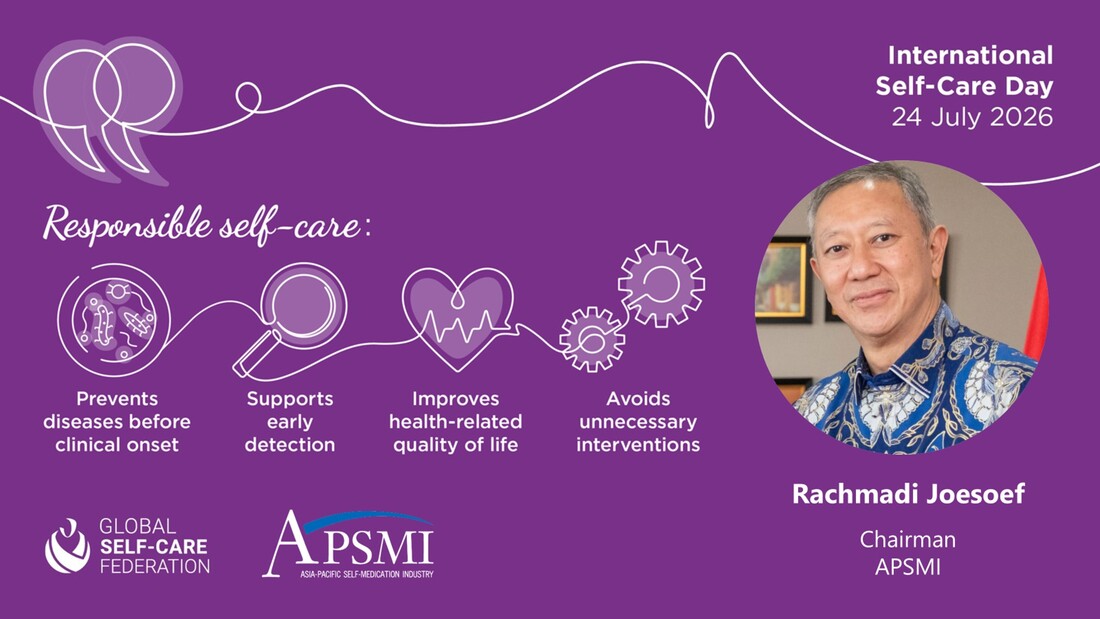
Responsible self-care means choosing appropriate medicines, reading labels carefully, following directions, and knowing when to seek professional healthcare advice—not self-medicating indiscriminately.
Jakarta – As healthcare systems across many countries in Asia-Pacific continue to face growing challenges, strengthening health literacy has become increasingly important in enabling individuals to make informed decisions about their health.
In celebration of International Self-Care Day, APSMI (the Asia-Pacific Self-Medication Industry) highlights the importance of public education, responsible self-medication, and multi-sectoral collaboration as key pillars for strengthening healthcare systems across the Asia-Pacific region. Self-care is defined as the ability of individuals, families, and communities to promote health, prevent disease, maintain well-being, and manage health conditions, with or without the support of healthcare professionals. When supported by adequate health literacy, self-care enables individuals to appropriately manage minor health conditions as a first line of care while recognizing when professional medical consultation is necessary. The World Health Organization recognizes self-care interventions as part of how the world reaches health for all and advances universal health coverage, the goal of everyone accessing care without financial hardship. According to Rachmadi Joesoef, Chairman of the Asia-Pacific Self-Medication Industry (APSMI), "Growing evidence demonstrates that responsible self-care delivers significant benefits not only for individuals but also for healthcare systems and economies. According to the Socio-Economic Research 2026 report by the Global Self-Care Federation (GSCF), responsible self-care:
It is further estimated that with policies supporting improved health literacy, access to quality-assured over-the-counter medicines, and enabling regulatory frameworks, the social and economic benefits of self-care could increase as much as 50% by 2040." According to Greg Perry, Director-General, Global Self Care Federation (GSCF), "When fully integrated, self-care delivers a profound return on investment: it empowers individuals, supports communities, and stands as the 'best buy' for financially strained healthcare systems globally." Every minor case handled at home is a serious case seen sooner. Selfcare protects scarce healthcare workers capacity by empowering individuals to manage their own minor ailments, letting doctors focus on complex cases and freeing more resources. However, APSMI emphasizes that self-medication does not mean taking medicines indiscriminately. Responsible self-care requires adequate knowledge, including the ability to select appropriate over-the-counter medicines, understand product labels and package information, follow directions for use, and recognize signs and symptoms that require consultation with healthcare professionals. "Responsible self-care begins with health literacy. When people have the knowledge and confidence to appropriately manage minor health conditions, they not only improve their own health outcomes but also help healthcare systems focus resources on patients with more complex medical needs. Strengthening health literacy is a shared responsibility that requires close collaboration among regulators, healthcare professionals, industry, academia, and communities," added Rachmadi Joesef. The call also marks the lead-up to the APSMI Self-CARER Bali Summit 2026, a regional forum that will bring together regulators, policymakers, Global and Regional healthcare experts, and industry leaders from across Asia-Pacific region to discuss strengthening the self-care ecosystem through evidence-based guidelines, improved health literacy, and greater access to safe, high-quality self-care products. |
EXPLORE FURTHER
|
India contains Nipah virus outbreak as Asian nations increase health screeningsRegional surveillance intensifies following confirmed cases and precautionary travel measures
|
|
Australia’s ‘Super-K’ flu strain sparks record global influenza outbreaksFast-spreading H3N2 variant emerges after prolonged flu season, raising global surveillance concerns
|
|
Global study reveals massive hidden health burden from violence against women and childrenIntimate partner violence drives severe anxiety, self-harm, and deadly outcomes
|
|
San Francisco sues food giants for marketing harmful ultra-processed productsOne of the first US government lawsuits targets food giants including Kraft Heinz, Mondelez International, and Coca-Cola
|