Inflammatory arthritis: Causes, symptoms, diagnosis and treatment approaches
February 16, 2026
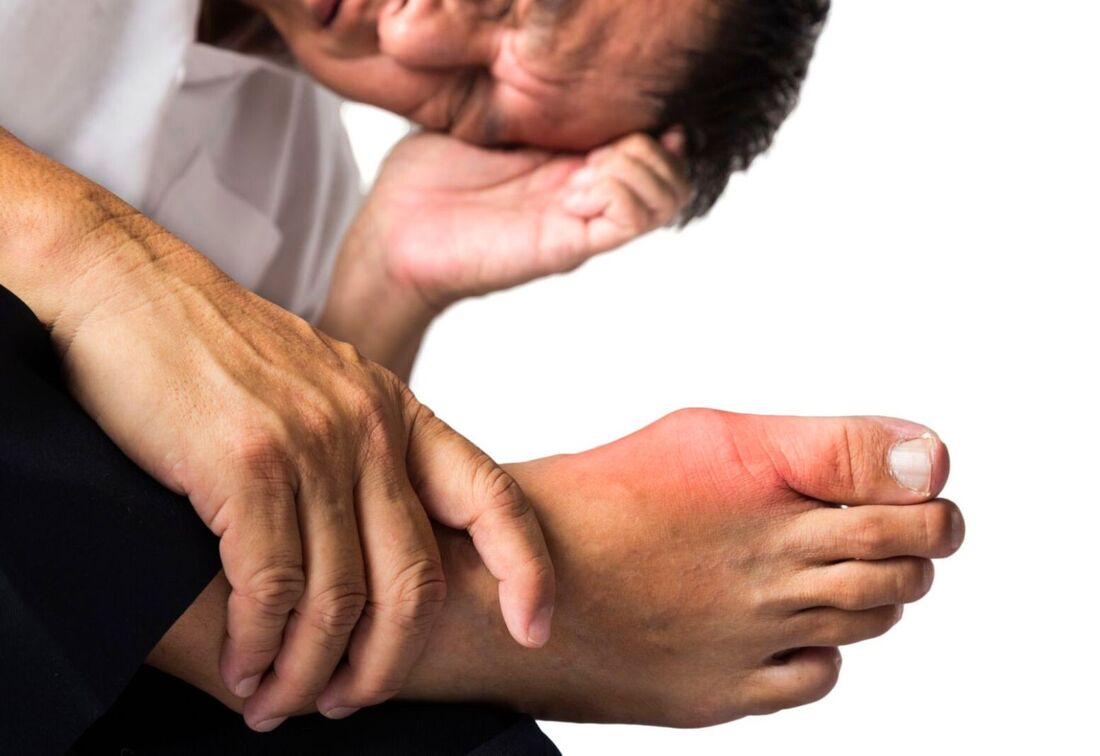
Gout often starts with sudden, severe swelling in one joint, but untreated flares can become frequent and resemble chronic inflammatory arthritis.
Arthritis simply means inflammation in the joints. The most common forms of inflammatory arthritis are autoimmune-mediated conditions.
“This is from rheumatoid arthritis, connective tissue diseases such as systemic lupus erythematosus, Sjögren’s syndrome, mixed connective tissue disease, and systemic sclerosis. It also includes seronegative spondyloarthropathy such as psoriatic arthritis, axial spondyloarthritis, reactive arthritis and inflammatory bowel disease–associated arthropathy. Crystal-induced arthritis includes gout as well as pseudogout, or calcium pyrophosphate dihydrate (CPPD). Infective causes include bacterial, viral, fungal, as well as mycobacterial infections. Non-inflammatory causes include primary and secondary osteoarthritis, which is probably the most common form of arthritis. There are also traumatic causes, as well as rare metabolic causes,” explains Dr Lydia Pok Say Lee, Consultant Physician and Rheumatologist, Sunway Medical Centre, Sunway City. The onset of inflammatory arthritis typically begins in younger individuals, between 30 and 55 years old. However, rheumatoid arthritis may still develop at 70 years of age. Determining the age at symptom onset is important. Systemic lupus erythematosus (SLE) may occur in childhood and extend into adulthood up to 55 years. Axial spondyloarthropathy often presents with back pain beginning before the age of 25. Gout commonly begins between 30 and 50 years old, although it is increasingly seen in younger individuals, even in their early 20s. CPPD or pseudogout tends to affect older patients. The risk of gout increases with age and is higher in post-menopausal women. Predominant female diseases include rheumatoid arthritis, systemic lupus erythematosus, and osteoarthritis, while predominant male diseases include gout and axial spondyloarthropathy. Psoriatic arthritis affects both sexes equally. Gout is generally rare in women of child-bearing age. Common causes of generalized musculoskeletal pain include primary and secondary fibromyalgia, endocrine disorders such as hypothyroidism and hyperparathyroidism, and certain medications including statins, zidovudine, fluoroquinolones, and chloroquine. Articular pain originates within the joint, whereas periarticular pain arises from surrounding structures such as tendons, ligaments, bursae, and muscles. Inflammatory or non-inflammatory Classic features of inflammation — swelling, pain, warmth, and redness — are present in inflammatory arthritis, whereas non-inflammatory forms typically present with pain alone. In connective tissue diseases such as SLE, patients often report inflammatory joint pain without obvious swelling. In rheumatoid arthritis, both pain and swelling are present. Systemic symptoms like fatigue are prominent in inflammatory arthritis but absent in degenerative arthritis. Inflammatory arthritis usually has an insidious onset. Degenerative arthritis develops gradually and worsens with age. Body stiffness is a hallmark of inflammatory arthritis and often lasts at least an hour or longer. In contrast, stiffness in non-inflammatory arthritis, such as osteoarthritis, is brief and resolves within 5–10 minutes once movement begins. Morning symptoms are worse in inflammatory arthritis, while non-inflammatory symptoms worsen toward the end of the day. Inflammatory pain improves with activity, whereas non-inflammatory pain worsens. Onset and duration If arthritis is inflammatory in nature, it is important to determine whether it is acute, chronic, or episodic. Acute arthritis may result from infection, trauma, gout or CPPD and sometimes reactive arthritis. Chronic arthritis is commonly associated with autoimmune-mediated diseases. Both acute and chronic forms tend to have persistent daily symptoms. Episodic forms include gout and palindromic rheumatism. Natural history of gout Gout usually begins as monoarticular or episodic arthritis with classical painful swelling of a single joint. Without treatment, attacks may progress to polyarticular involvement. Flares become more frequent and may resemble chronic inflammatory arthritis such as rheumatoid arthritis. Early attacks may occur months or years apart, but over time they may occur weekly. Although initially monoarticular, late-stage gout can mimic polyarthritis. Evaluating the number of joints involved, their distribution, and symmetry helps determine the pattern. Systemic and extra-articular features assist in differentiating forms of inflammatory arthritis. Constitutional symptoms such as fatigue, feverishness, weight loss, and loss of appetite are common in untreated inflammatory disease. Gastrointestinal symptoms consistent with inflammatory bowel disease — including bloody diarrhea, anemia, abdominal pain, weight loss, ulcerative colitis, or Crohn’s disease — may be associated with enteropathic arthropathy, a chronic inflammatory joint disease linked to inflammatory bowel disorders. Infections may follow viral or bacterial illnesses, diarrheal diseases, or triggers such as salmonella, shigella, campylobacter, sexually transmitted infections, or chikungunya. Post-chikungunya arthritis may persist for months to years after the initial febrile illness. Enthesitis Entheses are the insertion sites of tendons, ligaments, fascia, or capsules to bone and are frequently exposed to repeated biomechanical stress. Common sites include the medial and lateral epicondyles, Achilles tendon, and plantar fascia. Examination involves inspection for redness and swelling and palpation for tenderness. Dactylitis (sausage digits) presents as diffuse swelling of the fingers or toes and is characteristic of spondyloarthropathies. It may be acute, with warmth and tenderness, or chronic without obvious inflammatory changes. Examination includes checking for uniform swelling, redness, and tenderness. Cutaneous lupus Types of cutaneous lupus erythematosus include:
Psoriasis Psoriasis is a chronic autoimmune condition with five main types: plaque, guttate, pustular, inverse, and erythrodermic. Plaque psoriasis is the most common. Important examination sites include the scalp, elbows, knees, and nails. Nail changes may resemble tophi. Tophi occur only in chronic, untreated gout and develop gradually over months or years, typically over joints affected by gout. In neglected cases, they may appear anywhere, including fingers and earlobes. Investigation Blood tests Blood tests are used to assess inflammatory markers. Rheumatoid factor is not specific and may increase with age. A positive rheumatoid factor does not necessarily indicate rheumatoid arthritis. Approximately 20% of patients with rheumatoid arthritis are seronegative, meaning antibodies are absent despite typical symptoms. For gout, serum uric acid levels must be interpreted cautiously. During acute attacks, uric acid may deposit in joints, causing falsely low blood levels. Testing is best performed at least two weeks after flare resolution. Imaging X-ray changes may lag behind clinical findings by at least a year. Ultrasound is increasingly used as it is more sensitive than X-rays and allows evaluation of joint effusion, tendons, and ligaments. MRI is the most sensitive imaging modality for detecting active inflammation and is particularly useful in assessing non-radiographic disease. Treatment Nonsteroidal anti-inflammatory drugs (NSAIDs) such as diclofenac, diclofenac SR, meloxicam, celecoxib, and etoricoxib are commonly used. Adjunct measures include rest, cold compresses, topical NSAIDs, and physiotherapy with low-impact exercises such as swimming and cycling. Maintaining a normal BMI reduces stress on weight-bearing joints. Dietary restriction is generally unnecessary except in gout, where a low-purine diet is recommended. Definitive management Inflammatory arthritis, including rheumatoid arthritis, seronegative spondyloarthropathy, and connective tissue diseases, are chronic and incurable but manageable with Disease-Modifying Antirheumatic Drugs (DMARDs), which address the underlying disease process. Steroids and NSAIDs help control inflammation, while DMARDs target the root cause. Treatment is long term. In gout, managing flares is important, but determining the need for long-term urate-lowering therapy such as allopurinol or febuxostat is equally crucial. Indications include two or more flares per year, tophi formation, or radiographic joint damage. Early diagnosis and timely initiation of DMARDs improve function, prevent radiographic damage, and reduce long-term disability. Many patients are in their working years, and effective treatment helps prevent joint damage, disability, and loss of income. |
EXPLORE FURTHER

|
Biosimilars: The game-changer in arthritis treatmentAffordable alternative to biologics offers hope to those suffering from debilitating joint conditions
|

|
A knee-d for surgery? How knee osteoarthritis can be managed and treatedRheumatoid arthritis, gout or metabolic diseases at heightened risk
|

|
Reduce the risk of osteoarthritis with good nutritionTypes of low-impact exercises to reduce joint stress and combat obesity-related osteoarthritis
|

|
Is it rheumatoid arthritis or osteoarthritis? What's the difference?From joint involvement to treatment approaches
|

|
Get a grip on psoriatic arthritisOvercoming daily challenges: Living with severe psoriatic arthritis
|

|
Understanding rheumatoid arthritis in young adultsRecognizing the early warning signs
|