HEALTHCARE TODAY
  • IN THE SPOTLIGHT
    • MALAYSIA HEALTH & POLICY NEWS
    • GLOBAL HEALTH NEWS
  • HEALTH CONDITIONS
    • ANTIMICROBIAL RESISTANCE
    • ARTHRITIS
    • ASTHMA
    • BACK PAIN
    • BRAIN DISORDERS
    • BREAST CANCER
    • CANCER
    • CARDIOVASCULAR DISEASE
    • CERVICAL CANCER
    • CORONAVIRUS DISEASE (COVID-19)
    • DEMENTIA
    • DENGUE
    • DENTAL PROBLEMS
    • DIABETES
    • DRUG ABUSE
    • ECZEMA
    • EPILEPSY
    • EYE
    • FIBROIDS
    • GASTROINTESTINAL DISEASES
    • INFLUENZA (FLU)
    • HEADACHES & MIGRAINES
    • HEPATITIS
    • HIV & AIDS
    • JOINT PAIN
    • KIDNEY DISEASE
    • LUNG CANCER
    • LUPUS
    • MELASMA
    • MENTAL HEALTH
    • MOUTH-AND-TEETH
    • OBESITY
    • OSTEOPOROSIS
    • OVARIAN DYSFUNCTION: UNDERSTANDING PREMATURE OVARIAN FAILURE, POLYCYSTIC OVARY DISEASE AND INFERTILITY
    • SEXUAL & REPRODUCTIVE HEALTH
    • SKIN CONDITIONS
    • SLEEP
    • STROKE
  • DISABILITIES & SPECIAL ABILITIES
    • ADHD and ADD
    • AUTISM SPECTRUM DISORDER
    • BLINDNESS & VISION IMPAIRMENT
    • CEREBRAL PALSY
    • DOWN SYNDROME
    • RARE DISEASES
  • NURSING RESOURCES
  • DIGITAL HEALTH
  • HEALTH PRODUCTS & SERVICES
  • RELATIONSHIPS
  • FAMILY HEALTH & PARENTING
  • EMPOWERING WOMEN
  • MEN'S WELLNESS
  • GOLDEN YEARS
  • ACTIVE LIFE HUB
  • NUTRITION
  • COMPLIMENTARY MEDICINE
  • HUMANITARIAN & COMMUNITY HEALTH
  • AMBULANCE AND FIRST AID GUIDE
  • Community clinics/ Klinik Komuniti
  • Government Dental Clinics / Klinik Pergigian Kerajaan
  • ABOUT US
Healthcaretoday, Dr Kheng Kien Soo, Klinic Dr Kheng, Cancer, chemotherapy, oncologic care, tumors, hyperinsulinemia, metabolism, metabolic disease, sugar, refined carbohydrates, cancer risk,

Is excessive sugar and refined carbohydrate intake linked to cancer?

March 27, 2026

Healthcaretoday, Dr Kheng Kien Soo, Klinic Dr Kheng, Cancer, chemotherapy, oncologic care, tumors, hyperinsulinemia, metabolism, metabolic disease, sugar, refined carbohydrates, cancer risk,
Hyperinsulinemia—driven by refined carbohydrates and sugar—is linked to obesity, sedentary lifestyle, and type 2 diabetes, all established cancer risk factors.
Healthcaretoday, Dr Kheng Kien Soo, Klinic Dr Kheng, Cancer, chemotherapy, oncologic care, tumors, hyperinsulinemia, metabolism, metabolic disease, sugar, refined carbohydrates, cancer risk,
By Dr Kheng Kien Soo, Family physician,
Anti-ageing / Aesthetician;
Clinic Dr Kheng,
​Kota Kinabalu, Sabah
Modern medicine has achieved remarkable advances in treating cancer. Surgery, radiotherapy, and chemotherapy remain the cornerstones of oncologic care, and for many patients, these interventions are lifesaving. Yet, despite these successes, a troubling reality persists: long‑term success rates for many solid tumors remain low, and the quality of life during and after treatment can be devastating.

Conventional chemotherapy often falls short for solid tumors for several reasons:
  • Solid tumors are composed of heterogeneous cell populations, many of which divide slowly and reside in the resting phase of the cell cycle, making them inherently less susceptible to agents that target rapid division.
  • Chemotherapy does not correct the tumor microenvironment; in fact, it may worsen the pro‑inflammatory, pro‑angiogenic conditions that fuel malignancy.
  • Rather than eliminating cancer stem cells (CSCs), conventional agents can inadvertently enrich this population.
  • Acquired resistance to chemotherapeutic agents is the rule, not the exception.

The result is a high recurrence rate and significant treatment‑related morbidity. These limitations demand a rethinking—one from eradicating the seed to restoring the soil.

In the evolving landscape of oncology, a fundamental question is emerging: Are we focusing too heavily on the "seed" while ignoring the condition of the "soil"? 

In a compelling new analysis, Dr Salaheldin Halasa and his distinguished co-author Dr Robert Goldman challenge the prevailing genetic-centric view of cancer, proposing a paradigm shift toward understanding the metabolic, hormonal, and immune determinants that govern malignancy. Their work posits a simple yet profound analogy: Hyperinsulinemia is the soil; cancer is the seed.

The terrain, not just the seed
For decades, the war on cancer has largely been a battle against genetic mutations and clonal evolution. While these factors—the "seed"—are undeniably critical, Drs Halasa and Goldman argue that they do not tell the whole story.

Traditional oncology concentrates almost exclusively on eradicating malignant cells after they have emerged—the “seed”—while largely neglecting the host environment that allowed those seeds to take root, evade immune destruction, and thrive.

Restoring the body’s metabolic balance—by reversing hyperinsulinemia
Hyperinsulinemia, or chronically elevated insulin levels, does not initiate cancer on its own. However, it acts as the biological terrain that prepares the body for malignancy. It creates an environment characterized by sustained growth signaling, metabolic inflexibility, immune dysfunction, angiogenesis, and fibrosis. In this primed soil, oncogene seeds are far more likely to take root, evade immune destruction, and expand.

The insight carries implications far beyond oncology. Unlike cancer itself, hyperinsulinemia is detectable early, measurable, and—most importantly—reversible.

The authors emphasize that metabolic reprogramming is not a permanent state; it is reversible. Traditional oncology has excelled at eradicating malignant cells after they emerge. While this approach has produced remarkable advances, it often fails to address the host environment that enabled malignancy in the first place.

According to Drs Halasa and Goldman, altering the metabolic terrain may be as important as targeting the tumor itself. Interventions that reduce insulin signaling and restore mitochondrial function have demonstrated significant potential. 

These include:
  • Carbohydrate restriction and fasting protocols to lower circulating insulin
  • Activation of AMPK through exercise and caloric restriction
  • Circadian alignment to optimize hormonal signaling
  • Targeted physical activity to improve metabolic flexibility

When these interventions are applied, clinical data suggest a restoration of oxidative metabolism, reactivation of autophagy, improvement in immune surveillance, and subsequent suppression of tumor growth.

Perhaps the most actionable insight from this work is the identification of hyperinsulinemia as a powerful, early biomarker. While we often wait for tumors to appear on scans or for genetic markers to manifest, hyperinsulinemia can be detected years before disease onset using existing, cost-effective laboratory tools.

The notion that cancer is fundamentally a metabolic disease is not new. In 1931, Dr Otto Warburg received the Nobel Prize for his discovery that cancer cells exhibit a unique form of energy metabolism: they rely on aerobic glycolysis (the breakdown of glucose to lactate) even in the presence of oxygen. Warburg summarized his findings succinctly: “The primary cause of cancer is the replacement of the respiration of oxygen in normal body cells by fermentation of sugar.” In other words, all normal cells are obligate aerobes, while cancer cells behave as partial anaerobes, meeting a large portion of their energy needs through glucose fermentation.

Building on Warburg’s work, Dr Thomas Seyfried—author of Cancer as a Metabolic Disease—has advanced the concept that cancer is not primarily driven by mutations but by defects in mitochondrial energy metabolism. From this vantage point, the goal shifts from simply killing cancer cells to restoring normal cellular respiration, thereby depriving malignant cells of their preferred fuel.

The central role of hyperinsulinemia
If cancer cells are addicted to glucose, then the hormonal environment that governs glucose availability becomes a critical determinant of cancer risk and progression. Hyperinsulinemia—chronically elevated insulin levels—is not cancer itself, but it creates the biological conditions that allow malignancy to flourish.

Insulin and insulin‑like growth factor‑1 (IGF‑1) act as potent growth signals, activating the PI3K/Akt/mTOR pathway, which drives proliferation, inhibits apoptosis, and promotes angiogenesis. 

Moreover, hyperinsulinemia is tightly linked to obesity, sedentary lifestyle, and type 2 diabetes—all established cancer risk factors. Higher circulating C‑peptide, a marker of long‑term insulin secretion has been independently associated with increased cancer risk.

Recent studies underscore the clinical relevance. In a study of stage III colon cancer patients, higher dietary glycemic load was associated with increased recurrence and mortality. Yuan and colleagues reported that, among colorectal cancer patients, those in the highest quintile of dietary insulin load had a hazard ratio for cancer‑specific mortality of 2.82 (95% CI: 1.20–2.75; p = 0.006) compared with the lowest quintile.

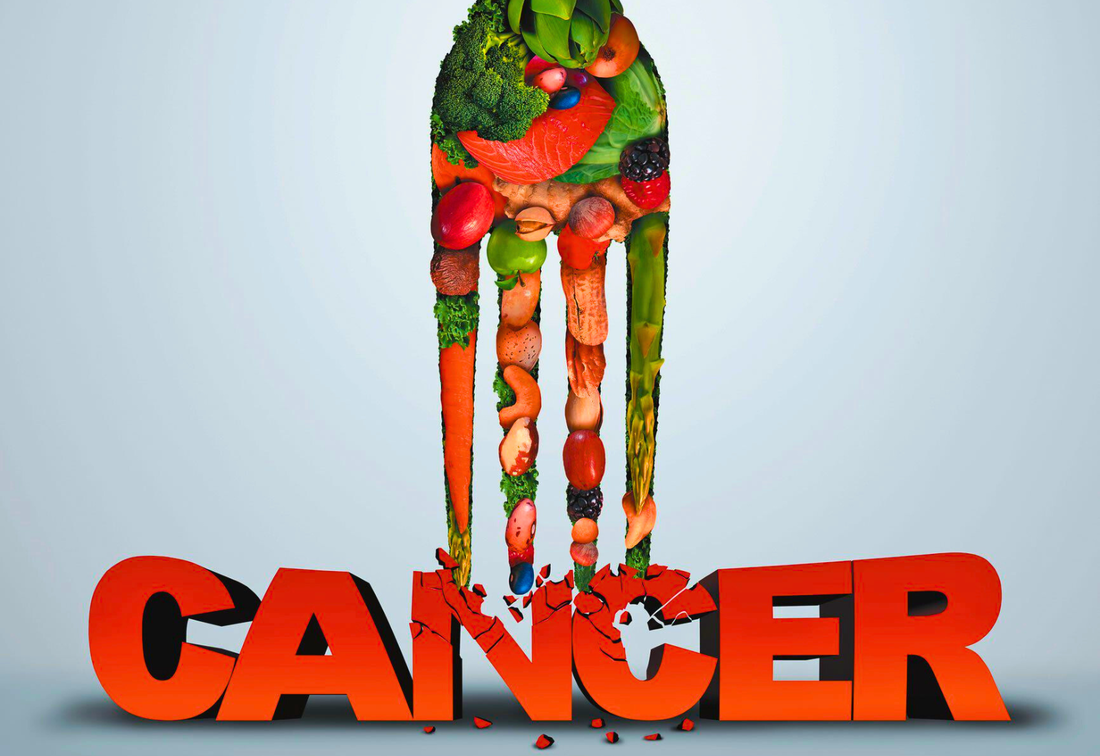
It is that simple: no dietary sugar, no cancer, it seems. But more precisely, hyperinsulinemia—driven by refined carbohydrates and sugar—is the soil in which cancer seeds germinate.

Modifying the metabolic terrain: Dietary and lifestyle interventions
Because hyperinsulinemia is reversible, it represents one of the most powerful opportunities for both cancer prevention and adjunctive treatment.

1. Dietary energy restriction
​Numerous studies show that dietary energy restriction—without malnutrition naturally lowers circulating glucose and insulin, reduces IGF‑1, and suppresses tumor growth across multiple types, including breast, brain, colon, pancreas, lung, and prostate. Importantly, calorie restriction targets the IGF‑1/PI3K/Akt/HIF‑1α signaling pathway, which underlies several cancer hallmarks. It also downregulates inflammation and tumor angiogenesis.

2. The ketogenic diet (KD) is a high‑fat, low‑carbohydrate, adequate‑protein regimen. A classic 4:1 KD delivers 90% of calories from fat, 8% from protein, and only 2% from carbohydrate. By drastically limiting glucose availability while providing ketone bodies—which normal cells can use efficiently but cancer cells cannot—the KD exploits the metabolic vulnerability of malignant cells.

Variations include the medium‑chain triglyceride (MCT)‑based KD and the modified Atkins diet. MCTs are rapidly absorbed and converted to ketones, allowing for greater carbohydrate flexibility while maintaining therapeutic ketosis.

3. Intermittent fasting and autophagy
Fasting stimulates autophagy—the cellular process of clearing damaged mitochondria, misfolded proteins, and senescent cells. 

Intermittent fasting (time‑restricted eating) is arguably the most effective non‑pharmacologic method to activate autophagy and improve insulin sensitivity. Recent evidence suggests that fasting can also enhance the response to chemotherapy across multiple tumor types (glioma, breast, colon, pancreatic, hepatocellular, lung) by:
  • Enhancing DNA repair in normal cells but not in malignant cells.
  • Improving autophagy‑mediated protection against organelle damage.
  • Reducing regulatory T cells while enhancing CD8⁺ T‑cell stimulation.
  • Promoting apoptosis selectively in cancer cells.

Pharmacologic support: Berberine and metformin
In addition to dietary strategies, specific pharmacologic agents can further reduce insulin signaling and activate anticancer pathways. Berberine, a plant alkaloid with a long history of use, exerts multiple anticancer effects:
  • Reduces cancer cell growth and prevents metastasis.
  • Induces apoptosis and activates autophagy.
  • Modulates the gut microbiota, increasing the Firmicutes/ Bacteroidetes ratio and beneficial taxa such as Akkermansia muciniphila.

A randomized, double‑blind study demonstrated that berberine 300mg twice daily significantly reduced the risk of recurrent colorectal adenoma following polypectomy. Preclinical and clinical data suggest potential benefit in breast, lung, gastric, liver, colorectal, ovarian, cervical, and prostate cancers. Hypoglycemia has not been reported with berberine, but blood glucose should be monitored when used with metformin. 

Metformin, an AMPK activator, lowers hepatic glucose output and insulin levels while inhibiting mTOR signaling—a key driver of cancer progression and autophagy suppression. In diabetic patients, those treated with insulin or insulin secretagogues have higher rates of solid cancers compared with those on metformin, highlighting metformin’s potential anticancer role. Metformin suppresses tumor initiation, growth, and spread and is recognized as an effective anticancer drug even for non-diabetics. Metformin has been demonstrated to reduce the risk of prostate cancer in men with diabetes.
ADVERTISEMENT

EXPLORE FURTHER


Picture

Understanding blood cancer: What it is and how it’s diagnosed

​Chimeric Antigen Receptor T-cell (CAR-T) therapy - targeted treatment for cancer patients
Picture

Rising cancer incidence in Malaysia: Addressing the growing burden through a multisectoral approach

​Urgent need for integrated strategies across sectors
Picture

Are governments failing in the fight against cancer? NGOs' role to fill the gaps

NGOs' involvement extends beyond mere awareness, focusing on research and advocacy
Picture

Cancer in the Global South: Tackling challenges in a post-pandemic world

Can developing countries overcome the severe limitations in cancer care? 
Picture

​Multi-cancer early detection (MCED) tests and the SPOT-MAS breakthrough

​Emerging technologies in liquid biopsy and multi-cancer detection offer new hope for reducing cancer mortality
Picture

Rising cancer incidence in Malaysia: Addressing the growing burden through a multisectoral approach

​Urgent need for integrated strategies across sectors to manage and mitigate the disease’s impact
Picture

What is cancer and how does it spread?

​The differences between cancer cells and normal cells
Picture

Cancer: Different types and origins

​Categories that initiate within particular cell types.
Picture

What signs could signal cancer?

​Recognizing subtle clues from your body
Picture

Comprehensive guide to cancer screening: What you can expect

​Navigating initial screening apprehensions
Picture

How often should you be screened for cancer?

​Pre-cancer awareness and proper screening is vital
Picture

Cancer diagnostics: Tests and results explained

​Making sense of lab test, imaging test and biopsy
Picture

Understanding childhood cancer and government treatment facilities

​​Leukemia, CNS Tumors, and Lymphomas
Picture

Navigating emotional turbulence: From avoidance to acceptance in the face of cancer

Experiential avoidance to heightened distress.
healthcaretoday, Fibromyxoid Sarcoma, soft tissue cancer, tumour, cancerous tumour, cancer fighter, cancer survivor, cancer awareness

Overcoming fibromyxoid sarcoma against all odds

Neng would feel tickles down his throat, with itching and frequent coughs...
healthcaretoday, Union for International Cancer Control, Cancer, cancer survivors, Cancer care, cancer prevention, cancer diagnosis, cancer cures, fighting cancer, cancer survivor, cancer awarenes

How immunotherapy can better train your immune system when battling with cancer

​Tackling the diagnosis for better outcomes
healthcaretoday, World Cancer Day, Cancer, cancer survivors, Cancer care, cancer prevention, cancer diagnosis, cancer cures, National Cancer Society Malaysia, NCSM

World Cancer Day: What will you do to close the care gap?

Social factors or lifestyle can negatively impact the quality of cancer care.
Picture

Fighting cervical cancer in the age of COVID-19

Second most common cancer despite it being a preventable disease.
healthcaretoday, cervical cancer, Dr Ragu Shan, Assunta hospital, teenage sex, oral contraceptives and cervical cancer, cancer awareness, fighting cancer, cancer survivor

​Below 15 exposed to sexual intercourse, at higher risk of developing cervical cancer

Oral contraceptives...
healthcaretoday, HER2-Positive breast cancer, breast cancer, Mazwin Mohd Radli, breast cancer survivor, cancer survivor, fighting cancer, cancer awareness,

No alternative therapy, magic pill for cure, says breast cancer survivor

​"There wasn't any pain nor any changes to my breast, but I could feel the lump."
Healthcaretoday, colorectal cancer, Gleneagles Penang, Metastatic colorectal cancer, common cancer, cancer survivor, cancer fighter, constipation, diarrhoea, abdominal discomfort, weight loss, bloody stool

​Evolving treatment for metastatic colorectal cancer

Colorectal cancer is the most common cancer diagnosed in men
healthcaretoday, Cancer, Chemotherapy, Cancer treatment, Locks of Hope, Cancer Awareness, Cancer Survivor, Battling Cancer, Fighting Cancer, hair donation, human hair wigs

Locks of Hope: Empowering cancer patients with confidence and support

Free human-hair pieces to individuals battling cancer.
Picture

​Chemotherapy: Balancing efficacy and minimizing side effects

​​​For decades, chemotherapy has remained a cornerstone in cancer treatment...
Picture

​PET scans in prostate cancer detection

​​The risk of prostate cancer increases with age, and it often coexists with Benign Prostatic Hyperplasia (BPH)
Picture

Triumph over adversity: Stories of courage in the face of cancer

​Three inspiring individuals defying the odds
healthcaretoday, Cancer, cancer fighter, cancer survivor, fighting cancer, cancer and employment, Fired, terminated, employment, ACTION, ASEAN Costs in Oncology, cancer patients terminated from employment, National Human Resource Centre (NHRC),

Can you be fired for having cancer?

​National Human Resource Centre says no provision in Employment Act for cancer 
Picture

Nutrition vs. dot-com doctors: Debunking cancer myths

​Cancer preventive tips from a nutritionist
Picture

How often should you be screened for cancer?

Pre-cancer awareness and proper screening is vital. ​
Picture

Cigarettes cause bladder cancer

​Smokers are four times more likely to develop bladder cancer than non-smokers.
Picture

Malaysia's cancer landscape: A closer look at incidence, trends and risk factors

​Changing cancer incidence patterns in Malaysia
MORE ON CANCER
Picture
Get our wellness newsletter
​Filter out the noise and nurture your inbox with health and wellness advice that’s inclusive and rooted in medical expertise.
Subscribe to Newsletter
About Us
©2018 - 2025 ©Healthcare Today Media Network Sdn Bhd.
All rights reserved. The material in this site is intended to be of general information use and is not intended to constitute medical advice, probable diagnosis or recommended treatments.          
  • IN THE SPOTLIGHT
    • MALAYSIA HEALTH & POLICY NEWS
    • GLOBAL HEALTH NEWS
  • HEALTH CONDITIONS
    • ANTIMICROBIAL RESISTANCE
    • ARTHRITIS
    • ASTHMA
    • BACK PAIN
    • BRAIN DISORDERS
    • BREAST CANCER
    • CANCER
    • CARDIOVASCULAR DISEASE
    • CERVICAL CANCER
    • CORONAVIRUS DISEASE (COVID-19)
    • DEMENTIA
    • DENGUE
    • DENTAL PROBLEMS
    • DIABETES
    • DRUG ABUSE
    • ECZEMA
    • EPILEPSY
    • EYE
    • FIBROIDS
    • GASTROINTESTINAL DISEASES
    • INFLUENZA (FLU)
    • HEADACHES & MIGRAINES
    • HEPATITIS
    • HIV & AIDS
    • JOINT PAIN
    • KIDNEY DISEASE
    • LUNG CANCER
    • LUPUS
    • MELASMA
    • MENTAL HEALTH
    • MOUTH-AND-TEETH
    • OBESITY
    • OSTEOPOROSIS
    • OVARIAN DYSFUNCTION: UNDERSTANDING PREMATURE OVARIAN FAILURE, POLYCYSTIC OVARY DISEASE AND INFERTILITY
    • SEXUAL & REPRODUCTIVE HEALTH
    • SKIN CONDITIONS
    • SLEEP
    • STROKE
  • DISABILITIES & SPECIAL ABILITIES
    • ADHD and ADD
    • AUTISM SPECTRUM DISORDER
    • BLINDNESS & VISION IMPAIRMENT
    • CEREBRAL PALSY
    • DOWN SYNDROME
    • RARE DISEASES
  • NURSING RESOURCES
  • DIGITAL HEALTH
  • HEALTH PRODUCTS & SERVICES
  • RELATIONSHIPS
  • FAMILY HEALTH & PARENTING
  • EMPOWERING WOMEN
  • MEN'S WELLNESS
  • GOLDEN YEARS
  • ACTIVE LIFE HUB
  • NUTRITION
  • COMPLIMENTARY MEDICINE
  • HUMANITARIAN & COMMUNITY HEALTH
  • AMBULANCE AND FIRST AID GUIDE
  • Community clinics/ Klinik Komuniti
  • Government Dental Clinics / Klinik Pergigian Kerajaan
  • ABOUT US