Laparoscopic surgery on infants and children - smaller incisions, faster recovery
AUG 20, 2019 @ 6.39PM
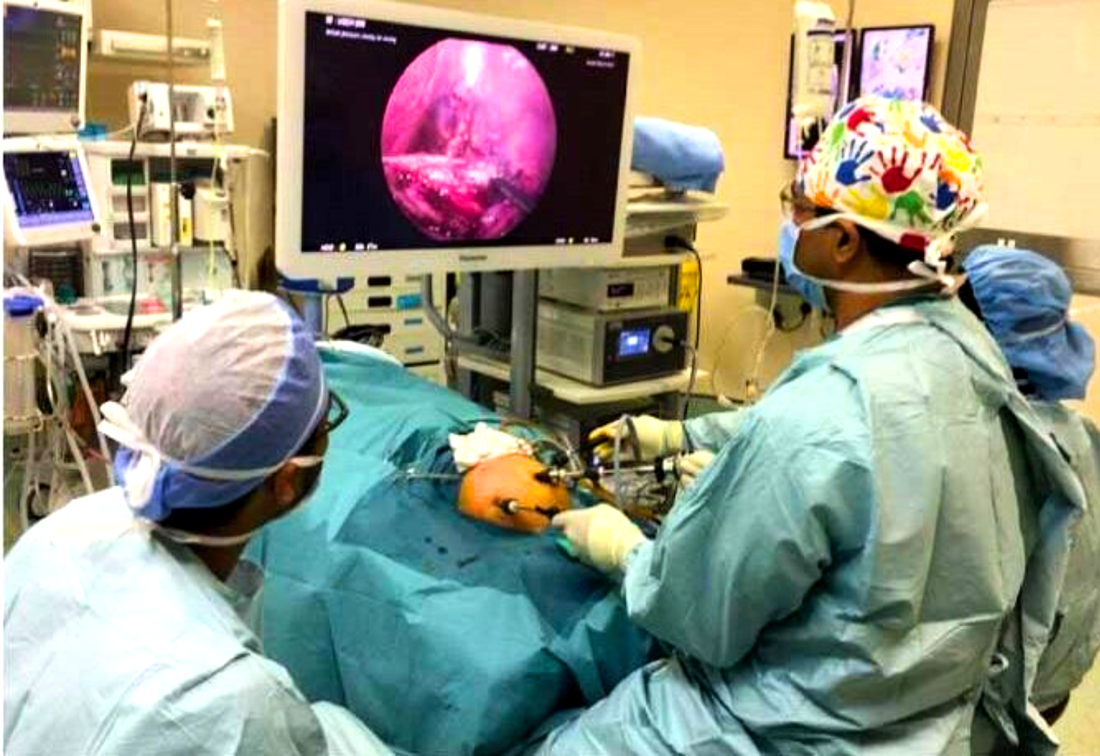
Paediatric laparoscopic surgery is not new. The minimally invasive procedure of treating children with surgical conditions began in the 70’s and started evolving in the late 1990’s, yet the benefits and the vast potential of this approach is yet to be explored by parents as well as the paediatric surgeons here in Malaysia.
Dr Nada Sudhakaran, Paediatric and Neonatal surgeon at Pantai Hospital Kuala Lumpur, is one among the five surgeons in the country who specialises in reconstructive paediatric surgery with emphasis on minimally invasive (keyhole surgery) on infants and children. “The procedure allows the surgeon to access the inside of the abdomen without having to make large incisions in the skin where three or more small cuts approximately of three millimetres are made to allow the laparoscopic instrument to be inserted into the abdomen of the child. The operation is done on sight and the instruments removed. “This is an advantage compared to an open surgery where it involves a cut from two to eight centimetres, enough for the surgeon’s hand to go inside and manipulate the organ or to manoeuvre the structure out of the body. So the cut has to be big enough. “The minimally invasive procedure is also less painful and less traumatic for both parents and the child, in addition to the faster recovery period. “I’ve taken the lobes and lungs out in babies and watch them recover in two days. In an open surgery, it would take anywhere between five to seven days to go home. “My analogy for this is, why would any parent want their child to go through more pain, suffering and scarring if they chose traditional open surgery over keyhole or minimally invasive surgery. “No parents would want any harm to their child. Surgery is harm - so, when the condition is significant enough to warrant surgery, we do the procedure with least harm. That is what keyhole surgery is about. “Why would parents want to do something to their child that involves lots of collateral damage - going through the muscles, tummy and so on before the surgeon is able to get into the organ when you could actually minimise the damage?" Having operated on hundreds of babies and children to date, Nada continues to perform reconstructive surgery on infants and minors with testicular problems, hernias, reconstruction of the penis, anorectal malformations and Hirschsprung’s disease apart from training. |

- IN THE SPOTLIGHT
-
HEALTH CONDITIONS
- ANTIMICROBIAL RESISTANCE
- ARTHRITIS
- ASTHMA
- BACK PAIN
- BRAIN DISORDERS
- BREAST CANCER
- CANCER
- CARDIOVASCULAR DISEASE
- CERVICAL CANCER
- CORONAVIRUS DISEASE (COVID-19)
- DEMENTIA
- DENGUE
- DENTAL PROBLEMS
- DIABETES
- DRUG ABUSE
- EAR, NOSE AND THROAT
- ECZEMA
- EPILEPSY
- EYE
- FIBROIDS
- GASTROINTESTINAL DISEASES
- GOUT
- INFLUENZA (FLU)
- HEADACHES & MIGRAINES
- HEPATITIS
- HIV & AIDS
- JOINT PAIN
- KIDNEY DISEASE
- LUNG CANCER
- LUPUS
- MELASMA
- MENTAL HEALTH
- MOUTH-AND-TEETH
- OBESITY
- OSTEOPOROSIS
- OVARIAN DYSFUNCTION: UNDERSTANDING PREMATURE OVARIAN FAILURE, POLYCYSTIC OVARY DISEASE AND INFERTILITY
- SEXUAL & REPRODUCTIVE HEALTH
- SKIN CONDITIONS
- SLEEP
- STROKE
- DISABILITIES & SPECIAL ABILITIES
- PALLIATIVE CARE
- NURSING RESOURCES
- DIGITAL HEALTH
- HEALTH PRODUCTS & SERVICES
- RELATIONSHIPS
- FAMILY HEALTH & PARENTING
- EMPOWERING WOMEN
- MEN'S WELLNESS
- GOLDEN YEARS
- ACTIVE LIFE HUB
- NUTRITION
- COMPLIMENTARY MEDICINE
- HUMANITARIAN & COMMUNITY HEALTH
- AMBULANCE AND FIRST AID GUIDE
- Community clinics/ Klinik Komuniti
- Government Dental Clinics / Klinik Pergigian Kerajaan
- ABOUT US