Tony Eusoff: Up close and personal with the man behind the spotlight
June 21, 2026
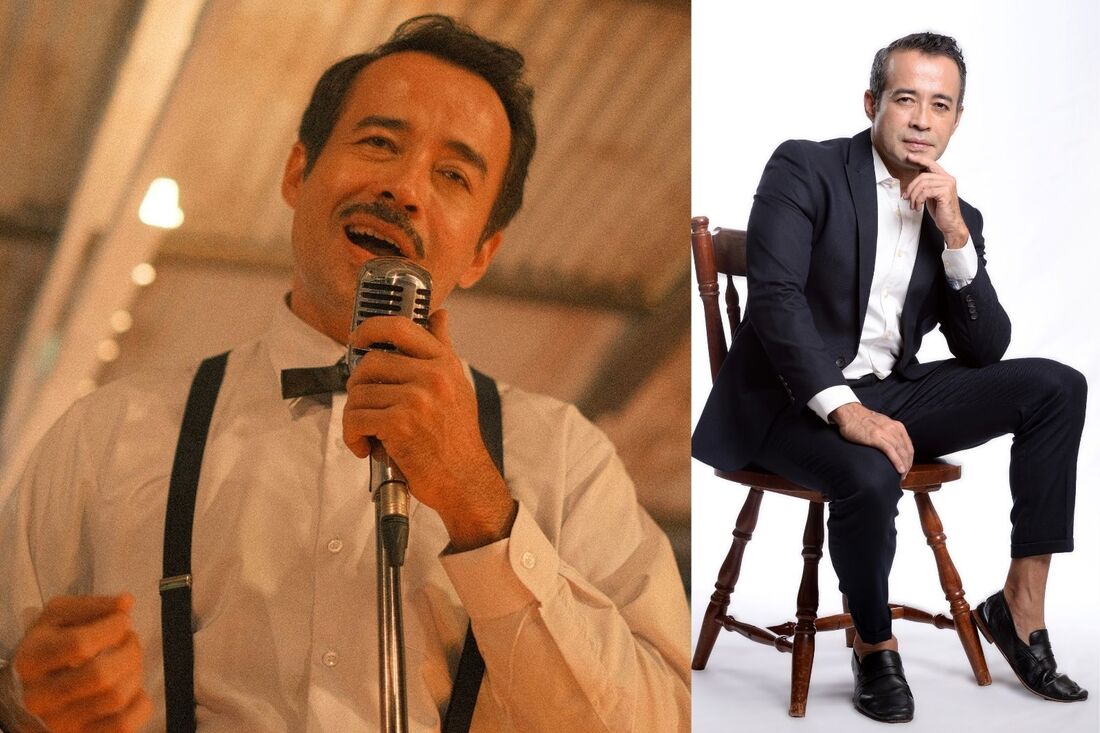
Mencari Ramlee remains one of Tony Eusoff's most meaningful projects, portraying a struggling P. Ramlee impersonator.
For more than two decades, Malaysian actor Tony Eusoff has quietly established himself as one of the country's most versatile performers, seamlessly navigating film, television, theater and musicals. Whether portraying the legendary P.Ramlee on stage and screen, delivering compelling performances in award-winning productions, or captivating audiences with his commanding presence, Tony has built a career defined by resilience, adaptability and artistic integrity.
His talent has earned recognition across Malaysia's most prestigious arts and entertainment platforms. He received a Best Actor nomination at the 34th Malaysian Film Festival for his leading role in Mencari Ramlee, a Best Supporting Actor nomination at the Anugerah Skrin, and a Best Solo Performance (Voice) nomination at the BOH Cameronian Arts Awards for his work in the Five Arts Centre production Encore. Today, Tony continues to expand his creative horizons. Audiences have recently seen him in acclaimed television and digital productions, while anticipation is building for his upcoming film Zero, directed by Andre Chiew. Yet long before the accolades and red carpets, Tony was simply a young man from Sarawak searching for a path that blended creativity, purpose and survival. A Sarawak boy with big dreams Born Anthony Joseph anak Hermas Rajiman on April 3, 1977, in Kuching, Sarawak, Tony grew up in a modest household surrounded by family values, creativity and curiosity. A member of the Bidayuh community, he attended SJK (C) Chung Hwa Batu 10, a Chinese-medium school located just steps from his mother's home. The transition from Chinese primary education to the national school system was not without challenges. Like many students from Chinese schools, Tony was placed in a one-year transition program known as a Remove Class (Kelas Peralihan) before continuing his secondary education at SMK Siburan. Language proved to be one of his biggest hurdles. "Sarawakians can relate to this because we don't really speak standard Bahasa Malaysia in Sarawak. We speak Bahasa Melayu Sarawak. The only Bahasa Malaysia we used regularly was in school." Because most of his reading was in English, his proficiency in Bahasa Malaysia lagged behind. Ironically, the language that would later become central to his acting career was once one of his greatest academic struggles. From architecture student to life's crossroads After completing his SPM in 1995, Tony applied to public universities through the manual application system that existed before the internet era. Despite not obtaining a credit in Bahasa Malaysia, he was fortunate to be accepted into the matriculation program at Universiti Malaya — one of the few institutions at the time willing to consider students in his situation. He enrolled in architecture, a field that appealed to both his artistic instincts and practical ambitions. "I've always loved the arts," he recalls. "As a child, I drew constantly. We didn't have many toys growing up, so paper, crayons and pencils became my world." Architecture seemed like the perfect compromise between creativity and career stability. Yet reality soon intervened. While studying in Kuala Lumpur, Tony rented a room for RM350 a month and purchased his first car — a Proton Iswara. The financial burden quickly became overwhelming. With monthly car instalments consuming much of his income, he found himself struggling to make ends meet. Rather than burden his mother, who was also supporting his younger brother's education, Tony made a difficult decision: upon completing his three-year architecture degree—the first step towards becoming a professional architect—he chose to leave architecture behind. Searching for the right fit Like many young adults, Tony's journey to finding his true calling was anything but linear. He first entered the medical equipment industry, working in sales and marketing for about a year. While the experience sharpened his communication and networking skills, it did not provide the fulfilment he was seeking. "I was still trying to figure out what worked for me and what I wanted to do." His next move was equally unexpected. Tony applied to become cabin crew for a national airline, believing it could offer both stability and opportunities to travel. That decision would ultimately change the course of his life. The chance encounter that changed everything While working as a flight steward, a stranger approached him one day and asked a simple question: "Have you ever done TV commercials?" The answer was no. The stranger happened to work for a casting agency and invited Tony upstairs to take a profile photograph and record a short video. A week later, he landed his first television commercial. Commercial work provided valuable supplementary income, although assignments only came every few months. For about a year and a half, Tony balanced commercial shoots with his responsibilities as cabin crew. Then came the breakthrough. One of his advertisements caught the attention of director Kabir Bhatia, who was casting the second season of the popular drama Astana Idaman. Tony was selected to portray a romantic lead in the 120-episode series. The production required three months of filming and offered him his first major acting opportunity in 2002. Betting on himself At a critical crossroads, Tony had to choose between the security of a steady airline career and the uncertainty of freelance acting. He chose acting. The decision was far from easy. Unlike many performers who entered the industry through formal training, Tony learned on the job. Veteran actors including Dato' Jalaluddin Hassan, the late Hani Mohsin, Shaharuddin Thamby and Azhar Sulaiman helped guide the newcomer through the realities of the entertainment business. Drawing upon his sales and marketing background, Tony approached acting like an entrepreneur. "There was no WhatsApp back then. You either called or sent an SMS." He cold-called producers, production managers and casting directors, introducing himself and asking for opportunities. Out of every ten calls, perhaps two would result in a response. Those early years were unpredictable — several months of work followed by weeks of unemployment. Yet instead of waiting for the phone to ring, Tony used the downtime to improve his craft. Building a career across three stages Determined to become a complete performer, Tony immersed himself in all three acting mediums: television, film and theater. His screen debut continued in 2003 with Gila Bola, followed by a supporting role in Di Ambang Misteri. He later appeared as Dr Fahmi in the romantic feature film Cinta. In 2005, he made his theater debut in Jalan Impian at Kuala Lumpur Performing Arts Centre (KLPac), a move that would significantly shape his artistic development. Theater sharpened his acting skills and revealed another strength — his singing ability. His versatility continued to open doors across genres and platforms. Over the years, he appeared in productions such as Sadiq & Co., Pecah, Sindiket, Anak Merdeka, Jibril, Projek Dapat Baby and Ola Bola The Musical. The roles that left a lasting mark Among the many projects throughout his career, one film remains especially close to his heart: Mencari Ramlee. The connection goes beyond the role itself. Years earlier, Tony had portrayed the legendary entertainer P.Ramlee in the stage production P. Ramlee The Musical and later reprised the icon in the biographical television film Saloma alongside actress Nabila Huda. By the time Mencari Ramlee entered production, director Megat Sharizal had Tony firmly in mind. "The story is actually about a struggling P.Ramlee impersonator," Tony explains. "I've been associated with P.Ramlee for so many years that the role felt particularly meaningful." Another project he considers a career highlight is Liar, Astro's Malaysian adaptation of the acclaimed British crime thriller. In the series, Tony plays a surgeon accused of raping a woman after a date. The story unfolds as a tense psychological battle in which audiences are left questioning who is telling the truth and who is lying. "It's one of the projects I'm most proud of because it was so well written and dealt with a difficult subject in a nuanced way," he says. The role resonated deeply on a personal level. Having known survivors of sexual harassment and abuse, Tony understood the emotional complexity surrounding the issue. He also recalls a frightening experience from his own youth when, at age 15, he narrowly avoided becoming the target of a sexual predator. "Thankfully, I was aware enough of the danger and got myself out of the situation." Chasing new challenges After 22 years in the industry, one might assume there are few roles left to explore. Tony disagrees. "As an actor, you have to be fascinated by people," he says. "No two lives are the same. The possibilities are endless." That curiosity continues to drive his career choices. While financial realities sometimes require him to accept familiar roles, he actively seeks characters that push him outside his comfort zone. One role he would particularly love to tackle is that of a transgender character — something he has never been offered before. Ironically, despite growing up in a village and helping his mother on the family farm, he has rarely been considered for rural roles. "People tell me I don't look like a farmer or a village boy," he says, shaking his head. "The usual comment is that I look too urban or too fair-skinned. But that's the whole point of acting. I can grow my hair, change my appearance, spend time understanding the character. It just requires a little imagination." For Tony, the most exciting roles are often the ones nobody expects him to play. A taste of home Despite spending much of his career travelling between film sets and productions, Tony remains deeply connected to his Sarawak roots, especially when it comes to food. Rather than chasing trendy dining spots, he prefers enjoying dishes that are authentic to their place of origin. In Kuala Lumpur, he gravitates toward wantan mee, while trips home to Sarawak inevitably involve generous servings of kolok mee and Sarawak laksa. Yet no dish quite compares to his mother's cooking. Growing up with a mother who was an excellent cook shaped his appreciation for food, although Tony admits he is far from a picky eater. "As an actor, you get put in situations where conditions aren't always ideal. You learn to eat whatever is available," he says with a laugh. Fortunately, he has no major food allergies and happily enjoys everything from Asian cuisine to Western fare. 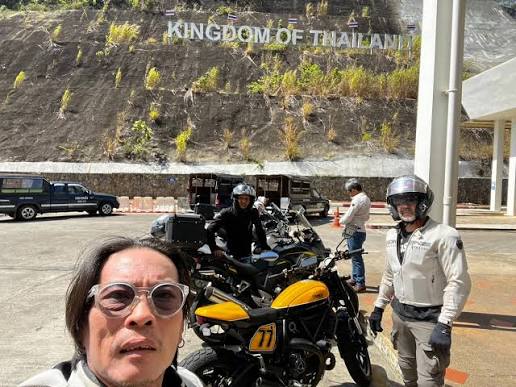
Away from the spotlight, Tony Eusoff finds freedom on two wheels, exploring Thailand's scenic landscapes and border towns on his scrambler.
Finding freedom on two wheels
Away from work, Tony's greatest escape comes on a motorcycle. "I love motorcycles far more than cars," he says. The actor owns a scrambler bike and regularly embarks on solo rides or convoy trips, particularly along Malaysia's East Coast. For him, the appeal isn't speed but freedom. "It's the feeling of the wind, exploring new places and being on the road. That's my healing." The rides provide a rare opportunity to disconnect from the demands of an industry where schedules are unpredictable and workdays can stretch well beyond conventional hours. Fitness as a professional necessity Maintaining physical fitness is another important part of Tony's lifestyle, although he jokes that his relationship with exercise is based more on practicality than passion. "I don't work out because I love working out," he says with a grin. "I work out because I love the results." Regular gym sessions combine cardiovascular exercise and strength training, both of which have become increasingly important as he gets older. "The older you get, the more important strength training becomes." His training often changes depending on the demands of a particular role. "If a character requires a lot of running, I'll focus more on cardio. If I need a larger physique, I'll work on building more muscle." For Tony, fitness is not about esthetics alone. It is part of the preparation and discipline required by his profession. The magic beneath the surface Another passion that lights up his face is scuba diving. Malaysia, he believes, is home to some of the finest dive sites in the world. From the islands of Perhentian, Tioman, Redang, Lang Tengah and Tenggol to the world-renowned waters of Sipadan, Tony has spent countless hours exploring the country's underwater treasures. "We have incredible coral reefs, amazing marine life and some of the best water temperatures anywhere." One of his most memorable encounters was spotting a juvenile whale shark during a dive. What surprises many people is that Tony does not consider himself a particularly strong swimmer. "I can float," he jokes. Yet he says diving offers something swimming cannot. "On the surface, the sea can be rough and chaotic. Underwater, everything becomes peaceful. It's a completely different world. It feels almost alien, but in the most beautiful way." Balancing solitude and connection When he is not working, Tony values both friendship and solitude. He enjoys meeting friends, discovering new food spots and occasionally playing the guitar. At the same time, he treasures quiet moments alone with a good television series or a book. Reading remains one of his lifelong habits. "It's a form of escape," he says. Like many modern readers, he has largely transitioned from physical books to digital versions, but his appetite for learning remains unchanged. The discipline of never stopping learning If there is one principle that guides Tony's approach to aging, it is the commitment to lifelong learning. "In your twenties, you think you know everything," he reflects. "As you get older, you realize how much you don't know." Acting constantly reinforces that lesson. Every new role requires research, preparation and a deeper understanding of human behavior. Whether learning lines, studying a character's psychology or analyzing a script, the work keeps his mind active. Rethinking masculinity and mental health As conversations around men's mental health continue to evolve, Tony believes society is still navigating centuries of deeply ingrained expectations. "For thousands of years, men were expected to hunt, fight and provide. Women often formed stronger emotional support networks. Those patterns don't disappear overnight." However, Tony considers himself fortunate. His profession has exposed him to people from diverse backgrounds, identities and experiences, giving him a broader perspective on human relationships and emotional expression. Growing up as a member of the Bidayuh community also taught him how to adapt and connect across different cultures. "I've spent much of my life being the only one of my kind in the room," he says. That experience taught him an invaluable life skill: the ability to listen, understand and navigate different worlds. Perhaps that is why Tony Eusoff remains such a compelling actor. His greatest strength may not be his ability to become someone else, but his willingness to understand people for who they truly are. Building a life, not just a career After 22 years in the entertainment industry, Tony Eusoff has accumulated more than acting credits, award nominations and memorable performances. He has also collected something far more valuable: perspective. The actor and producer speaks with the calm confidence of someone who has experienced both setbacks and successes, and who understands that life's greatest lessons rarely arrive when we expect them. Like many people reflecting on middle age, Tony occasionally looks back at certain chapters of his life and wonders whether he would make the same decisions again. Yet he does not dwell on regret. Instead, he believes that even difficult experiences serve a purpose. "If I hadn't gone through certain chapters in my life, I wouldn't have arrived at where I am today," he says. Looking back, some of the moments that once felt like major crises eventually became turning points that shaped his outlook on life. "What seemed like a huge calamity at the time often turned out to be serving a greater purpose." That realization did not come overnight. In some cases, the meaning behind a difficult experience only became clear years later. "Sometimes the lesson doesn't reveal itself until 10 years later. That's life. You have to trust the process." The perspective reflects a recurring theme throughout Tony's journey — resilience, patience and the understanding that growth often happens quietly in the background. The three pillars of well-being When asked about wellness habits every man should practice, Tony does not believe in quick fixes, miracle diets or complicated routines. Instead, he describes health as a simple tripod supported by three essential pillars: nutrition, movement and rest. The first pillar is being mindful of what we put into our bodies. Growing up in a village in Sarawak, Tony was raised on fresh, homegrown food long before terms such as "organic" and "farm-to-table" became fashionable. "We didn't grow up on fast food," he recalls. Vegetables came directly from his mother's garden. Chickens and ducks were raised at home. Processed food was never part of daily life. That upbringing shaped the way he views nutrition today. "Your body is your temple," he says. "It's your greatest asset." The second pillar is movement. Tony believes that while not everyone needs to become a marathon runner or bodybuilder, everyone needs to stay active. "For as long as you're alive, you need to keep moving." Whether it is walking, exercising, playing sports or simply finding opportunities to be less sedentary, he believes movement is essential for long-term health. "Sitting for ten hours a day can't possibly be good for you." The third pillar is often the most overlooked: rest. "Our bodies need sleep. Our brains function better when we're rested." In an age where productivity is often celebrated above recovery, Tony views quality sleep not as a luxury but as a necessity. Together, these three habits form the foundation of the lifestyle he tries to maintain as he grows older. Staying curious at every age As someone who has spent more than two decades in the public eye, Tony has become a role model to many aspiring performers. Yet he is quick to challenge the traditional notion that wisdom only flows from senior figures to younger generations. "You don't just learn from the people who came before you," he says. "You also learn from the people who come after you." Some of his most valuable insights, he admits, have come from younger actors and colleagues. "They see the world differently. They have perspectives I would never have had if I hadn't worked with them." For that reason, he rejects rigid hierarchies within the entertainment industry. "I don't believe in the whole senior-junior mentality." Respect, he believes, should be mutual. The willingness to listen, regardless of age or status, remains one of the most powerful tools for growth. 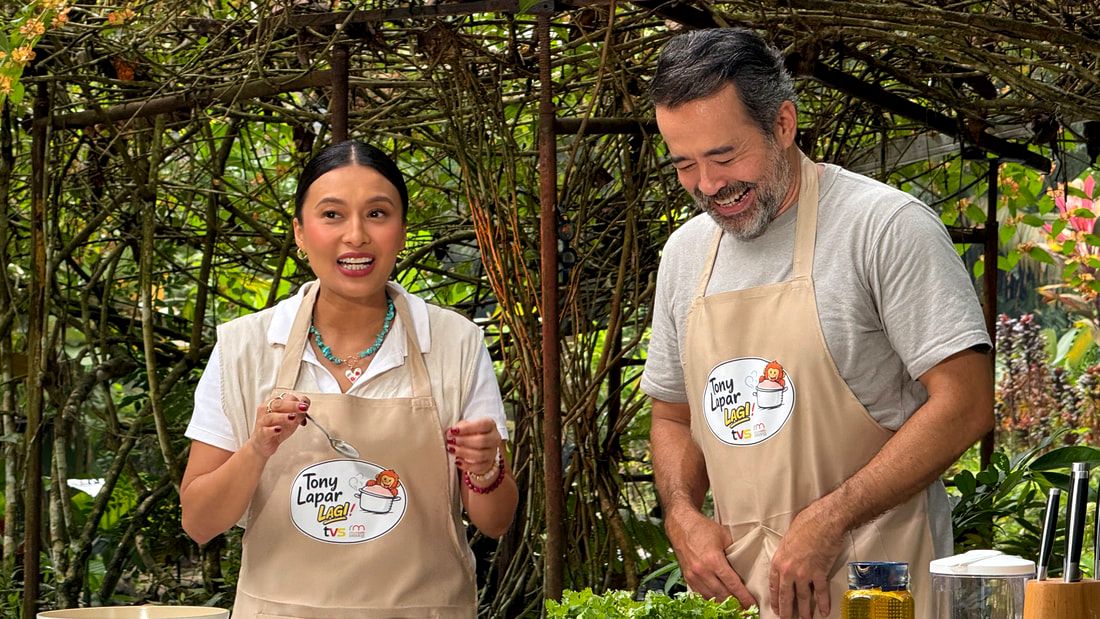
Tony Eusoff and Nabila Huda bring their chemistry to Episode 9 of Tony Lapar Lagi, currently airing on TVS.
From actor to producer
In 2020, as the world grappled with the COVID-19 pandemic, Tony embarked on a new chapter as a producer. The catalyst came when Sarawak launched its own television station, TVS, creating new opportunities for local content creators. Recognizing the potential, Tony established his own production company and began producing smaller-scale programs. "We weren't ready to produce dramas or films yet," he explains. "So we started with talk shows and magazine programs." One of those projects unexpectedly became a hit. The program, Tony Lapar, was built around a simple but entertaining premise: Tony, who openly admits he cannot cook, invites celebrity guests to teach him culinary skills. "Every episode featured a celebrity teaching me how to cook." The concept resonated with audiences and generated enough interest for TVS to commission a second season. The follow-up series, Tony Lapar Lagi, recently completed production and began airing in May. For Tony, producing has become another avenue for creativity and storytelling. |
EXPLORE FURTHER
|
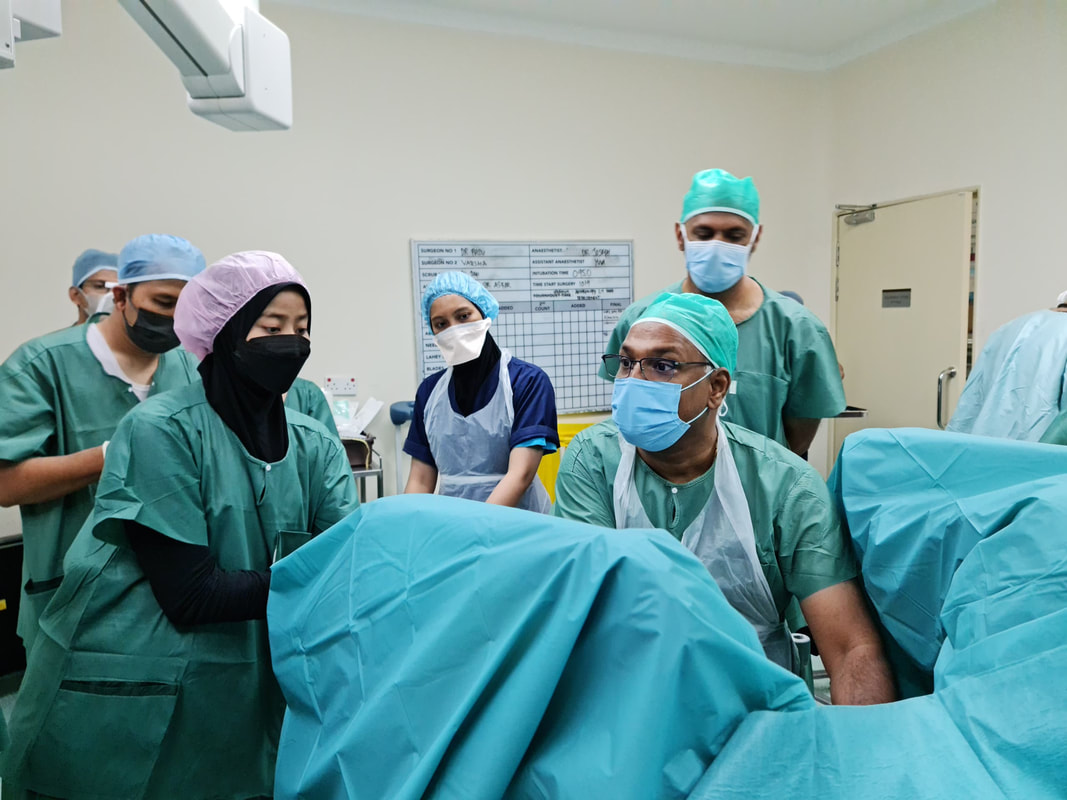
Revolutionizing prostate care with Rezum therapy
Safe, effective solution for Benign Prostatic Hyperplasia (BPH)
|
|
Redefining leadership: From stoic detachment to family integrationElon Musk’s approach shows ambition and fatherhood can coexist
|

|
Is chronic obstructive pulmonary disease (COPD) the same as asthma?Smoking is a primary risk factor, with rising e-cigarette use among youths
|

|
Interstitial cystitis/bladder pain syndrome in menSymptoms, misdiagnosis, and treatment challenges
|

|
Bloody urine in men: Causes and considerationsHematuria, can be concerning and may arise from various underlying conditions.
|

|
From broke to bespoke: A gentleman’s guide to old money looksDress like a million bucks without spending more than RM50
|

|
Empowering men's health: The essential guide to managing metabolic syndrome
Are you aware of these early kidney warning signs in MetS?
|

|
The quiet struggle of male breadwinners: Challenging traditional gender roles and expectationsMale breadwinners rooted in Asian cultural traditions
|

|
Toxic masculinity can be destructive to men's mental healthSuicide rates have increased significantly for males in Malaysia between 2014 and 2019
|

|
Are e-cigarettes and vaping a 'healthier' option?The nicotine level in e-cigarettes is found to be double
|

|
Addiction in men: Understanding the challenges and finding supportFacing unique challenges including societal pressures to appear strong
|
|
Should you get your ear pierced? Exploring public perception and earlobe changes with ageLearn about age-related changes in the earlobe
|
|
Seven problems you might experience with your penisPenis disorders can cause pain and affect a man's sexual function and fertility
|
|
Is a curved penis normal?Peyronie’s disease is a disorder in which the penis bends or curves because of fibrotic scar
|

|
Understanding priapism: Causes, symptoms and treatment of painful prolonged erectionsHaving an erection for more than 4 hours can be a painful experience
|

|
Penile siliconoma: Complications of unregulated penile augmentationPenis fillers are gaining popularity among Malaysians and foreign workers
|

|
The gender gap in health: Changing the perception of men's healthMost men prefer to suffer in silence as they see sickness as a sign of weakness
|
|
Have trouble peeing?An enlarged prostate gland can cause reduction in flow, longer to initiate a urine stream
|