Do plant purines carry the same gout risk as meat and seafood?
September 25, 2026
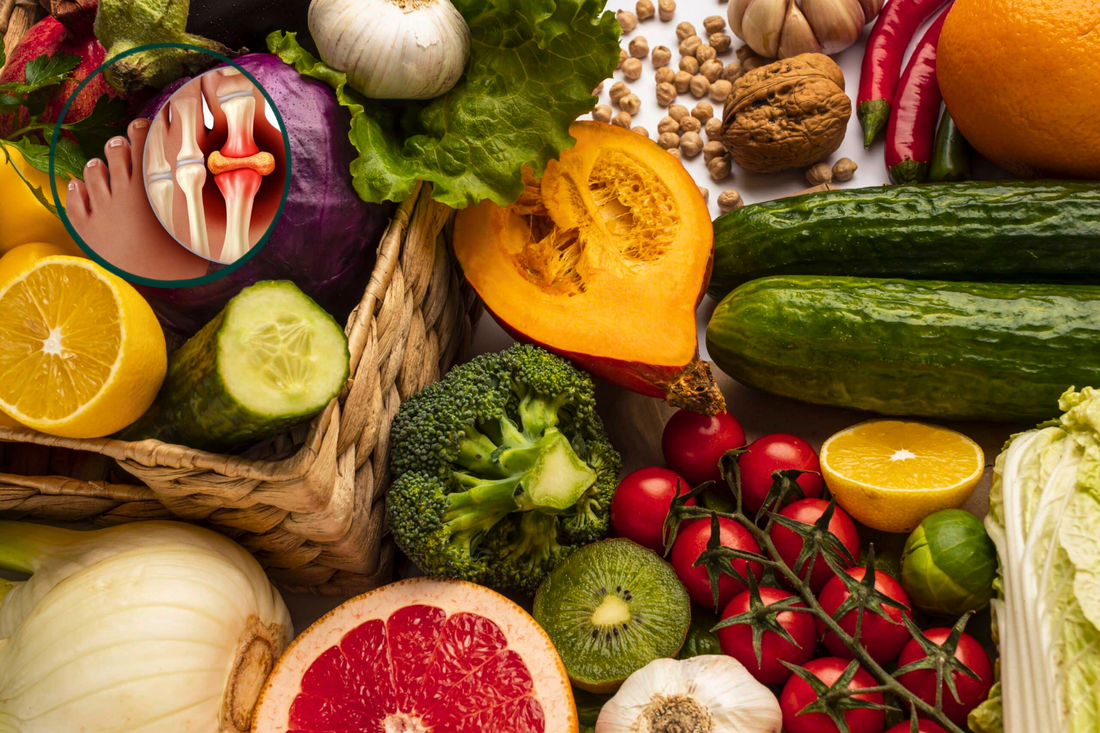
Eating more plant foods and staying appropriately hydrated can all support gout management.
Diet plays an important role in gout, but dietary advice has sometimes become unnecessarily restrictive. The objective is not to eliminate every food containing purines. Instead, focus on the dietary patterns most consistently associated with higher or lower risk.
Red meat and organ meat Beef, pork, lamb and especially organ meats can provide substantial purine loads. Frequent large servings may raise gout risk. Portion size and frequency matter. Shellfish and some seafood Certain shellfish and seafood are also rich in purines. Patients who experience recurrent gout may benefit from moderating high-purine seafood intake while maintaining an overall nutritionally balanced diet. Vegetables and legumes This is where older “purine avoidance” diets can be misleading. Beans, lentils, peas, spinach and other vegetables contain purines, but plant-derived purines do not appear to carry the same gout risk as large quantities of red meat and certain seafood. There is generally no reason for people with gout to avoid nutritious vegetables simply because they contain purines. Alcohol and gout Alcohol can increase the risk of gout attacks. Beer and spirits are particularly associated with gout risk, while the effect of wine appears less consistent across studies. Rather than telling patients that wine is “safe,” a more useful message is that alcohol can trigger gout and individual susceptibility varies. People experiencing frequent attacks may find that reducing or avoiding alcohol meaningfully improves disease control. Alcohol can also contribute to dehydration and metabolic abnormalities, amplifying other gout risk factors. Sugar-sweetened drinks and fructose Sugar-sweetened beverages deserve special attention. Fructose metabolism can increase uric-acid production, and consumption of sugary drinks is associated with higher gout risk. The Centers for Disease Control and Prevention (CDC) identifies sugary beverages and foods containing high-fructose corn syrup among dietary factors that can increase uric acid and gout risk. Reducing:
Whole fruit is different. Fruit contains fiber, vitamins, minerals and phytochemicals and should not generally be eliminated simply because it contains naturally occurring fructose. Dairy foods may be helpful Low-fat dairy products have consistently been associated with a lower risk of gout in observational research. Milk and yogurt can therefore fit comfortably within a gout-conscious diet unless another medical reason requires their avoidance. Weight loss helps—but avoid crash diets Reducing excess body weight can lower gout risk and improve metabolic health. However, rapid weight loss and prolonged fasting can temporarily raise uric-acid concentrations and may provoke an attack. The goal should be gradual, sustainable weight reduction. A combination of:
Hydration matters Uric acid leaves the body primarily through urine. Maintaining adequate hydration can therefore be particularly important for people prone to gout or uric-acid kidney stones. Fluid needs vary according to kidney function, cardiovascular disease, medications, climate and activity level. Lifestyle improvements For someone with mild hyperuricemia and no gout, lifestyle improvement may be all that is required. For a patient with established recurrent gout and substantial urate crystal deposits, lifestyle changes alone often cannot lower uric acid enough to dissolve those deposits. Diet, exercise and medication should therefore not be framed as competing strategies. They often work together. A healthy lifestyle improves:
Vitamin C: Helpful, but not a gout treatment Vitamin C has attracted attention because supplementation may produce a modest reduction in serum uric acid in some studies. However, the effect is generally much smaller than that achieved with established urate-lowering medication. Older reports suggest that vitamin C works mainly by inhibiting xanthine oxidase. Its effects appear more complex and may include changes in renal urate handling. The key clinical point is simpler: Vitamin C should not be presented as a replacement for allopurinol, febuxostat or other indicated gout therapy. It can be obtained readily through a balanced diet rich in fruits and vegetables, and supplementation should be individualized. Cherries: A promising dietary addition Cherries are probably the best-known food associated with gout prevention. They contain anthocyanins and other polyphenols with antioxidant and anti-inflammatory properties. Observational studies have suggested that cherry intake may be associated with fewer gout attacks. That is encouraging—but cherries are not a cure for gout, and evidence remains insufficient to substitute them for effective urate-lowering medication when medication is indicated. The Arthritis Foundation similarly describes cherries as potentially useful alongside standard gout management rather than as a replacement for it. For most patients, whole cherries can be incorporated safely into an otherwise healthy diet. Highly sweetened cherry drinks, however, may provide substantial sugar and should not automatically be assumed to have the same benefit. Coffee and gout risk Large observational studies have reported an association between regular coffee consumption and lower gout risk. Both caffeine and non-caffeine compounds have been proposed as possible contributors. However, association does not prove that beginning high-dose coffee consumption will treat established gout. Someone who already enjoys coffee can usually continue it if medically appropriate. There is little justification for prescribing multiple cups per day as a gout drug—particularly for individuals who experience palpitations, reflux, insomnia or other caffeine-related problems. Fiber and a whole-food diet Higher dietary fiber intake has been associated with better metabolic health and, in observational studies, lower hyperuricemia risk. Fiber-rich foods include:
A high-fiber diet can also support:
Folate Observational research has suggested that higher dietary folate intake may correlate with lower gout risk in some populations. But this evidence does not establish folate supplements as gout treatment. Folate-rich whole foods—such as leafy vegetables, legumes and fortified grains—can be part of a healthy dietary pattern without being promoted as a specific urate-lowering therapy. Flavonoids, resveratrol and herbal extracts A wide variety of plant compounds—including:
Some experiments have produced effects comparable with established medications under laboratory conditions, but that does not mean a herbal extract is clinically equivalent to allopurinol. Dose, absorption, metabolism, toxicity, interactions and reproducible human outcomes all matter. These compounds should therefore be described as areas of research rather than established gout therapies. Curcumin, omega-3s and chronic inflammation Gout is dominated by dramatic acute attacks, but inflammation can persist at lower levels between attacks when crystals remain in tissues. This has led researchers to investigate nutrients with anti-inflammatory activity, including:
For patients who need urate-lowering therapy, reducing inflammation without lowering urate would leave the underlying crystal burden untreated. Fish oil vs fish Some patients reduce seafood because of gout and then worry about losing the cardiovascular benefits of omega-3 fatty acids. Purines are found mainly in the cellular material of fish rather than in purified fish oil. Therefore, a high-quality omega-3 supplement contains little or no meaningful purine load. Whether supplementation is appropriate depends on the patient's cardiovascular needs, medications and diet. It should not automatically be prescribed simply because a patient has gout. |

EXPLORE FURTHER

|
Hyperuricemia to gout: The four stages explainedDoes high uric acid mean gout? Why do some people progress while others don’t?
|