Hyperuricemia to gout: The four stages explained
September 21, 2026
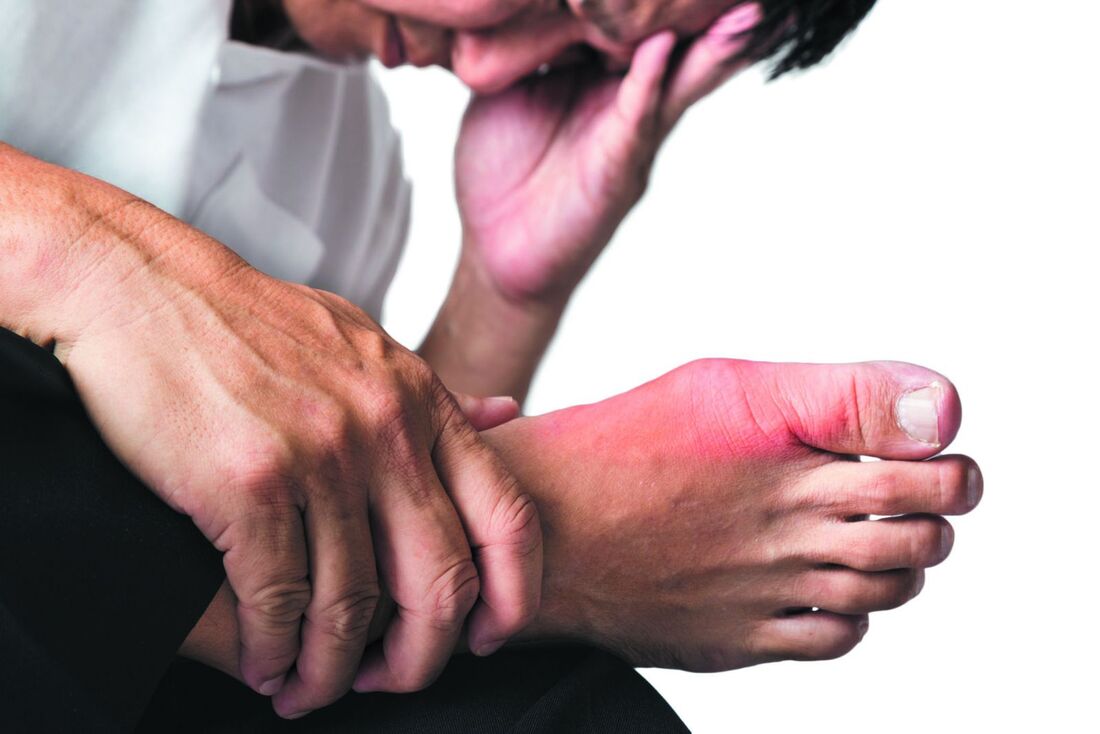
Men develop gout more frequently than women, although women's risk rises after menopause.
Few forms of arthritis announce themselves as dramatically as gout. A person may go to bed feeling perfectly well and awaken hours later with a joint that is intensely painful, swollen, red and so tender that even the pressure of a bedsheet feels unbearable. The classic location is the base of the big toe, but gout can also affect the ankles, knees, feet, wrists, fingers and elbows.
Gout is an inflammatory arthritis caused by the deposition of monosodium urate crystals in and around joints. These crystals form when the concentration of uric acid in body fluids remains high enough for urate to precipitate out of solution. The underlying biochemical condition is called hyperuricemia, meaning an elevated level of uric acid in the blood. But there is an important distinction: Not everyone with hyperuricemia develops gout, and an elevated uric-acid test by itself does not establish a diagnosis of gout. Once crystal deposition produces repeated attacks, however, gout can become a chronic disease capable of damaging joints and affecting quality of life. Fortunately, modern treatment can control inflammation, lower uric acid and, over time, allow deposited crystals to dissolve. From “disease of kings” to a modern metabolic disorder Gout is one of the oldest recognized forms of arthritis. Historically, it became known as the “disease of kings” because rich foods and plentiful alcohol—luxuries unavailable to much of the population—were associated with attacks. Today, gout is certainly not restricted to the affluent. Modern diets, obesity, metabolic disease, kidney dysfunction, certain medications and longer life expectancy all contribute to its burden. Men develop gout more frequently than women, although women's risk rises after menopause. Obesity, alcohol use, selected high-purine foods and certain medications also increase risk. Rather than viewing gout simply as the result of dietary excess, modern medicine recognizes it as a disorder involving a complex interaction between uric-acid production, kidney excretion, genetics, metabolism, medications and lifestyle. What Is uric acid? Uric acid is produced when the body breaks down purines. Purines are natural compounds found in human cells and in many foods. When purines are metabolized, uric acid is produced as an end product. Humans differ from most mammals in an interesting way. Many mammals possess an enzyme called uricase, which converts uric acid into allantoin, a substance that is much easier to eliminate. Humans lost functional uricase during evolution. As a result, we naturally maintain considerably higher uric-acid concentrations than most other mammals. Uric acid is not entirely undesirable. In extracellular fluids, it has antioxidant activity. The problem occurs when concentrations rise sufficiently for monosodium urate crystals to form. Why does uric acid become too high? Blood uric-acid levels reflect the balance between two processes:
For most people with gout, impaired excretion through the kidneys contributes more to hyperuricemia than excessive uric-acid production. Genetic differences in kidney urate transporters can influence how efficiently uric acid is removed. Kidney function, medications, hydration status and metabolic health can further alter that balance. Diet matters—but it is only part of the picture. Hyperuricemia is not the same as gout This distinction deserves emphasis. Some individuals have elevated serum urate for many years without ever experiencing a gout attack. Conversely, a blood uric-acid measurement obtained during an acute flare may sometimes be lower than expected. For that reason, doctors do not diagnose gout simply by looking at whether a uric-acid result is marked “high.” The likelihood of crystal formation increases as serum urate rises, but diagnosis must take symptoms, examination and sometimes direct identification of crystals into account. For patients already receiving urate-lowering therapy for established gout, current treatment generally aims for a serum urate concentration of 6 mg/dL or lower so existing crystal deposits can gradually dissolve and new deposits are less likely to form. What does a gout attack feel like? An acute gout flare usually begins suddenly. Pain may become severe within several hours. Typical features include:
The joint at the base of the big toe is particularly characteristic. Gout in this location is known as podagra. Other commonly affected areas include:
Attacks frequently develop overnight. A gout flare can be so painful that the patient cannot tolerate a sock, shoe or bedsheet touching the affected joint. Why the big toe? Urate crystals form more readily in cooler environments. Peripheral joints—especially those of the feet—are cooler than the body's core. This may help explain why gout so often begins at the first metatarsophalangeal joint at the base of the big toe. Previous joint injury and local anatomical factors may also influence where crystals accumulate. What can trigger an attack? A person may have urate deposits without symptoms until something destabilizes the crystal environment and provokes inflammation. Possible triggers include:
Paradoxically, gout flares can temporarily become more frequent when effective urate-lowering treatment is first started. This does not necessarily mean the treatment is failing. As tissue urate deposits begin to mobilize, crystals can temporarily provoke inflammation. This is why clinicians frequently prescribe preventive low-dose colchicine or another anti-inflammatory treatment when urate-lowering medication is initiated. The stages of gout Gout can evolve through several clinical phases. Asymptomatic hyperuricemia Uric acid is elevated, but no gout attack or tophus has developed. Medication is not routinely prescribed solely because uric acid is elevated in otherwise asymptomatic individuals. Treatment decisions depend on the clinical context. Acute gout A sudden inflammatory flare develops as the immune system reacts strongly to urate crystals. Intercritical gout After a flare resolves, the patient enters a symptom-free interval. The absence of pain does not necessarily mean the disease has disappeared. Urate crystals may remain within joints. Chronic tophaceous gout With longstanding uncontrolled disease, large collections of urate crystals known as tophi may develop. Tophi can occur:
Who is at risk? Several factors increase the likelihood of hyperuricemia and gout. Age and sex Gout is more common in men. Women's risk increases later in life, particularly after menopause, when the uric-acid-lowering effects associated with estrogen decline. Obesity Excess body fat is associated with increased uric-acid levels and gout risk. Obesity also commonly accompanies insulin resistance, hypertension and kidney disease—all conditions that can complicate gout. Kidney disease Because the kidneys eliminate uric acid, impaired kidney function can cause urate to accumulate. At the same time, treatment choices for gout need to take kidney function into account. Medications Certain medications can increase uric-acid concentrations. These include:
Gout rarely travels alone Hyperuricemia and gout often occur alongside other chronic diseases. These include:
Nevertheless, a gout diagnosis should prompt clinicians and patients to think beyond the painful joint. Blood pressure, kidney function, body weight, glucose regulation and cardiovascular risk all deserve attention. |