Is it gout or other disorders?
September 26, 2026
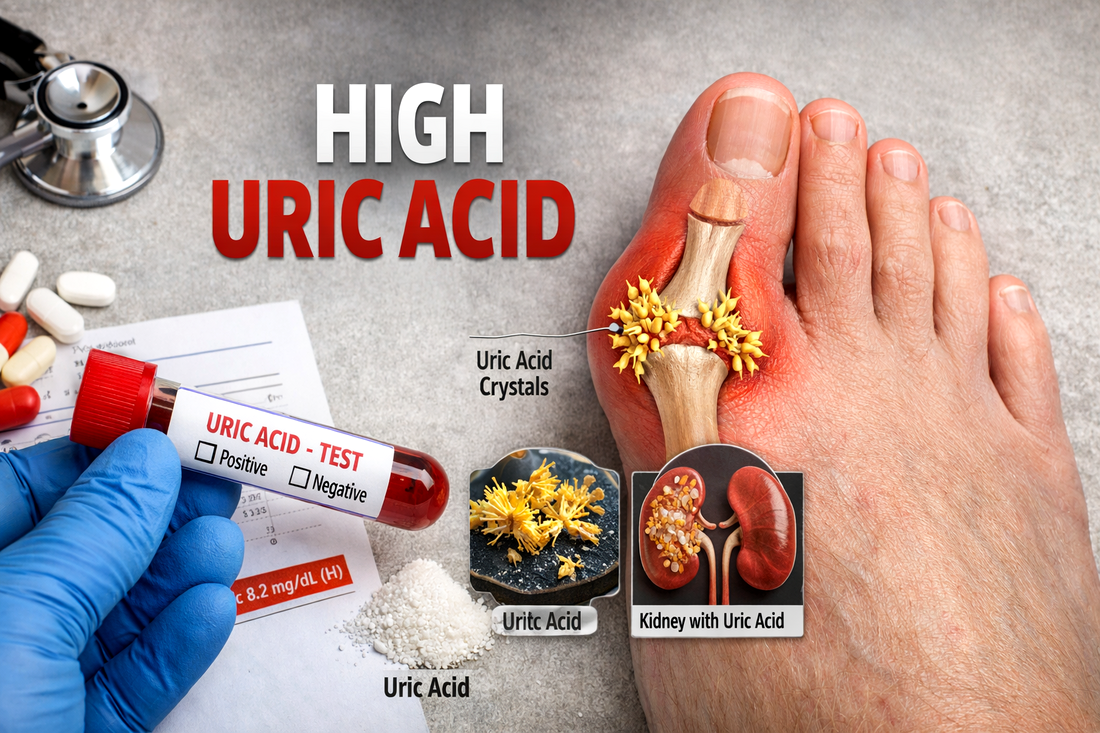
Blood uric-acid testing remains useful—but should be interpreted in clinical context rather than used alone to confirm or exclude gout.
The clinical picture can strongly suggest gout, but several other disorders can mimic it. These include:
The most definitive diagnostic method is identifying monosodium urate crystals in fluid obtained from the affected joint or from a tophus. Under polarized-light microscopy, the crystals have characteristic features. Joint aspiration becomes particularly important when infection is a possibility because septic arthritis requires urgent treatment. Blood uric-acid testing remains useful—but should be interpreted in clinical context rather than used alone to confirm or exclude gout. Treating an acute gout attack When a flare occurs, the immediate objective is to stop inflammation and relieve pain. Current first-line options include:
The American College of Rheumatology strongly recommends these options as first-line approaches for gout flares, with the choice depending on the patient's other medical conditions and medications. NSAIDs Drugs such as naproxen or other prescribed NSAIDs can be highly effective. However, they may not be suitable for patients with:
Colchicine Colchicine reduces the inflammatory response to urate crystals. Modern treatment generally favors low-dose rather than high-dose colchicine, because higher doses increase toxicity without providing proportionate additional benefit. Colchicine can interact with other medications and must be used particularly carefully in patients with kidney or liver dysfunction. Corticosteroids Oral or injected corticosteroids provide another effective option, particularly when NSAIDs or colchicine are unsuitable. The best choice is individualized rather than assuming one drug is best for everybody. Treating the cause: Lowering uric acid Stopping a flare treats inflammation. It does not remove the underlying urate deposits. Patients with recurrent attacks, tophi, or certain other manifestations of gout may therefore require long-term urate-lowering therapy. Modern gout management uses a “treat-to-target” approach. For patients receiving long-term therapy, the usual target is serum urate below 6 mg/dL. Allopurinol: The mainstay of long-term treatment Allopurinol inhibits xanthine oxidase, an enzyme involved in uric-acid production. Current American College of Rheumatology guidance strongly favors allopurinol as the preferred first-line urate-lowering therapy for most patients requiring treatment, including many with chronic kidney disease. Treatment usually begins at a relatively low dose and is adjusted according to the patient's serum urate response and clinical circumstances. The goal is not merely to take a standard tablet dose. The goal is to achieve and maintain the target uric-acid level. Febuxostat Febuxostat also inhibits xanthine oxidase and lowers uric-acid production. It can be an important alternative for selected patients who cannot use allopurinol or in whom allopurinol does not provide adequate control. Choosing between these medications requires consideration of medical history, cardiovascular risk, kidney function, previous drug reactions and other factors. Kidney function, kidney-stone history and medication interactions need to be considered. Pegloticase: A powerful option for difficult gout Humans lack functional uricase, but modern biotechnology has made it possible to provide uricase activity as medication. Pegloticase (Krystexxa) is an intravenous enzyme treatment that converts uric acid into allantoin. It can dramatically lower urate and help dissolve large crystal deposits. However, pegloticase is not routine first-line treatment. It is reserved for adults with chronic, uncontrolled gout when standard urate-lowering treatments have failed or cannot be used. Infusion reactions and anaphylaxis are important potential risks. Modern treatment may include co-administration of methotrexate in appropriate patients to improve response to therapy; FDA labeling includes clinical-trial data evaluating this approach. What About rasburicase? Rasburicase also acts as a urate oxidase. But it should not be confused with routine gout therapy. Rasburicase (Elitek) is primarily indicated to manage dangerous elevations in uric acid associated with tumor lysis in patients receiving anticancer treatment. It is not a standard long-term treatment for ordinary gout. This distinction is important because the two uricase-based drugs serve very different clinical roles. |

EXPLORE FURTHER

|
Do plant purines carry the same gout risk as meat and seafood?The gap between vitamin C and proven urate-lowering treatment may matter
|

|
Hyperuricemia to gout: The four stages explainedDoes high uric acid mean gout? Why do some people progress while others don’t?
|