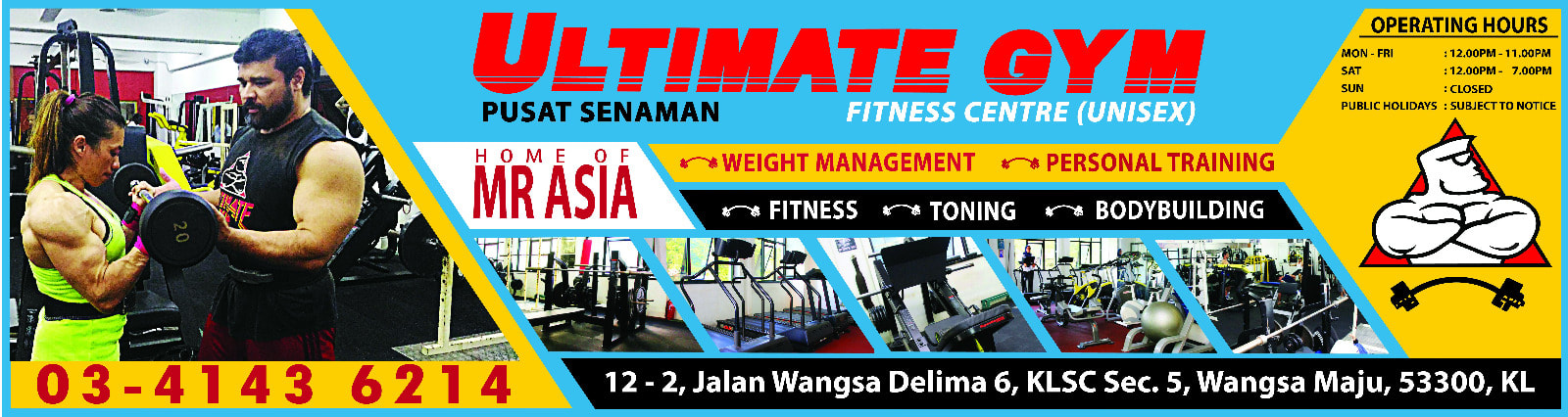
Terry Gallyot: At 57, is Malaysia’s bodybuilding legend ready to return?
August 21, 2026
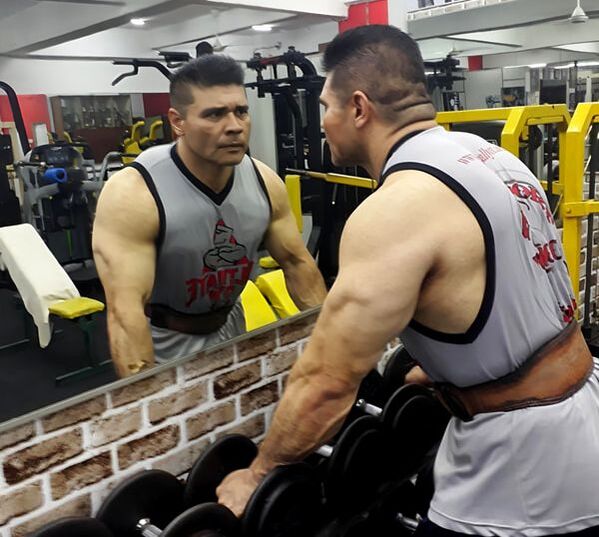
Terry Gallyot reflects on four decades of bodybuilding at Ultimate Gym, where discipline, determination and countless hours under the iron continue shaping his legacy.
For four decades, Terry Gallyot has built more than muscle. He has built a reputation, a career, a business and, perhaps most importantly, a legacy within Malaysian bodybuilding.
Born on July 17, 1969, in Melaka, Terry is a former competitive bodybuilder, personal trainer, actor and gym owner whose name has become synonymous with Malaysia’s old-school bodybuilding scene. At the peak of his competitive career, Terry was an imposing physical specimen — standing 6 feet (182.9 cm) tall and weighing 232½ pounds (105.5 kg) at competition weight. His physique was the kind that commanded attention. His arms measured a formidable 20 inches (50.8 cm), while his forearms stretched to 16½ inches (41.9 cm). His 19½-inch (49.5 cm) neck framed a massive 52-inch (132.1 cm) chest, while a remarkably tight 31-inch (78.7 cm) waist created the classic V-taper that bodybuilders spend years chasing. The legs — 28-inch (71.1 cm) thighs and 19½-inch (49.5 cm) calves — completing a thick, muscular and proportioned physique. His off-season weight reached 265 pounds (120.2 kg). Ripped, heavily muscled and built with the kind of proportions that made him stand out on stage, Terry was not simply lifting weights. He was sculpting a physique for competition. And he started remarkably young. From SPM holidays to the bodybuilding stage Terry began training in 1986 during his SPM long holidays. At the time, there were far fewer gyms around than there are today. He found his way to a gym in Taman Melawati, which was, as Terry recalls, practically the only gym available in the area. He started lifting, discovered that his body responded exceptionally well to training and quickly became hooked. Within just eight months, he entered his first bodybuilding competition in 1987. The motivation was not complicated. As a child, Terry had been fascinated by larger-than-life muscular characters on television and in comics. “For me, it was always the passion to build my body,” he says. Growing up watching characters such as the Incredible Hulk and reading Conan comics, Terry was captivated by muscular physiques. “I got thinking that I wanted to look like them someday.” When he finally had the opportunity to train, he grabbed it. His body responded. And then came the competitions. Terry kept winning. What began as an interest soon evolved into something much bigger. “It dawned on me that I would like to turn this into a hobby come career.” That opportunity arrived in 1990 when Terry and a fellow bodybuilder discussed setting up a gym together. In January 1991, the dream became reality. Ultimate Gym was born. From favourite hobby to lifelong career Terry’s business partner eventually moved to Australia, leaving Terry to continue running the gym. Three and a half decades later, he is still there. For Terry, there could hardly have been a better career. “What better way to have your favorite hobby become your career? Your business and you are your own boss.” In 2026, Ultimate Gym marks 35 years — an extraordinary run in an industry where gyms come and go, fitness trends change and bodybuilding itself continues to evolve. But Terry remains. And so does the philosophy that got him there. A trophy cabinet built on discipline Terry’s competitive record is a formidable one. He won Mr KL Junior in 1989 and 1990, followed by Mr Malaysia Junior in 1990. He claimed Mr KL Heavyweight in 1990 and 1991, before establishing himself nationally with multiple Mr Malaysia Heavyweight victories in 1990, 1995, 1996, 1999, 2000 and 2003. His international achievements followed. He finished second at the Mr Muscle Beach Open in 1995, before winning the competition in 1996. In 1999, he placed second in the SEA Championship Heavyweight category before capturing the Mr Asia Heavyweight title. In 2000, Terry took on the world stage, finishing among the Top 15 at Mr Universe. For a Malaysian bodybuilder competing during an era when the sport had far less infrastructure, exposure and support than it does today, the achievements were significant. Terry and his generation were, in many ways, pioneers. The old-school way versus the social-media era Bodybuilding today looks very different from the sport Terry knew during his competitive years. Social media has transformed fitness culture. It has made bodybuilding more visible, allowed athletes to reach enormous audiences and given ordinary people unprecedented access to training information. Terry sees the benefits. “Social media is able to reach more people and create awareness and invite people to come and be a part of this healthy revolution.” But there is another side. The old-school bodybuilder walked into the gym with one objective: train. Hard. Heavy. Intensely. “Old-school bodybuilders, when they go to the gym, it's balls to the wall. Only workout. We go in, we talk a little bit, but the focus is the workout.” Today, Terry observes, some people can become more preoccupied with the camera than the workout itself. Setting up the phone. Finding the right angle. Checking the physique. Taking photographs. Perfecting the pose. The result? Sometimes the intensity of the actual workout gets lost. For Terry, social media is neither entirely good nor entirely bad. It is a powerful tool — provided the tool does not become the goal. Forget motivation. Build discipline. As conversations around men's health, muscle building and healthy aging become increasingly prominent, Terry believes one word matters more than motivation. Discipline. “Motivation is like a trend, like a fad, a passion. It comes for a while and then it fizzles off.” Discipline, he argues, is different. Rain or sunshine. Good mood or bad mood. Busy day or quiet day. You still show up. “You need to put that effort in. That's discipline.” And when discipline is practised long enough, something changes. It becomes a lifestyle. Whether you are in your 20s, 30s, 40s or 50s, Terry believes the principle remains the same. Getting older doesn't mean stopping Age, however, changes how you train. Terry stresses that someone in their 50s should not necessarily train like a 20-year-old. The objective is no longer simply to push harder. It is to train smarter. “You don't want to train like a young kid because you want to protect your joints.” Older adults need to understand their bodies, adjust their programs and pay greater attention to recovery. Training, nutrition and supplementation all have a role, but Terry maintains that the fundamentals remain unchanged. The basics are still the bread and butter of bodybuilding.
Science has caught up While the fundamentals have remained remarkably consistent, the science surrounding bodybuilding has evolved dramatically. Terry recalls an era when athletes often trained instinctively. Today, research provides much greater insight into muscle development, training volume, recovery and nutrition. “Back then people would train on instinct. Today, they have research done that will tell you if you are overtraining or if you are not doing enough.” That knowledge allows athletes to streamline their programs and potentially achieve better results in less time. Nutrition has undergone a similar transformation. Protein, carbohydrates, fiber and fats remain fundamental, but athletes now have access to far more information about quantities, timing and nutritional requirements. Even whey protein has evolved. “Back then whey protein was literally still no, but today, we have technology to refine and extract whey protein — creating it in the purest form to boost recovery from intense training.” For Terry, the combination of better training knowledge, nutrition and recovery strategies gives today's athletes a significant advantage. The mind builds the body But beneath the muscles, Terry believes bodybuilding is ultimately a mental game. Discipline has to begin in the mind. “You've got to treat yourself like a stubborn child that would not veer off being on track.” The objective is to keep going until training and healthy eating become so deeply embedded that they are no longer decisions. They become part of your character. “Over time, if you skip a session, you feel something's off.” That, Terry believes, is when lifestyle change has truly taken hold. Progress follows. For him, that mindset has sustained four decades of bodybuilding. You cannot out-train a bad diet Training alone is not enough. Terry is equally blunt about nutrition. Diet, he says, is something many people do not want to deal with. It is much easier to eat whatever is available and head to bed. But bodybuilding demands something different. Training and nutrition go hand in hand. For Terry, healthy living has become something he refuses to surrender. He compares it to experiencing luxury. “If you're a millionaire having tasted luxury — driven all the Rolls Royce, the Bentley, the Ferraris — would you want to go back to becoming a poor person driving a Kancil, Wira or a Proton Saga?” For Terry, good health is that luxury. He has experienced what it feels like to be healthy, physically capable and rarely sick. “I've experienced health well in that sense and I want that for as long as I live.” Could Terry Gallyot return to the stage? At 57, Terry has not completely closed the door on competition. The possibility of stepping onto the bodybuilding stage again — perhaps in a masters category — has crossed his mind. But for now, he remains undecided. “I am not for it, neither am I against it. I'm kind of in a limbo at the moment.” After four decades of bodybuilding, Terry says he is enjoying life without the stress and pressure of preparing for competition. But he knows bodybuilders. They can disappear from competition for years before suddenly deciding to step back under the lights. “Bodybuilders keep going for 20-25 years then suddenly decide to do another show. That's me.” So, will Terry Gallyot make a comeback? For now, the answer remains tantalizingly uncertain. Building the next generation Perhaps Terry's greatest legacy, however, will not be measured by trophies, inches or pounds. It will be measured by the people he helps. Terry believes his generation helped open the door for Malaysian bodybuilding. “We were the pioneers who gave way for bodybuilding to be accepted publicly in the country.” Today, he is passing that knowledge forward. He has been mentoring a bodybuilder from the armed forces for several years. In 2025, his protégé won Mr Asia in the middleweight category. Now Terry hopes to help take him even further — potentially all the way to the world stage and a Mr Universe title. For Terry, this is his way of giving back. “When I was competing, there was really nobody to guide us, really nobody to help and show the ropes.” Now he wants to be that person for someone else. Forty years later, the fire is still burning Outside Ultimate Gym, Terry continues to engage with the public through TikTok live sessions, where he answers questions about bodybuilding, fitness, weight training and healthy living. And perhaps that says everything about the man. The competitive career may be behind him. The physique may have changed with age. The stage lights may have dimmed. But the passion remains. If Terry could travel back four decades and speak to the young man who first walked into that gym, what would he say? Train harder. Do better. Go further. “I come from a very hard background, out of which training was something that saved me. I felt this was an avenue out of poverty, so I actually went full-blown, full-on for it.” “If I had to go back to myself when I was 20, I would give myself a pat on the shoulder and say, you did well.” Four decades. Hundreds of workouts. Countless meals. A trophy cabinet filled with national and international victories. A 35-year-old gym. And generations of Malaysians inspired to pick up weights and build stronger bodies and stronger minds. For Terry Gallyot, bodybuilding was never simply about becoming bigger. It was about becoming better. And after 40 years, the Malaysian bodybuilding legend is still standing tall. |
EXPLORE FURTHER
|
Hoops + Health basketball festival attracts 150 youthsThird-year program benefits 400 youths, reaches 3,000 through coach-led activities
|
|
The future of health & wellness: Ogilvy Malaysia’s cultural read on what’s nextWhere fitness meets culture, recovery becomes status, and wellness feels human
|
|
UNSTOPPABLE: The Nicol David legacy - from court to communityHow Malaysia's squash legend transformed personal triumph into national inspiration
|

|
Nicol David Organization to roll out positive play nationwideCollaboration with Ministry of Youth and Sports to enable its mental health and sports program to reach more states starting 2026
|
|
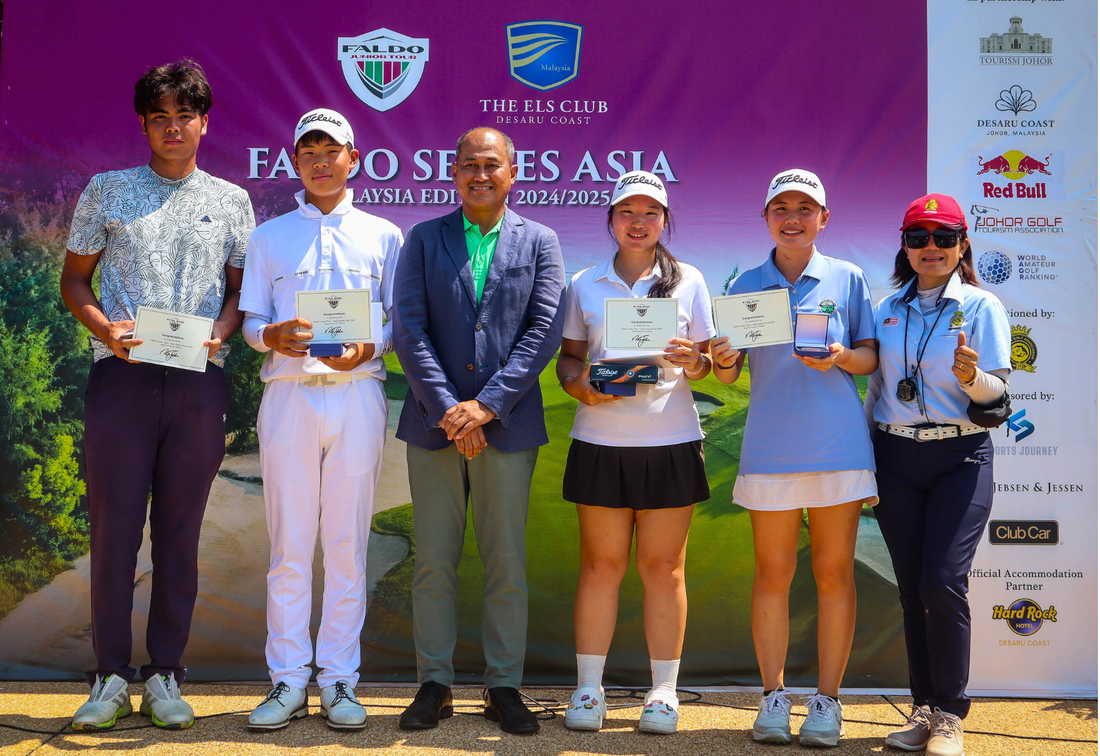
Young golfers take center stage at Faldo Series Asia - Malaysia Championship 2024/2025Aiden Kei Ahmad Shaharuddin and Denise Ng claim titles in Under 21 divisions
|
|
Mirabel Ting shines at Florida State Match UpAt Seminole Legacy Golf Course, Ting shoots second consecutive 67 to finish 16 under for the tournament
|
|
Langkawi Big Golf Weekend raises RM175,864 for Mount Miriam Cancer HospitalGolf enthusiasts from Europe, North America look forward to the 2026 tournament
|
|
Nicol David Organization joins the Squash and Education AllianceSEA and NDO are committed to inspiring change and empowering youth globally
|

|
The Faldo Series Asia – Malaysia Edition 2024/2025!Experience the challenge of a 54-hole stroke play format across four competitive categories!
|
|
Jeneath Wong shines at WAAP, breaks into World Amateur Golf Top-100Melbourne-based Malaysian golfer's victory boosts her ranking and opens doors to major tournaments
|
|
Tee off with confidence: A beginner's guide to starting golfEssential equipment, costs, and tips to kick off your exciting golfing adventure!
|

|
Swinging for health: Discover the benefits of golf for body and mindHow golf can enhance your well-being and connect you with others
|

|
David Max Poole wins stage 3 of PETRONAS Le Tour de Langkawi 2024Team DSM-Firmenich rider dominates Cameron Highlands climb, claims green and polka dot jerseys
|
|
10 effective ways to find motivation for diet and exerciseFrom personal struggles to small, actionable steps, discover how to regain control over your health
|
|
Heart Heroes Charity Run raises RM40,000 for congenital heart diseaseEnhancing pediatric cardiology and aiding low-income families
|
|
Championing resilience: microLEAP sponsors Fugee School teams for Faisal Cup 2024Join the team on July 13 at National Stadium Bukit Jalil
|

|
1500 run in support of those impacted by spinal muscular atrophyCreating awareness on the challenges by those facing this rare disease
|

|
Exercising in harmony with your menstrual cycle: A guide for womenCreate an exercise routine that aligns with your natural fluctuations.
|
|
From family roots to football fields: Mahali Jasuli's journeyFrom aspiring player to rising star
|

|
Combatting flabbiness at 40: Strategies to address yo-yo dieting and achieve a toned bodyTips on building muscle mass, cardiovascular health and lifestyle changes
|
|
Plastic vs. metal kettlebells: Exploring the ideal choice for beginnersCompare materials, weight ranges, cost, and safety for an informed decision.
|
|
Powerbuilding: The middle ground between powerlifting and bodybuildingFueling powerbuilding with a balanced diet for muscle growth and strength development
|
|
I finally took the plunge! I cycled to work for the past weeks...30kms per dayA journey of self-discovery and professional growth
|

|
Maximizing muscle growth: Tailoring fitness strategies to your body type
Understanding your body type is essential for achieving your fitness goals.
|

|
Deep breathing exercises to boost focus and energyMastering abdominal breathing: The key to deeper oxygenation and relaxation
|
|
Nana Al Haleq's journey into weightliftingUnleashing strength: From childhood athlete to fitness icon
|
|
Stretch and strengthen muscles with gyratonic and gyrokinesis movements
Discover total body wellness at Beyond Movement
|
|
Dato Ir Wong Wai Ching speaks on teeing off and RMAF golf courseFinding relaxation on the greens
|
|
Sazali Samad still going strong at 51Defying age with discipline and nutrition
|
|
ALTY Orthopedic Hospital empowers National Blind Football Team
Comprehensive support for visually impaired athletes
|