Could your child be missing sounds?
July 31, 2026
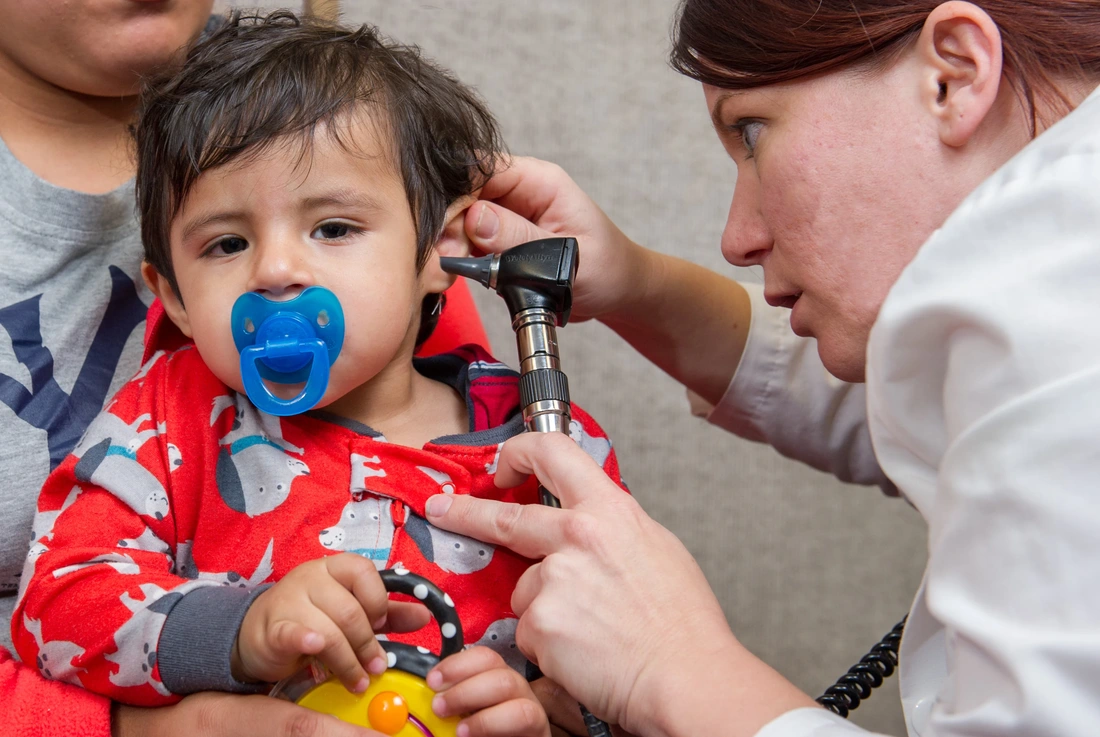
The first three years are crucial for hearing, speech and brain development. Early hearing restoration helps children achieve better language, learning, social and emotional outcomes.
Hearing plays a fundamental role in a child's speech, language and overall brain development. Yet hearing loss remains one of the most commonly overlooked causes of delayed speech, particularly during the first few years of life when the brain is developing at its fastest pace.
According to Dr Azrina Ahmad (picture below), Pediatric Ear, Nose and Throat (ENT) Surgeon, hearing loss affects one to three newborns in every 1,000 births, while up to six children per 1,000 develop permanent hearing loss by the time they reach school age. Given these numbers, many children with hearing impairment may go undetected until speech delays become obvious. Speaking during the 'Modern Diagnostics and Advanced Therapeutics in ENT Care' symposium organized by Sunway Medical Center, Sunway City, Dr Azrina stressed that recognizing hearing problems early can dramatically improve a child's long-term communication, cognitive development and quality of life. 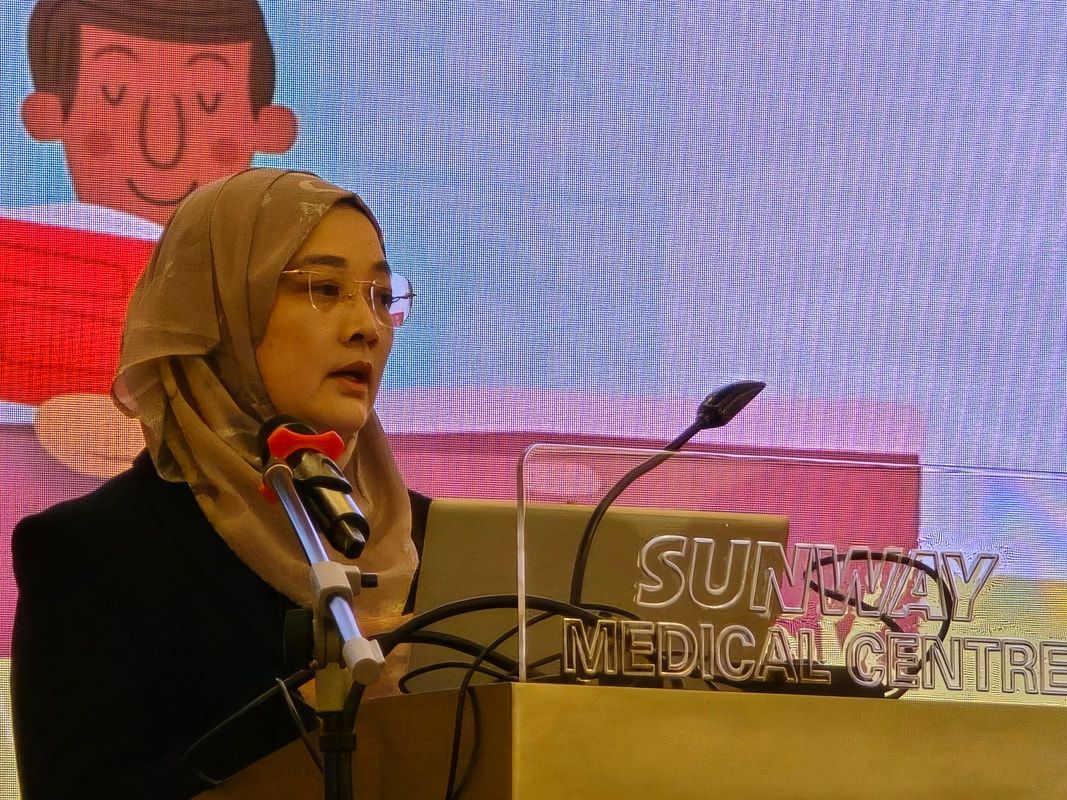
The first years shape a child's future
Hearing is far more than simply detecting sounds. It enables babies to recognize voices, understand language and eventually develop speech. During infancy, every conversation, lullaby and interaction helps strengthen the brain's language pathways. "If you can't hear, you don't know what speech sounds like," explains Dr Azrina. She emphasizes that early intervention, particularly before six months of age, significantly improves outcomes for children born with hearing impairment. "The first three years are critical. Auditory stimulation shapes speech and cognitive development. Delayed hearing can affect academic achievement, social interaction and emotional wellbeing." Because the developing brain is highly adaptable during infancy, restoring hearing early allows many children to develop speech comparable to their peers. Parents also play an essential role. "Parents are advised to chat to your baby, not put them on the screen," she says. "Some parents are more chatty, so you unfortunately end up with very chatty children because of the input that they get when they were younger. And of course, you see the type of brain development, more than visual pathways." Rather than relying on digital devices, frequent face-to-face conversations, reading aloud, singing and interactive play provide the auditory stimulation necessary for healthy language development. Why early intervention matters Dr Azrina explains that one of the most important concepts in pediatric hearing care is the difference between pre-lingual and post-lingual intervention. The brains of young children remain remarkably plastic, meaning they continue to develop rapidly during the first few years of life. "When we talk about pre-lingual and post-lingual age, there's a lot of studies about how plastic the brain of children are. They can still grow." However, timing makes a tremendous difference. "We have found that below the age of two, if you do intervention, especially speech therapy and hearing assisting, they speak normal—just like you and me." Once intervention begins after two years of age, speech development becomes more challenging. "We call it post-lingual. Unless parents are very intense in doing speech therapies, they will speak with speech impediment." This highlights why identifying hearing loss during infancy is essential rather than waiting until speech delays become obvious. Parents should monitor developmental milestones In Malaysia, newborn developmental milestones are documented in the child's health record—commonly referred to as the Blue Book for boys and the Pink Book for girls. These records outline age-appropriate developmental milestones that healthcare professionals monitor during routine follow-up visits. Dr Azrina says parents should familiarize themselves with these milestones and seek medical advice whenever their child fails to achieve them. Healthcare professionals following children during postnatal visits should also explain whether developmental milestones are being met and advise parents on the next steps if delays are identified. Normal hearing milestones Understanding what children should hear and respond to at different ages allows parents to identify possible warning signs early. At birth, babies should startle in response to loud sounds. By three months, they should begin turning towards familiar voices. "If a child has a single caregiver like their mom, they usually like the mom's voice better. But if they have so many, they sometimes get confused. But that's fine." By six months, babies should respond consistently when their own name is called. At nine months, they should understand the word "no." By 12 months, children should understand simple commands such as:
Even understanding and responding to "come here" represents an important developmental milestone. By 18 months, children should be able to identify body parts when asked. However, Dr Azrina notes that this depends greatly on parental interaction. Children first need to be taught the names of body parts before they can identify them. Growing up in multilingual families Malaysia's multicultural environment often means children grow up hearing multiple languages from birth. Fortunately, this is not necessarily a disadvantage. "We have found that in multicultural, multilingual families, especially those who are intermarried, you have so many languages." "For children with normal cognitive function, they can pick up five languages, no problems." However, children with underlying developmental or cognitive challenges may struggle when exposed to too many languages simultaneously. "For children who are slightly challenged are advised by the speech therapist to at least try to master one language." Screen time further complicates language development. "The problem with kids nowadays is that screen time, number one, and their screens speak in Malay and English. At home, parents speak in Malay. This results in language confusion." Interactive communication with parents remains far more beneficial than passive exposure through electronic devices. Understanding two-step commands Language comprehension develops progressively. By 24 months, children should understand increasingly complex instructions. Dr Azrina illustrates this progression with simple examples:
The ability to understand multiple-step instructions reflects ongoing development of language comprehension and cognitive processing. Speech milestones every parent should know Speech develops alongside hearing. One of the earliest milestones is babbling, which should begin by six months of age. Failure to babble at this stage is considered an important warning sign. "It's a red flag if by six months, they don't babble." According to Dr Azrina, the first recognizable word is usually "dada." "The first word they should say is dada. If the husband chooses to call themselves dada or papa, that's great because that's why they never call mama first. Mama is not the first word. It's dada." By 12 months, children should be saying one to three meaningful words, including examples such as:
By 18 months, vocabulary should expand to approximately 10 to 20 words. At two years, children should have a vocabulary exceeding 50 words while beginning to combine words into simple two-word phrases such as:
By three years, children should be speaking in simple three-word sentences such as:
By four years, speech should become understandable not only to parents but also to people outside the family. "Sometimes parents say, 'Oh, I understand him or her.' However, someone else may not understand what the child says, which signals a lot of speech impediment there." Warning signs parents should never ignore While every child develops differently, several warning signs should prompt further medical assessment. These include:
Among these, speech regression is especially concerning. "I have seen quite a number of kids undiagnosed at birth because they were perfectly well, but at the age of two, they suddenly stopped talking." Dr Azrina explains that regression may signal serious neurological disease rather than hearing loss alone. "So what happens is that these children have, unfortunately, neurodegenerative disorders, and they will pass away by the age of three to five years old." "That is why regression is something that you have to look at. A lot of times you will miss them because these kids usually grow normal and at a certain age, the neurodegenerative disorder starts to set in." Any loss of previously acquired speech should therefore be investigated urgently rather than dismissed as a temporary developmental phase. Is it hearing loss or simply speech delay? One of the biggest challenges clinicians face is determining whether delayed speech is caused by hearing impairment or another developmental condition. "When you talk about speech delay, you're not sure whether it's speech delay because of normal hearing or they actually have hearing loss, therefore they have speech delay." Children with hearing loss often struggle to follow verbal instructions because they simply cannot hear them clearly. In contrast, children with isolated speech delay but normal hearing usually understand commands well, despite having difficulty expressing themselves verbally. Eye contact is often normal in children with hearing loss, while social interaction varies depending on how much hearing remains. Babbling is typically reduced or absent in hearing loss, whereas children with isolated speech delay generally continue to babble normally. Children with neurodiversity may present differently, often showing delays across multiple developmental milestones rather than speech alone. Recognizing these differences helps guide further assessment, although Dr Azrina cautions that hearing loss should always be excluded before assuming delayed speech is purely behavioral or developmental. Four types of childhood hearing loss Once hearing loss is suspected, identifying its underlying cause becomes the next critical step, as treatment differs depending on the type of hearing impairment. Dr Azrina explains that childhood hearing loss generally falls into four categories: conductive hearing loss, sensorineural hearing loss, mixed hearing loss and auditory neuropathy. Conductive hearing loss Conductive hearing loss occurs when sound cannot travel efficiently through the outer or middle ear. In many children, the cause may be relatively simple. "A child could have conductive hearing loss which can be as simple as earwax collected in the ear. But at that time, the child can't hear. Once the earwax is removed, the child's hearing returns to normal." Sensorineural hearing loss Sensorineural hearing loss results from damage involving the cochlea or hearing nerve. Unlike conductive hearing loss, sensorineural hearing loss is usually permanent and often requires hearing aids or cochlear implantation to improve hearing. Mixed hearing loss Some children experience both conductive and sensorineural hearing loss simultaneously. This combination is known as mixed hearing loss, requiring treatment that addresses both the conductive problem and the underlying permanent hearing impairment. Auditory neuropathy Another, less common condition is auditory neuropathy, where the inner ear may detect sounds normally, but the hearing nerve or the brain struggles to process those signals accurately. What causes hearing loss in children? The causes of hearing loss vary depending on whether it is conductive or sensorineural. For conductive hearing loss, common causes include:
Dr Azrina explains the difference between otitis media with effusion and acute otitis media. "Otitis media means infection. The difference between otitis media with effusion and acute otitis media is that basically, the effusion is just fluid and inflammation, while acute otitis media is an infection that requires treatment with antibiotics." For sensorineural hearing loss, causes include:
She notes that because Malaysia now screens many pregnant mothers and newborns, congenital causes are identified more frequently than in previous years, reducing the number of missed diagnoses. Glue ear remains the commonest cause One of the most frequent causes of temporary childhood hearing loss is otitis media with effusion, commonly known as glue ear. Dr Azrina says the condition affects up to 80% of children at some point during childhood. Glue ear usually causes mild conductive hearing loss of approximately 20 to 40 decibels, but even this degree of hearing impairment can interfere with speech and language development. Children may present with:
Because glue ear often develops without pain or fever, parents may not realize their child has hearing difficulties until learning or communication problems become apparent. The importance of newborn hearing screening Early detection begins shortly after birth. Dr Azrina says countries such as the United Kingdom and Australia have established universal newborn hearing screening programs. "Even if you deliver the baby at home in a bathtub, someone will come and do the hearing test for the baby." In Malaysia, babies delivered in university hospitals and most private hospitals routinely undergo hearing screening before discharge. Several Ministry of Health hospitals also perform screening for babies considered at high risk, particularly those admitted to the neonatal intensive care unit (NICU) for more than five days. Dr Azrina highlights the internationally recognized 1-3-6 principle for newborn hearing care:
"Sometimes the baby is delivered over a long weekend, so none of the audiologists or the nurses are there. But then they will give an appointment within the first 30 days of delivery." Early diagnosis ensures treatment begins while the brain remains most responsive to auditory stimulation. Children at higher risk require closer monitoring Not all hearing loss is present at birth. Some children develop hearing impairment months or years later. Risk factors for delayed-onset hearing loss include:
Children recovering from bacterial meningitis require hearing assessment following hospital discharge because hearing loss may develop after the acute illness. Likewise, children receiving certain chemotherapy drugs should undergo hearing tests before treatment begins. Assessment begins with a thorough history Evaluating a child with suspected hearing loss starts long before specialized investigations. Dr Azrina says assessment begins with obtaining a comprehensive medical history, including:
This is followed by a detailed physical examination assessing:
Together, these provide valuable clues before audiological testing is performed. When should children undergo hearing tests? Some parents wonder whether they should see an audiologist directly or consult an ENT specialist first. Dr Azrina explains that in government and university hospitals, children are generally assessed by an ENT specialist before being referred for audiological investigations. In private hospitals, practice varies, although abnormal findings identified by audiologists are usually referred back to an ENT specialist for further management. Children should undergo audiological testing if they have:
Choosing the right hearing test Different hearing assessments are designed for different age groups. Otoacoustic emission (OAE) Suitable for newborns, this test uses a small probe placed in the ear to assess the function of the inner ear hair cells and detect early hearing loss. Auditory brainstem response (ABR) Recommended for infants, particularly those who fail newborn hearing screening or have risk factors for hearing impairment, ABR measures how the hearing nerve and brain respond to sound. Visual reinforcement audiometry Suitable for children aged six to 24 months, this assessment encourages children to turn towards sounds using visual rewards such as illuminated toys or videos, allowing hearing to be assessed without verbal responses. Play audiometry Designed for children aged two to five years, this test uses games and simple activities while wearing headphones to determine hearing thresholds. Pure tone audiometry For children older than five years, pure tone audiometry measures the softest sounds heard at different frequencies using headphones and age-appropriate responses such as raising a hand or pressing a button. Tympanometry Suitable for all age groups, tympanometry evaluates eardrum movement and middle ear function, helping identify fluid, ear infections and blockages. Speech depends on more than hearing alone Although hearing is fundamental, Dr Azrina reminds parents that speech development relies on three interconnected components. "The triangle — hearing at the top, cognition, oromotor — results in speech." Children require:
If any one of these areas is affected, speech development may also be impaired. "Hearing has to be checked whether it is okay or not. After that, cognition." She explains that oromotor function is generally normal if children can feed, chew and drink appropriately. However, children with hypotonia or conditions affecting mouth movement may develop speech difficulties despite having normal hearing and cognitive abilities. When hearing and oromotor function are normal, cognition often becomes the next area requiring assessment. "For cognition, most of the time when kids come in, hearing is normal, oromotor function is normal. This is where the neurodiversity talk comes in." Speech delay is not always caused by hearing loss While hearing impairment is a major cause of delayed speech, Dr Azrina emphasizes that several other conditions should also be considered. These include:
Each requires different assessment pathways and management strategies, highlighting the importance of a comprehensive evaluation rather than focusing solely on hearing. |
EXPLORE FURTHER

|
Could your ‘allergies’ actually be something else entirely?Key differences between allergic and non-allergic rhinitis
|

|
When the world starts spinning: Understanding vertigo and tinnitusCan dizziness and ringing ears be treated before they become serious?
|

|
Is my child's snoring normal, or could it signal something more serious?Understanding sleep-disordered breathing, warning signs, diagnosis and treatment options
|

|
When should I worry about voice changes?Persistent hoarseness may be more than temporary strain or a lingering cold
|