Is my child's snoring normal, or could it signal something more serious?
July 2, 2026
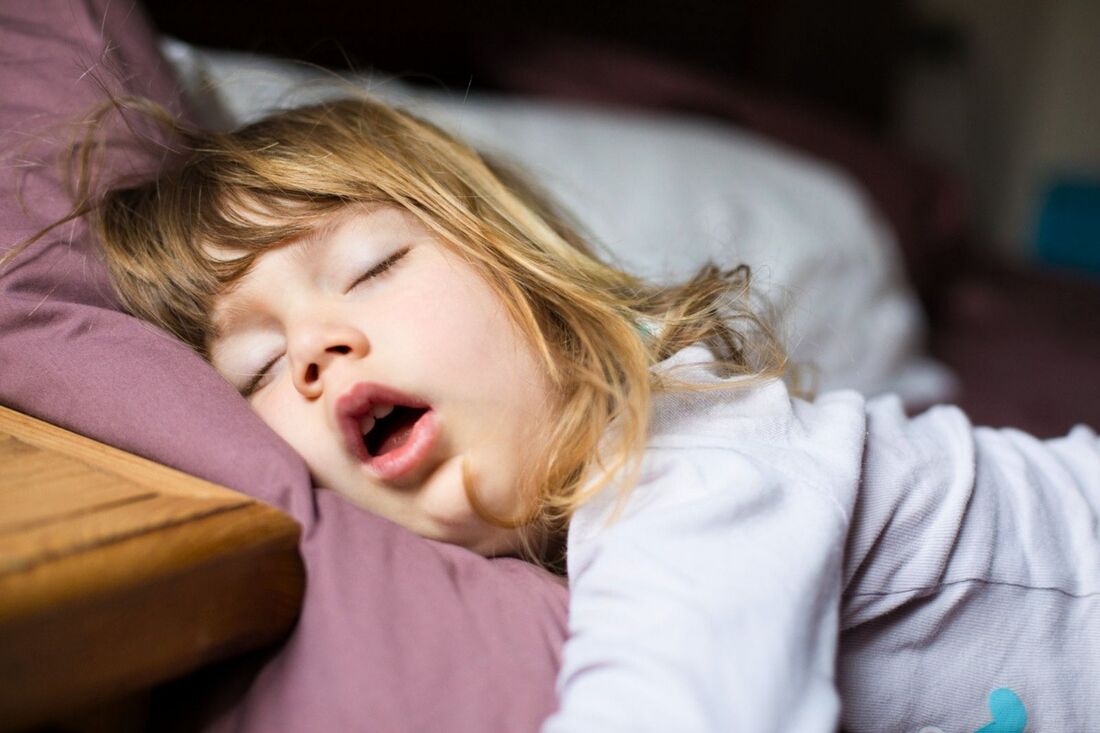
Children with upper airway resistance syndrome continue breathing but repeatedly awaken as increased breathing effort fragments sleep, affecting rest, behavior, concentration and overall wellbeing.
Many parents consider a child's snoring harmless, or even endearing. However, habitual snoring can be an early warning sign of a potentially serious sleep disorder that affects a child's growth, behavior, learning and long-term health.
Habitual snoring affects approximately 7% to 10% of children, while the prevalence of obstructive sleep apnea (OSA) is estimated at 1.2% to 5.7%. Malaysian studies report a prevalence of around 1% to 5%, although experts believe many cases remain undiagnosed because caregivers rarely mention snoring during routine medical visits. Untreated childhood OSA can lead to significant neurocognitive, cardiovascular and metabolic complications. The spectrum of sleep-disordered breathing Sleep-disordered breathing exists on a spectrum, ranging from simple snoring to severe airway obstruction. At the mildest end is primary (simple) snoring, where children snore without significant breathing pauses or oxygen desaturation. These children generally sleep comfortably, with the snoring often bothering parents or siblings more than the child. The next stage is upper airway resistance syndrome, where increased breathing effort causes repeated sleep fragmentation. Although airflow continues, the child repeatedly awakens because breathing requires excessive effort. More severe is obstructive hypoventilation, characterized by sustained partial airway obstruction that results in carbon dioxide (CO₂) retention, detectable during polysomnography. At the most severe end is obstructive sleep apnea, where repeated episodes of complete or near-complete airway obstruction interrupt normal breathing and sleep. Children may briefly stop breathing, awaken to reopen the airway, then return to sleep. These repeated interruptions confirm obstructive sleep apnea. "The peak age is two to eight years, which coincides with peak adenotonsillar hypertrophy. In children, about 90% of obstructive sleep apnea cases are caused by enlarged adenoids and tonsils. Although obesity is becoming an increasingly important independent risk factor, boys and girls are equally affected. Higher prevalence is seen in children with Down syndrome, craniofacial anomalies and neuromuscular diseases," explains Dr Priatharisiny Ponnai (picture below), Consultant Ear, Nose & Throat and Pediatric Ear, Nose & Throat Surgeon, during the Modern Diagnostics and Advanced Therapeutics in ENT Care symposium organized by Sunway Medical Center, Sunway City. 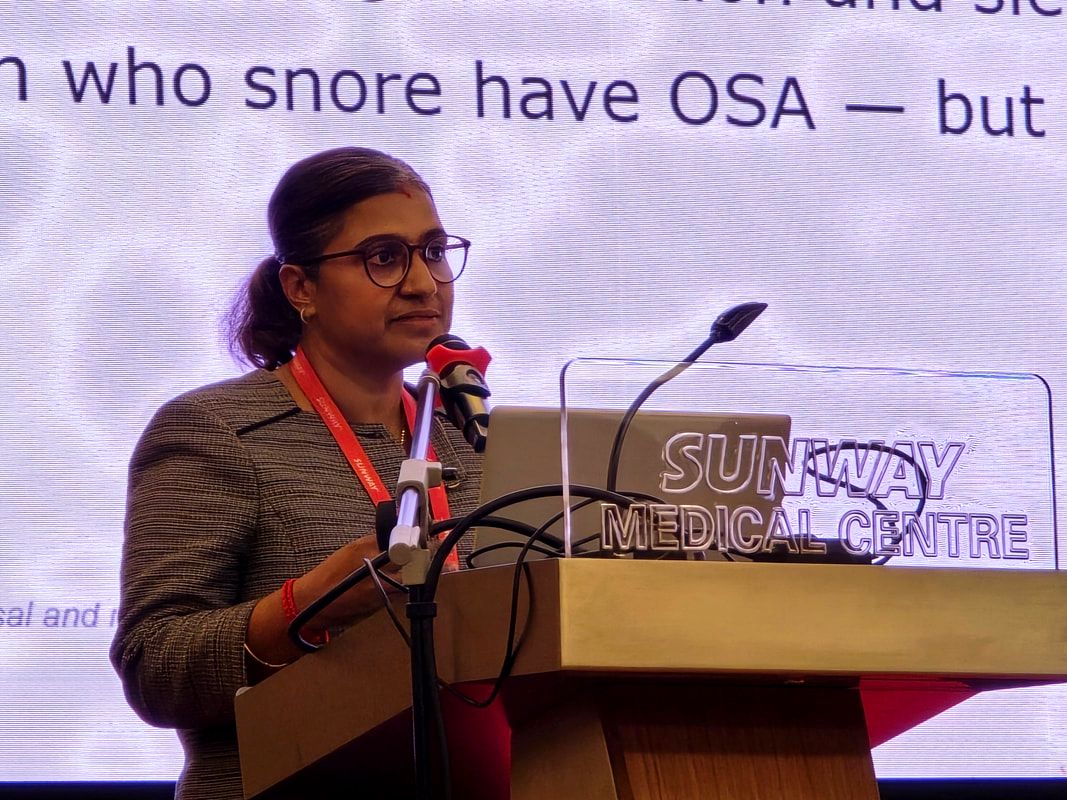
Why obstructive sleep apnea develops
Intermittent upper airway obstruction causes repeated oxygen desaturation (hypoxia), carbon dioxide retention (hypercapnia) and repeated sleep fragmentation. Each time the airway collapses, the child's brain briefly awakens them to restore normal breathing. "Waking up is actually protecting the child. They wake up to reopen the airway and then go back to sleep," says Dr Priatharisiny. Repeated episodes of airway obstruction can trigger systemic inflammation and oxidative stress, ultimately affecting brain development, cardiovascular health, growth and behavior. Unlike adults, who often experience excessive daytime sleepiness, children typically present with neurobehavioral symptoms instead. Common risk factors The most common modifiable cause of childhood OSA is adenotonsillar hypertrophy. Other important risk factors include:
Any obstruction from the nose to the upper airway can contribute to snoring and sleep-disordered breathing. Symptoms parents should recognize Routine medical visits should include questions about snoring, particularly if it occurs more than three nights each week. Parents should also watch for:
Daytime symptoms One of the most noticeable signs is declining school performance. Poor-quality sleep frequently causes:
Many children are mistakenly diagnosed with attention-deficit/hyperactivity disorder (ADHD) when the underlying problem is chronic sleep disruption. Children with OSA also expend more energy simply to breathe, while disrupted slow-wave sleep interferes with normal growth hormone secretion. Serious consequences if left untreated Untreated childhood OSA affects multiple body systems.
Physical examination Clinical examination should include assessment of:
However, examination while the child is awake may appear entirely normal because airway obstruction often occurs only during sleep. Brodsky tonsil grading The Brodsky grading scale classifies tonsil size as:
"Grade one and grade two usually are not really obstructive," says Dr Priatharisiny. Adenoid facies Some children have enlarged adenoids despite having relatively small tonsils. These children may develop characteristic adenoid facies, including:
Because adenoids cannot be visualized directly during routine examination, assessment requires either a lateral paranasal sinus (PNS) X-ray or nasal endoscopy. Early treatment is important because chronic mouth breathing can permanently alter facial development. Children at particularly high risk Some groups require especially careful evaluation because they are more likely to develop severe OSA or experience treatment complications. These include:
Confirming the diagnosis The gold standard investigation remains polysomnography (PSG). This overnight laboratory study measures:
Pediatric-specific scoring criteria from the American Academy of Sleep Medicine (AASM) should be used. Dr Priatharisiny notes that although American guidelines recommend PSG for all children suspected of having OSA, this is not always routine in Europe or Asia. When adenotonsillar enlargement is obvious and the child is not considered high risk, clinicians may proceed directly to adenotonsillectomy. Obstructive versus central apnea In obstructive apnea, respiratory effort continues despite airway blockage. Children use their accessory respiratory muscles to breathe even though airflow is absent. In contrast, central apnea results from reduced respiratory drive, meaning both airflow and respiratory effort cease. Treatment remains centered on adenotonsillectomy Evidence from the Childhood Adenotonsillectomy Trial showed that early adenotonsillectomy in children aged five to nine years significantly improved polysomnography findings, behavior, quality of life and symptoms. Improvements in attention and executive function were also observed. Although approximately 25% of children managed with watchful waiting experienced spontaneous normalization of PSG findings, adenotonsillectomy remains the recommended first-line treatment for OSA associated with adenotonsillar hypertrophy. Additional ENT assessment Ear, nose and throat specialists may perform flexible nasendoscopy to directly examine the adenoids, nasal turbinates and posterior choanae, alongside detailed examination of the palate, uvula and tonsils. Because awake examination cannot fully replicate airway behavior during sleep, further assessment may sometimes be required. Drug-induced sleep endoscopy Drug-induced sleep endoscopy (DISE) provides dynamic assessment of upper airway collapse while the child is sedated using medications such as propofol or dexmedetomidine. Using the VOTE classification, specialists evaluate collapse at the:
DISE is particularly valuable in children with persistent OSA after adenotonsillectomy, obesity, Down syndrome, craniofacial syndromes or severe multilevel airway obstruction. It also assists surgical planning and helps determine why continuous positive airway pressure (CPAP) therapy has failed or is poorly tolerated. REM-predominant obstructive sleep apnea Some children experience obstructive sleep apnea predominantly during rapid eye movement (REM) sleep. During REM sleep, muscle tone is markedly reduced, making the upper airway particularly vulnerable to collapse. As a result, airway obstruction during REM sleep is often longer and associated with greater oxygen desaturation than during non-REM sleep. Consequently, some children may remain symptomatic despite having a relatively normal overall apnea-hypopnea index (AHI). Medical therapy Adenotonsillectomy remains the preferred treatment when enlarged adenoids and tonsils are the primary cause of OSA. However, medical therapy may be considered in mild disease or while awaiting surgery. Treatment options include:
Dr Priatharisiny emphasizes that medical therapy does not replace surgery when adenotonsillar hypertrophy is the primary cause of airway obstruction. |
EXPLORE FURTHER
|
Could your child be missing sounds?Recognizing hearing loss early can prevent lifelong speech and developmental challenges
|

|
Could your ‘allergies’ actually be something else entirely?Key differences between allergic and non-allergic rhinitis
|

|
When the world starts spinning: Understanding vertigo and tinnitusCan dizziness and ringing ears be treated before they become serious?
|

|
When should I worry about voice changes?Persistent hoarseness may be more than temporary strain or a lingering cold
|